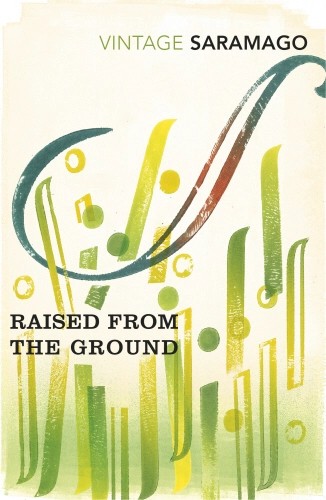
First published in 1980, the novel draws directly on Saramago’s rural origins. Born into a family of landless peasants in the Portuguese village of Azinhaga, he transforms this background into a broader narrative about class, memory and survival. The book follows multiple generations of the Mau‑Tempo family in southern Portugal, tracing lives shaped by poverty, labour and systemic inequality.
Set against a turbulent historical backdrop – including the two World Wars, the Salazar dictatorship and the country’s eventual transition to democracy – the novel connects private experience with larger political shifts. Yet its focus remains firmly on those at the margins, whose daily struggles unfold largely outside official historical narratives.
Although this early work does not yet adopt the strongly allegorical style that defines Saramago’s later fiction, it offers a vivid portrayal of exploitation, the violence of power and the fragile emergence of collective awareness among the oppressed. Institutions such as the state and the Church come under sustained scrutiny, while the lives of workers reveal the enduring structures of inequality.
At its core, Raised from the Ground is both a social novel and a personal homage. It gives voice to communities often excluded from literature, while reflecting the author’s deep humanism and attachment to his roots. Through its layered storytelling and distinctive narrative voice, the book stands as a key work in Saramago’s oeuvre – one that bridges personal memory and collective history.