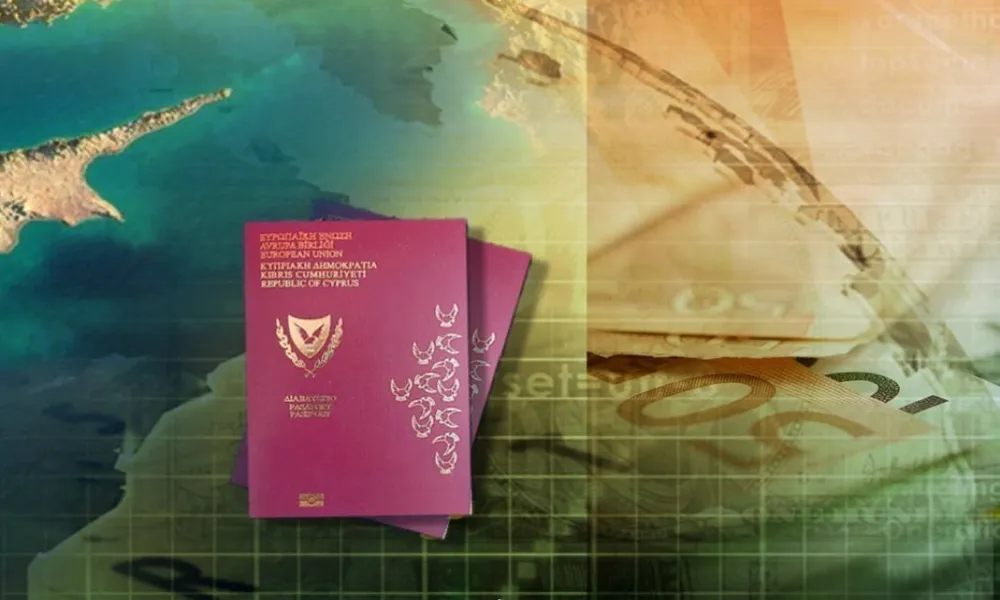

Cyprus is now moving to revoke the passports of two individuals following revelations from a sweeping money laundering investigation in Singapore, one of the most elaborate such cases in recent years. Some of the biggest names in international finance appear among the suspects.
The “Golden Passport” scandal - a long-running controversy surrounding the granting of Cypriot citizenship through investment - continues to cast a shadow over Cyprus’s reputation, keeping the country entrenched in international conversations about financial system security and anti-money laundering efforts. Two holders of Cypriot passports were implicated in Singapore’s billion-dollar scandal, as authorities there imposed hefty fines on some of the world’s largest financial institutions.
The scandal, which gained notoriety for allowing individuals from around the globe to purchase EU citizenship through real estate investments in Cyprus, continues to stain the island’s credibility. Now, Singapore’s case has shown that its legacy is far from over. Finance authorities there have issued severe penalties against the accused, including two Cypriot passport holders.
Two “Cypriots,” Su Haijin and Wang Dehai, were sentenced to short prison terms.
Su Haijin, originally from China’s Fujian province, held Cypriot nationality during the investigation. He received a 14-month prison sentence and agreed to surrender 90–95% of his seized assets, worth over $127.05 million USD. Wang Dehai was sentenced to 16 months for money laundering, with about 90% of his assets -totaling around $37.88 million- forfeited to the state.
The one silver lining is that Cypriot authorities had already been informed of the case and promptly initiated the citizenship revocation process. According to the Ministry of Interior, it had been briefed from the start about the legal proceedings, and once the conviction was announced, it moved to strip the men of their citizenship in line with the relevant legal framework.
The behavior of individuals who acquired Cypriot citizenship under the now-defunct Cyprus Investment Program (CIP) remains under scrutiny. The Interior Ministry revokes citizenship as soon as it is informed that someone meets the legal conditions for such action. As of now, the Cabinet has approved the revocation of citizenship for 306 individuals- 88 investors and 218 of their family members- who had gained it through the CIP.
This significant number of revocations confirms that the program served as a haven for controversial figures. Although officially terminated in 2020 under the weight of both domestic and international scandals -including allegations of opaque procedures and political interference- the program continues to damage Cyprus’s image. Investigative reports by international media and organizations like OCCRP and Transparency International repeatedly identify former and current Cypriot passport holders as being involved in global money laundering, banking fraud, and illegal capital transfers.
Even when Cyprus is not directly involved in these scandals -as in the Singapore case- the global pattern shows that international laundering schemes, such as Malaysia’s 1MDB or the Russian laundromat, exploit the lax oversight of “welcoming” citizenship regimes. The stigma of “Cypriot passport holders” appearing on lists of international suspects is hard to shake. It prolongs reputational damage and makes restoring credibility even more difficult.
There has been a sustained effort over the past decade to repair this image, especially by Cyprus’s banking sector, but the damage is deep, and ongoing money laundering cases involving "Cypriots" don’t help. Rebuilding trust will require years of consistent oversight and zero tolerance for ambiguity. As long as Cypriot passport holders continue to show up in scandals, Cyprus will be forced to prove it means what it says.
The $2.2 Billion Laundering Operation
The case involving Su Haijin and Wang Dehai is among the most serious money laundering prosecutions to date, with Singaporean authorities acting swiftly and decisively. It reveals that money laundering through global financial networks remains rampant, with prominent institutions implicated.
In early July, Singapore’s Monetary Authority (MAS) issued total fines of $21.5 million USD to six banks and three financial institutions, in connection with the country’s largest money laundering investigation revealed in 2023.
The scandal involves illegal assets worth $2.2 billion USD. In August 2023, ten foreign nationals were arrested during simultaneous raids. The individuals had funneled proceeds from international fraud and illegal online gambling into Singaporean banks, then converted them into property, vehicles, and luxury goods. They were sentenced to 13–17 months and subsequently deported.
Banks involved - Credit Suisse, UOB, UBS, Citibank, Julius Baer, and LGT Bank - were fined between S$1 million and S$5.8 million. Other institutions fined include UOB Kay Hian, Blue Ocean Invest, and Trident Trust Company Singapore with fines of S$2.85M, S$2.4M, and S$1.8M, respectively. The MAS stated that this concluded enforcement measures against the institutions.
Failures were identified in risk assessments, wealth source verifications, and suspicious transaction monitoring. Four individuals were permanently banned from MAS-regulated activities. The financial institutions cooperated with MAS investigations.
UBS, which agreed to acquire Credit Suisse in March 2023, acknowledged the findings and said it fully cooperated with authorities.
A Citi Singapore spokesperson said the bank has since strengthened its customer onboarding and monitoring processes and continues to work closely with regulators to safeguard financial integrity and combat financial crime.
UOB Kay Hian announced it has enhanced its internal policies and regularly updates the Central Bank on its progress.
Blue Ocean Invest and Trident Trust Company also reported full cooperation and internal policy overhauls.
A Julius Baer spokesperson stated the bank has taken specific steps to improve its AML framework. LGT Bank reaffirmed its commitment to anti-money laundering and preserving the integrity of Singapore’s financial system.
In June 2024, Singapore’s government officially designated the banking sector as the country’s highest-risk sector for money laundering.
Jho Low: In China with an Australian Passport and a Greek Name
Jho Low, the Malaysian financier and former Cypriot citizen - perhaps the most infamous case in the "golden passport" debacle - remains one of the most wanted individuals globally. Considered the mastermind behind Malaysia’s 1MDB corruption scandal, he is believed to be living in a luxury Shanghai villa under tight security.
Recent revelations from international investigations and journalists such as Bradley Hope and Tom Wright indicate that Low is moving about using a forged Australian passport under the alias "Constantinos Achilles Veis." This false passport reportedly allows him to travel relatively freely within China, protecting his true identity.
An ABC Australia report noted that Australian authorities are treating the abuse of its passports seriously but cannot comment on individual cases due to privacy laws.
Possession of a fraudulent passport is a criminal offense in Australia, punishable by up to 10 years in prison and/or significant fines. Meanwhile, authorities in both Malaysia and China either deny knowledge of Low’s exact whereabouts or remain officially uninformed. Reports suggest he is working behind the scenes with Chinese entities, helping companies bypass international sanctions.