
Air traffic in Greece has returned to normal following the full restoration of a major technical failure that caused widespread disruption at airports nationwide and led to the cancellation of all flights earlier in the day.
According to an updated statement by the Hellenic Civil Aviation Authority, all operational radio frequencies and communication telephone lines were fully restored by 17:00, while air traffic flow was normalised by 17:45.
What caused the disruption
Immediately after the problem emerged in the morning hours, the National Cybersecurity Authority and the National Intelligence Service were notified to investigate its causes.
Based on findings so far, authorities have ruled out sabotage or a cyberattack. Instead, the issue has been linked to a technical failure affecting an antenna located in the Geraneia Mountains, which serves the Athens Flight Information Region (FIR).
The Civil Aviation Authority said that a “mass interference” was recorded across almost all radio frequencies of the Athens FIR, combined with a simultaneous failure of HELLAS COM lines and other operational communication systems. The interference took the form of continuous, unintended transmission noise.
Further investigations by the National Intelligence Service, in cooperation with the Hellenic Telecommunications and Post Commission, concluded that there was no external interference. According to informed sources, the phenomenon may have been caused by hardware failure, such as a faulty circuit board, leading to internal resonance and widespread interference.
Authorities noted that a problem with the same antenna had been identified during a previous inspection. Technical checks are continuing to determine the precise cause and prevent a recurrence.
In a later update, the Civil Aviation Authority said coordination is ongoing with external bodies and EUROCONTROL. For safety reasons, operations were temporarily limited, with up to 35 departures and arrivals being handled and partial overflights permitted in three sectors. An updated NOTAM has been issued.
What Aegean said about the incident
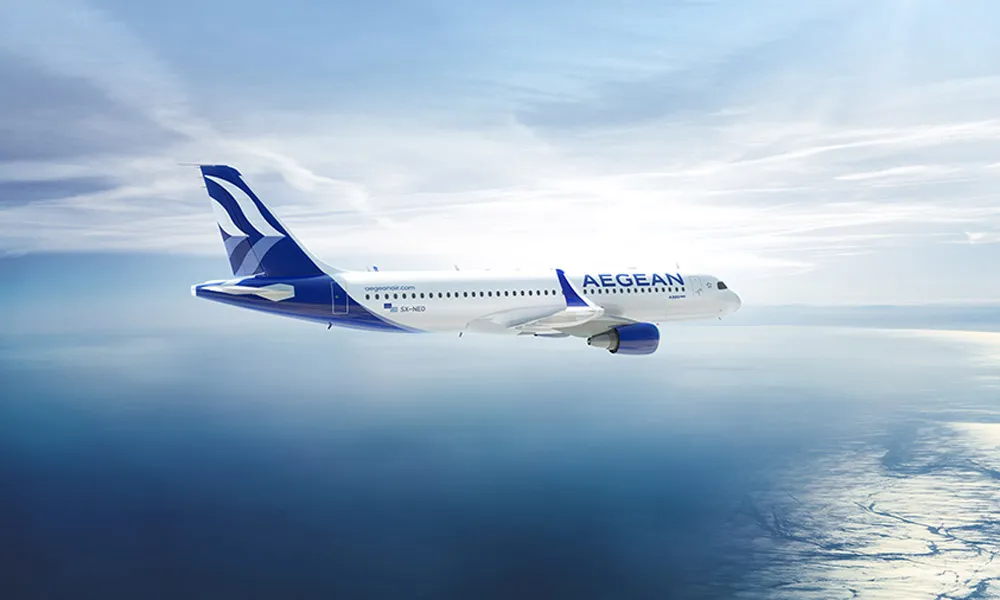
In a separate statement, Aegean Airlines outlined the serious impact of the technical failure on its operations, noting that flights to and from Greek airports were heavily affected from the morning of Sunday, January 4.
According to the airline, all flights were completely suspended between 09:35 and 12:20 due to the inability to manage airspace safely. From 12:20 to 18:00, only 35 aircraft movements per hour were permitted across the entire Athens FIR, compared with a normal capacity of around 180 movements per hour, operating at less than 20% of standard capacity. The gradual restoration of capacity began shortly before 18:00.
As a result, extensive delays were recorded and a total of 48 Aegean flights were cancelled, representing approximately 12% of the airline’s scheduled domestic and international programme. The situation was further aggravated by the closure of several Western European airports during evening hours, disrupting the return rotation of aircraft and crews.
Aegean said a significant number of passengers were affected during an already demanding post-holiday travel period. The airline stressed that it is making every possible effort to support passengers and issued an apology in cases where full service could not be provided.
Provided that the Civil Aviation Authority’s communication systems remain fully operational, Aegean expects its flight operations to stabilise from the morning of Monday, January 5, once aircraft return to their bases overnight. The airline said it will continue to closely monitor the situation and keep passengers informed with further updates.