
Bulgaria is set to join the eurozone on January 1, becoming the 21st EU member state to adopt the single currency, at a time of heightened political instability and deep social divisions at home.
The Bulgarian government says the move will strengthen the economy of the EU’s poorest member state and firmly anchor the country to the West. European leaders have echoed this view, presenting euro adoption as a strategic step towards greater stability amid war in Ukraine, geopolitical tensions and global economic uncertainty.
European Commission President Ursula von der Leyen has said that the euro will offer Bulgaria greater trade opportunities, increased investment and better-quality jobs with real income growth. EU Economy Commissioner Valdis Dombrovskis stressed that the timing is critical, underlining the importance of European unity in an increasingly volatile international environment.
A divided society
Despite the expected economic benefits, Bulgarian society remains sharply split. According to a recent survey by the Ministry of Finance, 51% of citizens support adopting the euro, while 45% oppose it.
This divide was also reflected in parliament, where tensions flared when the European Commission approved Bulgaria’s accession. MPs from the far-right, pro-Russian Revival party attempted to block the process, leading to clashes inside the chamber.
Analysts say the dispute over the euro mirrors wider political polarisation in the country. A four-year political crisis marked by repeated elections and corruption allegations has eroded public trust in institutions.
Protests and resignation shake the political scene
The instability intensified in recent weeks, culminating in the resignation of Prime Minister Rosen Zhelyazkov on December 11, just hours before a sixth vote of no confidence.
Announcing his decision in parliament, Zhelyazkov said his resignation reflected “the energy of the citizens and their demands”, describing the protests as a clear democratic call for change. Parliament Speaker Raya Nazaryan confirmed that the no-confidence process would proceed as planned.
The country now enters a new political phase, with the possibility of either forming a new government within the current parliament or heading towards early elections, which many observers consider increasingly likely.
Gen Z protests and unrest nationwide
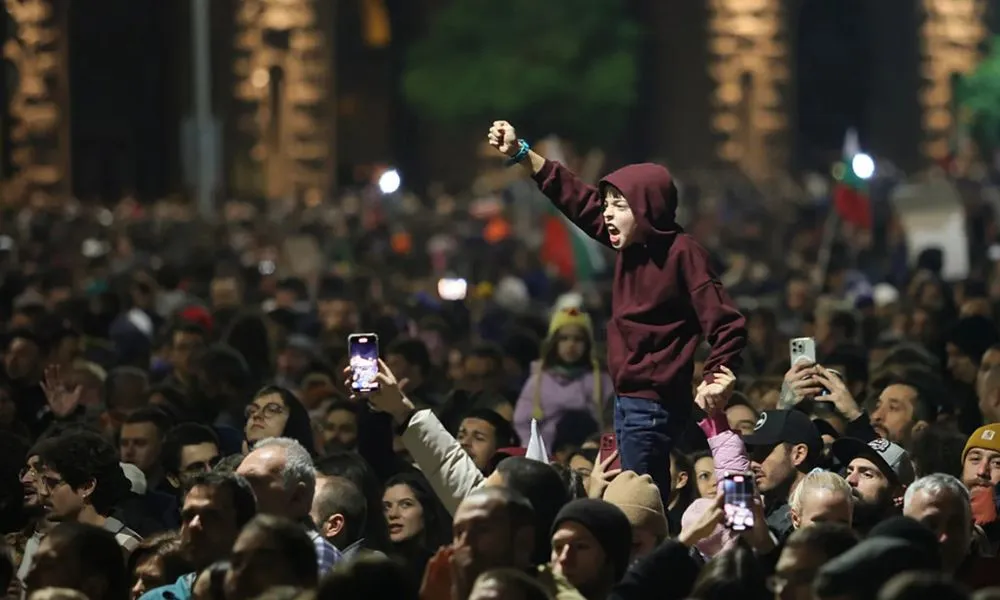
Bulgaria has witnessed its largest anti-government protests in over a decade, led largely by Generation Z and driven by anger over corruption. Tens of thousands of demonstrators took to the streets in Sofia and at least a dozen other cities, including Plovdiv, Varna and Burgas.
According to Bulgarian media, between 50,000 and 100,000 people gathered in the capital during the largest rally. While the main demonstration was largely peaceful, smaller groups later clashed with police, using firecrackers, bottles and stones, setting bins alight and damaging police vehicles. Authorities responded with tear gas and arrests.
The protests also forced the centre-right government to withdraw its controversial draft budget for 2026 earlier this month, a move announced just hours after a mass rally in Sofia.
Economic concerns and disinformation fears
While political instability is not expected to derail euro adoption, many Bulgarians worry about price increases during the transition period. With the average monthly salary standing at around £1,100, concerns are particularly strong among pensioners and rural communities. The EU has said there is no evidence that the changeover will trigger a surge in inflation.
At the same time, research reports have pointed to networks of Russian influence on social media, allegedly seeking to undermine support for the euro through disinformation. Dombrovskis has said it is “no secret” that Russia is waging hybrid warfare against Europe, including the spread of false narratives.
Transition period ahead
Until January 31, transactions in Bulgaria will be possible in both the lev and the euro. After that date, only the European currency will be accepted. While some citizens describe the transition as stressful, many remain optimistic that the euro will bring long-term economic benefits and greater stability for future generations.
Source: The Guardian, Dnevnik