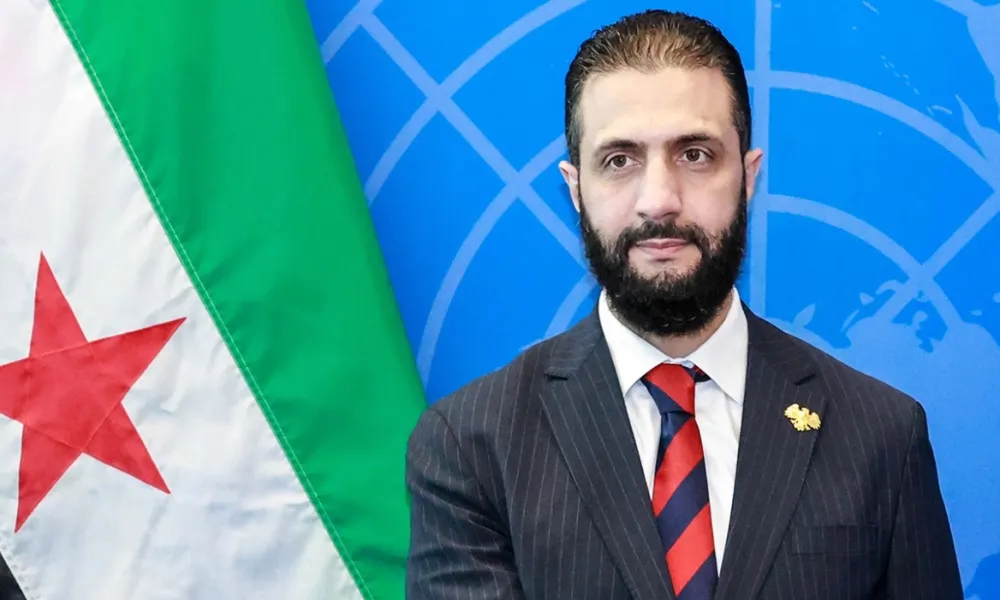

A highly contested process to form a transitional parliament began in Syria on Sunday, with critics decrying the exercise as fundamentally undemocratic. One-third of the 210-member body will be directly appointed by the country’s interim leader, Ahmad al-Saraa, raising further concerns over transparency and representation.
According to the organising committee, over 1,500 candidates are vying for seats, with just 14% of them being women. The transitional assembly will serve a renewable term of 30 months and is expected to hold legislative authority until a permanent constitution is adopted and fresh elections can be held.
Meddling
Saraa is set to hand-pick 70 representatives himself. The remaining two-thirds will be selected by local committees, which, notably, were themselves appointed by the election commission, an entity also formed under Saraa’s direction.
Two key regions are excluded from the process entirely. The Druze-majority province of Sweida, which witnessed deadly violence in July, and the Kurdish-controlled northeast, both remain outside Damascus’ control. Their 32 allocated seats will remain vacant for now.
The previous legislative body was dissolved after the interim government took power. Under a provisional constitution introduced in March, the incoming parliament is expected to assume full legislative responsibilities until a more permanent governance structure is established.
Saraa has defended the controversial approach, arguing that holding direct elections is currently unfeasible due to the displacement of millions of Syrians, many of whom lack documentation after years of civil war.
Restrictions and criticisms
Acknowledging criticism of the process in a speech on Sunday, Saraa admitted that the vote was “incomplete,” but described it as a "modest process appropriate to the current situation and conditions in Syria.”
Preliminary results are expected shortly after the conclusion of voting, with the final list of parliamentarians set to be announced on Monday.
Candidates are subject to restrictions, including a ban on individuals seen as supporters of the previous regime, or those advocating for secession or division of the country.
Among the more notable candidates is Syrian-American Henry Hamra, who would be the first Jewish parliamentary hopeful in Syria since the 1940s.