-
Toumazos Tselepis said there was a UN document abolishing guarantees and intervention rights, Turkey was ready to negotiate troop withdrawal, and the Greek Cypriot side rejected it, leading to collapse.
-
Andreas Mavroyiannis said everyone bears responsibility, the talks ended prematurely, and the discussion of two states was a serious mistake.
- The Stylianides–Anastasiades dispute reignited debate and mutual accusations about who was responsible for the collapse at Crans-Montana.
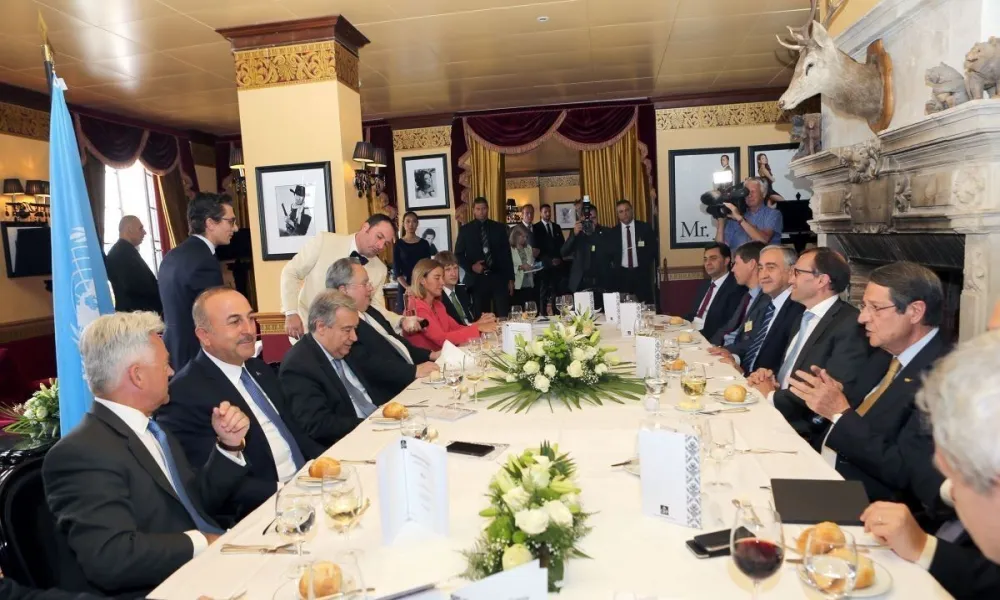
The long-running dispute over what truly happened at Crans-Montana in 2017, the last major attempt to solve the Cyprus problem, resurfaced this week in Cyprus’s media and political debate.
Toumazos Tselepis, international law expert and long-standing member of the Greek Cypriot negotiating team, spoke on Politis Radio 107.6’s Morning Review with Katerina Eiadi, offering his account of events and directly contradicting prevailing narratives about why the talks collapsed.
Meanwhile, Andreas Mavroyiannis, also a veteran diplomat and negotiator, appeared on Sigma TV’s Frontshow to clarify his recent comments and to respond to accusations from Christos Stylianides that he was being politically and morally targeted by a system “guided by former President Nicos Anastasiades.”
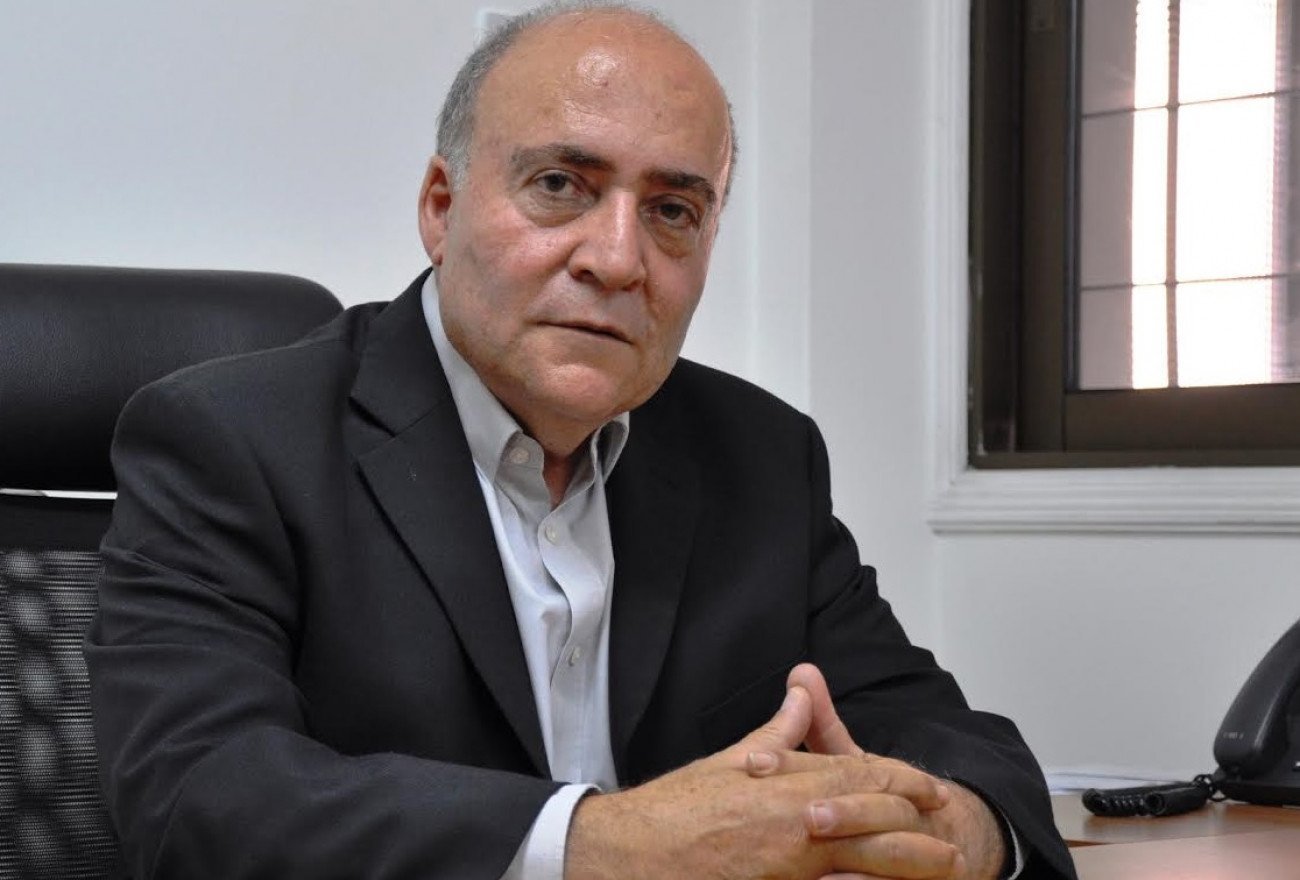
Toumazos Tselepis on Politis' Morning Review: “We rejected a
UN document abolishing guarantees.”
Tselepis revealed that, during the final phase of the Crans-Montana Conference, the United Nations produced a confidential paper that envisioned the abolition of the system of guarantees and the withdrawal of Turkish occupation troops, yet the Greek Cypriot side rejected it.
“According to the UN notes,” Tselepis said, “the Secretary-General, António Guterres, personally informed President Anastasiades just hours before the final dinner that Turkey was prepared, through a confidential document handed to him, to discuss the termination of the Treaty of Guarantee from day one, the withdrawal of occupation forces within a specific timeframe, and the abolition of intervention rights.”
Anastasiades, he continued, replied that he could not accept a “non-complete” solution and insisted on the full withdrawal of all troops from day one, including both the Greek (ELDYK) and Turkish (TURDYK) contingents.
Tselepis explained that the informal UN document on implementation mechanisms, sent electronically to the Greek Cypriot delegation, effectively eliminated the guarantee and intervention system. The technical team recommended accepting it, but the political leadership rejected it, citing “contradictory and conflicting justifications.”
“When Turkey realized the document was rejected,” Tselepis noted, “it made its spectacular U-turn, and that’s when the conference effectively collapsed.”
He added that the UN’s own notes refute later political narratives, showing that both sides shared responsibility, which is why Guterres’s post-conference report did not assign blame solely to one party.
Tselepis criticized those who “distort the facts to either demonize or absolve whoever they choose,” insisting that “no one has the right to mislead their people.”
He further stressed that any future talks should resume from where they left off in 2017, on the basis of the Guterres Framework.
On Federica Mogherini’s role (then EU High Representative), he reminded listeners that “she was in the room during the final dinner and knows exactly what happened, meaning the EU is fully aware of the truth.”
Finally, Tselepis observed that Turkey knows a two-state solution is unachievable, and praised Turkish Cypriot politician Tufan Erhürman for his “honest support” of a bizonal, bicommunal federation, instead of the “two-states” line promoted by Ankara.
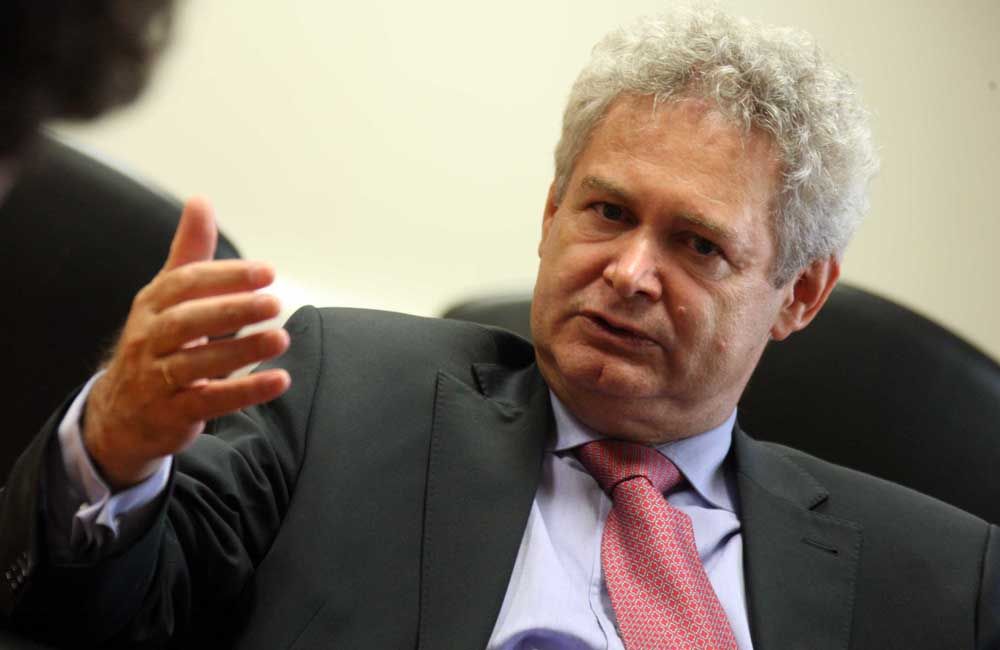
Andreas Mavroyiannis on Sigma TV: “Our biggest mistake
was ending the talks.”
Responding to Christos Stylianides’ complaint of being politically “exterminated” by the Anastasiades system, Andreas Mavroyiannis appeared on Sigma’s Frontshow to clarify statements he made about Crans-Montana.
He stated that he never accused Stylianides of reporting to the European Commission that Anastasiades was responsible for the failure:
“I never said Mr. Stylianides conveyed anything to the College of Commissioners. What I knew was that, after the College meeting, both he and Mr. Avramopoulos indicated to Ms. Mogherini that responsibility lay with President Anastasiades. I told him this at the time, and he did not deny it.”
He explained that this discussion resurfaced much later, “this year, in a kind of post-mortem analysis,” and that he had not intended to reopen the matter.
“I’m sorry for the fuss that was created and for any discomfort caused. It was never my intention to undermine Mr. Stylianides,” Mavroyiannis said, offering an apology.
On the substance of Crans-Montana, he accepted that everyone involved, including himself, bore some responsibility for the breakdown:
“The biggest mistake was declaring a deadlock. We could have said we needed more time and reconvened a few days later. The negotiations should not have been interrupted there.”
He also criticized the discussion of a two-state solution that reportedly took place between Anastasiades and Turkish Foreign Minister Çavuşoğlu on the eve of the final day:
“That conversation was a serious mistake,” he said.
Looking ahead, Mavroyiannis acknowledged that conditions today are more difficult but not hopeless. He noted that the new Turkish Cypriot leader has shown openness to a federal solution, and that Turkey itself is making tactical adjustments.
However, time is pressing since the term of UN Secretary-General Guterres ends in 2026.
“If we resume from where we left off, based on the Guterres Framework and the EU acquis, a bizonal, bicommunal federation remains both achievable and viable,” he said.
He concluded on a realistic note:
“We are not talking about a perfect solution, there is no such thing. We are talking about a solution that allows us to live peacefully and prosper together in a reunited, European Cyprus.”