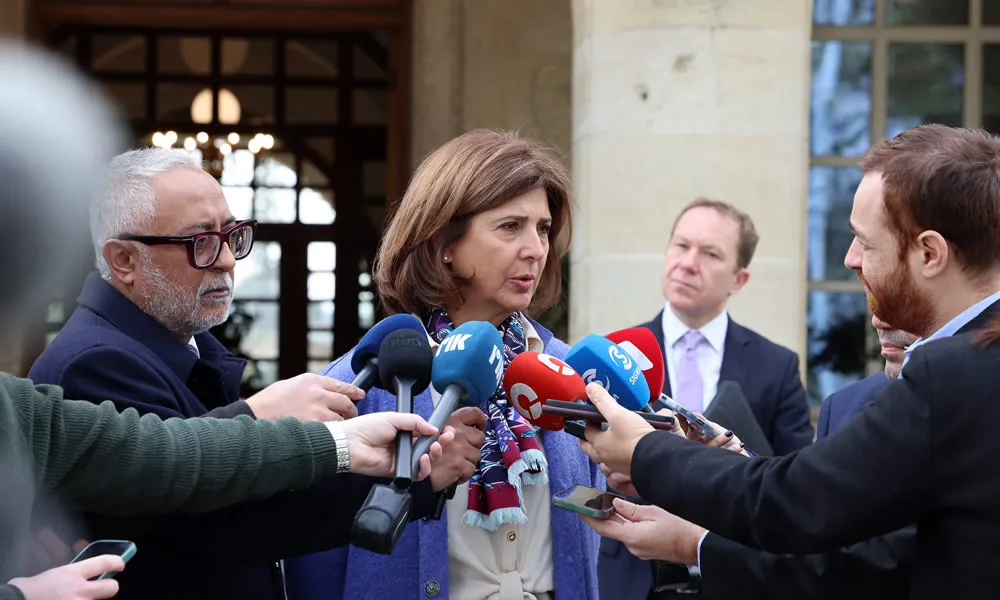
The UN Secretary-General’s Personal Envoy on Cyprus María Ángela Holguín Cuéllar said the minimum requirement to move forward is “a shared commitment to engage in good faith”. A new ‘5+1’ cannot be a substitute for the political will of the leaders, she warned.
In an interview with Politis to the point, Holguín said the biggest obstacles to building trust are not only political but also psychological, shaped by decades of failed efforts and growing scepticism about whether change is possible.
She stressed that trust cannot be rebuilt through statements alone, but through “sustained and daily actions” that demonstrate reliability and mutual benefit.
On confidence-building measures (CBMs), their value lies in showing that cooperation is possible. But their pace and direction depend on “the leaders’ readiness to invest in the process and on their ability to find compromises”.
Holguín highlighted the importance of inclusivity and engaging with society. Voices from outside formal political structures can bring practical ideas to the process. Inclusivity also brings greater resilience, ownership and legitimacy to a process, while preparing societies for compromise, said the envoy.
Drawing on her experience from Colombia’s peace process, Holguín said beyond a negotiated agreement, leaders also need to build public understanding and support for a solution. People need to understand that their daily lives will not be disrupted by an agreement.
While Cypriots may not control regional dynamics they can control “their dialogue, their choices, and their future,” she said. Progress is possible when there is “clarity of purpose and a willingness to engage constructively”.
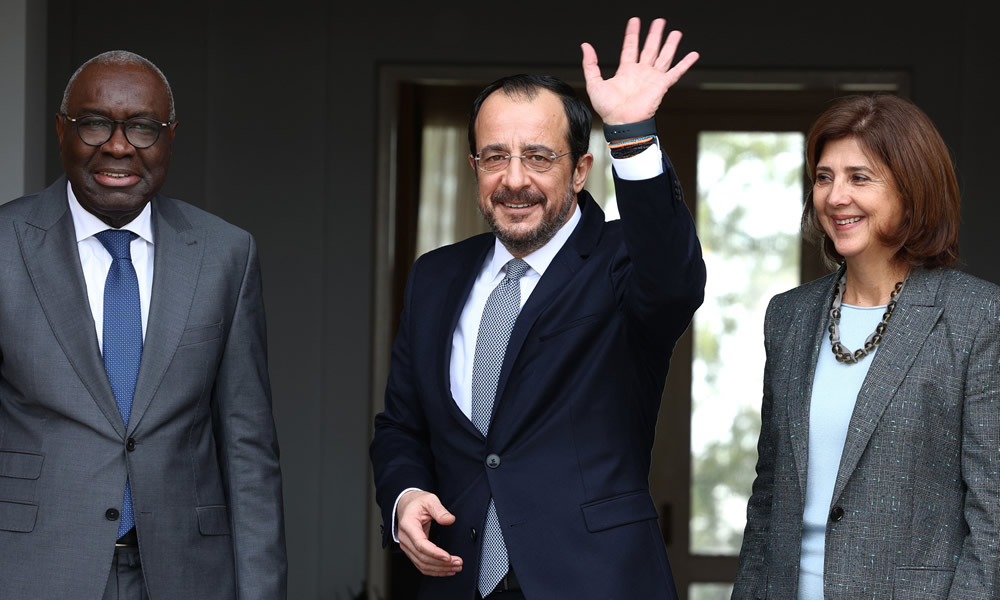
Interview with UN Personal Envoy on Cyprus María Ángela Holguín Cuéllar
Having spent time on Cyprus over the last two years, what would you say are the biggest obstacles to building trust on the island?
First, it was not two years: it was 6 months (January-June 2024) and from May 2025 to date.
Trust is built slowly and can be eroded quickly. What I have observed is that the obstacles are not only political, but also psychological. Many decades without a comprehensive settlement have understandably created fatigue, caution and, in some cases, scepticism about whether progress is possible. Narratives of the past still weigh heavily on the present.
At the same time, I have also seen a strong desire among many Cypriots to improve daily life and to create a more predictable future, including in the wake of growing uncertainty in the region and of the international system. The challenge is to translate that shared interest into practical cooperation. Small, consistent steps that demonstrate reliability and mutual benefit can gradually rebuild confidence. Trust is not created by declarations alone — it is built through sustained and daily actions.
The leaders have yet to take significant strides towards implementing CBMs while their views on methodology are not yet in full alignment. What are the minimum steps needed to unlock the door to a new ‘5+1’?
The minimum step is a shared commitment to engagement in good faith. A new “5+1” meeting cannot substitute for political will by the leaders; it can only support it. Even where positions differ, it is important that the leaders continue to communicate directly and explore areas where convergence is possible. The leaders actually agreed to do just this by deciding to meet again directly in the next weeks. This is important and positive.
Trust-building measures are valuable because they produce tangible benefits and show that cooperation is feasible. Progress does not require agreement on everything at once. It requires identifying practical issues where cooperation can move forward and building momentum from there. The United Nations stands ready to facilitate, but the pace and direction ultimately depend on the leaders’ readiness to invest in the process and on their ability to find compromises.
Academics and civil society actors often highlight the lack of inclusivity in the peace process. Having met with a cross-section of people in both communities, do you believe that peace efforts would be strengthened by broadening the scope of participation?
Inclusive processes are generally more resilient. My meetings with civil society, youth, business leaders and community representatives have shown that there is significant energy and creativity outside formal political structures. These voices can enrich the process by bringing practical ideas and by keeping attention focused on the human dimension of peace.
Ultimately, a settlement must be owned by the people it affects. Broad participation helps build understanding, prepares societies for compromise, and strengthens legitimacy. While negotiations remain the responsibility of the leaders, engagement with society is an important complement to official diplomacy.
How do regional and global geopolitical developments impact your work? Is the effort to bring all the pieces in line for the resumption of talks affected by external factors?
Cyprus does not exist in isolation, and regional dynamics inevitably shape perceptions and priorities. Global uncertainty can either distract from peace efforts or underline the importance of stability and cooperation. Much depends on how these developments are interpreted by the parties.
My role is to keep the focus on what Cypriots can control: their dialogue, their choices, and their future. External factors may influence the environment, but they do not determine the outcome. Progress remains possible when there is clarity of purpose and a willingness to engage constructively.
What lessons did you take from the Colombian peace process and are any relevant to Cyprus?
Every peace process is unique, but some principles are universal. One lesson from Colombia is the importance of persistence. Negotiations often face setbacks, yet continuity of dialogue is essential. The capacity to truly listen to each other and to understand the aspirations, fears, and positions of the other side at all levels is key.
Another lesson is the value of preparing societies for peace — not only negotiating agreements, but building public understanding and support for a solution. In this context, it was important that the people understood that their daily lives would not be disrupted by the agreement. Unfortunately, this fear was not adequately addressed in the Colombian peace process and that represented a negative aspect of the process. I think that this also is highly relevant in the case of Cyprus.
Finally, patience is also critical. Deep conflicts cannot be resolved overnight. What matters is maintaining channels of communication and nurturing the hope that a negotiated future is preferable to a divided present. These lessons are not prescriptions for Cyprus, but they underline that peace is a process that requires endurance, inclusion and sustained leadership.