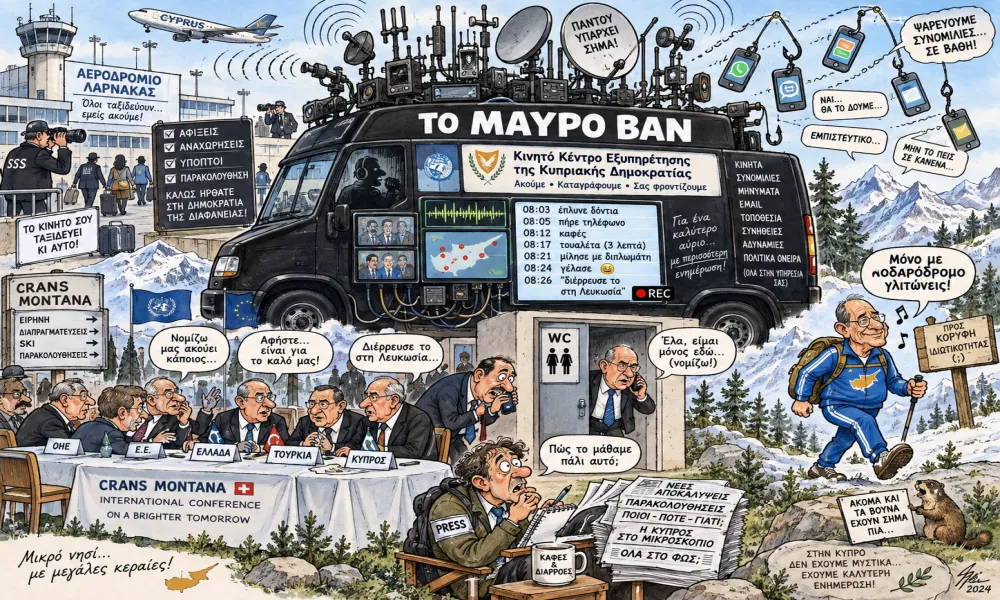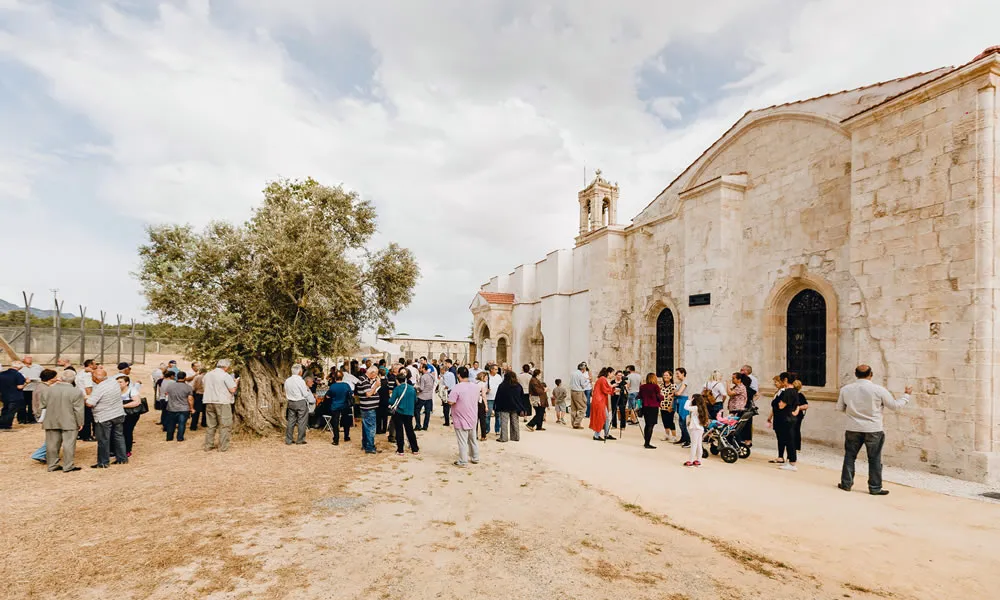

For 18 years now, Greek Cypriots and Turkish Cypriots have been working together in relative obscurity on some of the island’s most practical and sensitive problems. From fighting disease-carrying mosquitoes to restoring churches and mosques, coordinating police work, and keeping the electricity grid running, some of the bicommunal Technical Committees have quietly delivered results that most Cypriots take for granted.
A report by the Interdisciplinary Centre for Law, Alternative and Innovative Methods (ICLAIM) and Human Rights Platform delivered a comprehensive assessment of how these Technical Committees operate, as part of a three-year EU-funded project, titled ‘InPeace: Inclusive Peacebuilding’.
Project coordinator Dr Nasia Hadjigeorgiou presented the findings earlier this week, noting that very little is publicly known about the Committees, their activities or who their members are.
The research included interviews with current and former committee members, representatives from international organisations and civil society.
From nine to 13
In 2008, the leaders of the two communities, Demetris Christofias and Mehmet Ali Talat, established bicommunal Technical Committees to “address issues that affect the day-to-day life of people, through encouraging and facilitating greater interaction and understanding between the two communities”.
They started with nine committees on: Broadcasting and Telecommunications; Cultural Heritage; Crime and Criminal Matters; Economic and Commercial Matters; Environment; Health; Crisis Management; Crossings; and Humanitarian Affairs.
In 2015, Nicos Anastasiades and Mustafa Akinci agreed there was a need for cooperation in three more thematic areas: Culture; Gender Equality and Education. Last year, Anastasiades and Ersin Tatar set up a 13th Committee on Youth.
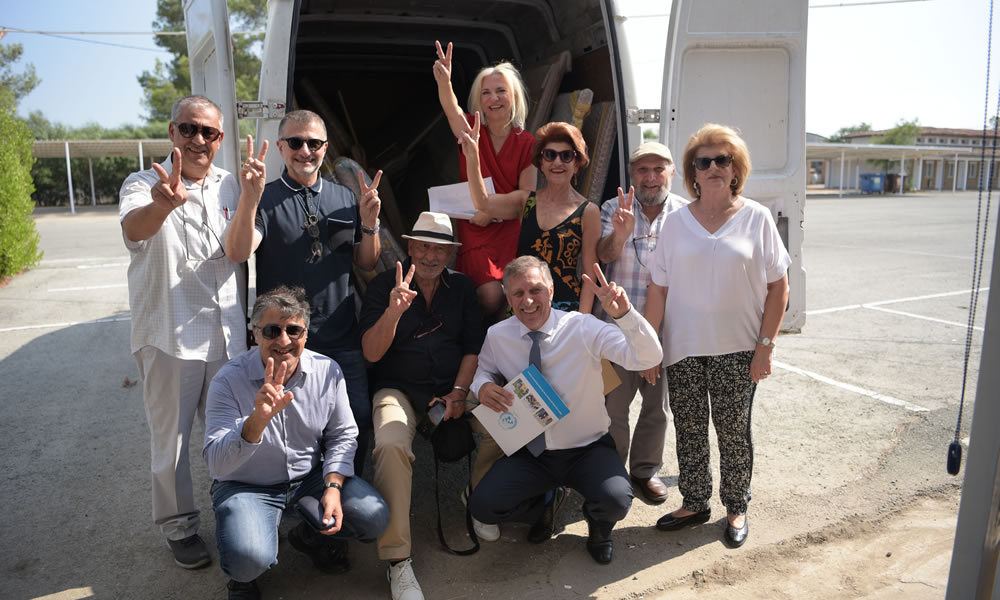
Lack of awareness hampers trust building
Hadjigeorgiou notes the general mandate of the Committees was first, to address everyday practical issues, and second, to build trust between the two communities.
“Some Committees did a very good job on the first part of the mandate, but almost all, except the Technical Committee on Cultural Heritage, did a pretty bad job on the second part,” she said.
The coordinator questioned the need for secrecy on the Committees, noting there is a clear legal basis for engagement without recognition, which allows for cooperation between de facto and de jure entities. Even international courts have highlighted the need for the two communities to cooperate without this meaning recognition.
“There is a mechanism for this, but it’s easier to say we don’t cooperate,” said Hadjigeorgiou.
The format
According to the report, each leader appoints a co-chair and roughly an equal number of members from each community who serve as volunteers. Some Committees meet regularly, others, rarely.
The co-chairs and members – numbering around 200 in total – operate in their personal capacity and, in almost all cases, are not remunerated. Some members hail from civil society, others are public servants – active or retired. They operate without legal status, formal budgets or rules of procedure. They examine problems, propose solutions, and in some cases implement projects after receiving approval from both sides.
The international community is involved through the UN Good Offices, UNDP, and the EU which provides most of the funding. In 2019, the EU offered one million euros to the Technical Committees, of which only 64% had been used by 2022, suggesting lack of funding is not the main cause of the Committees’ mixed results of the Committees.
One interviewee told researchers: “A budget and an office would have helped, but the most important thing we need is political support.”
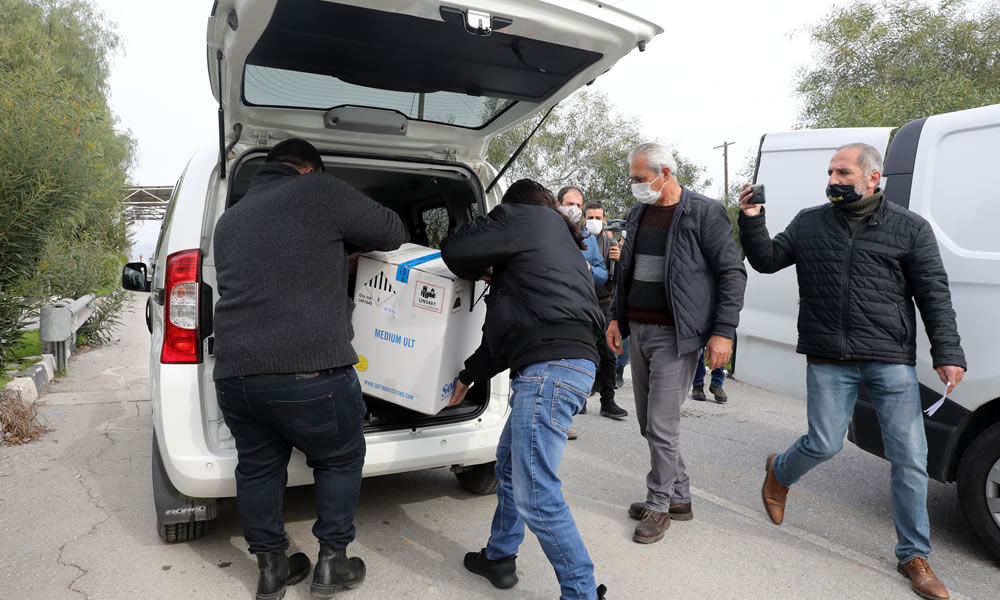
Success stories
The report documents a series of projects that have had island-wide impact, often without public awareness of their bicommunal origins.
One of the most successful examples is the Joint Contact Room (JCR), set up as a subcommittee under the Technical Committee on Crime and Criminal Matters. Between 2009 and 2018, Greek Cypriot and Turkish Cypriot law enforcement agencies exchanged information on more than 1,000 instances, including missing persons, stolen property and the crossings of persons of interest. Officers meet daily, originally in the Nicosia buffer zone, though since 2024, also in Pyla where a second JCR was set up.
“Roughly 38% of requests for cooperation come from Turkish Cypriots and 62% from Greek Cypriots, thus suggesting that both communities are keen to make use of this cooperative mechanism,” said the report.
The mechanism has become an essential tool for day-to-day policing, even if it remains limited in serious crimes such as human trafficking.
Equally significant is the Mosquito Project, run by the Technical Committee on Health. After scientists identified invasive mosquito species capable of spreading dengue and Zika, bicommunal teams mapped breeding sites across the island, built a shared database and launched joint public awareness campaigns.
The report also highlights the interconnection of the electricity grids, coordinated through the Technical Committee on Economic and Commercial Matters. Emergency electricity transfers in both directions have prevented blackouts during crises. Similar cooperation helped avert an environmental disaster during an oil spill in the Karpasia peninsula in 2013.
The Technical Committee on Cultural Heritage stands out as the most visible success story. Since 2008, it has overseen the restoration of 80 sites of cultural, religious or archaeological importance, at a cost of roughly €25 million, earning international awards for using heritage as a tool of reconciliation. The restorations have helped bring communities together while preserving sites that might otherwise have been lost.
In Education, the ‘Imagine’ programme marked a historic breakthrough by bringing Greek Cypriot and Turkish Cypriot pupils together for the first time during school hours for joint activities. To get a sense of its value, before coming together, ‘Imagine’ facilitators would receive questions from pupils about the ‘other’ community, such as: Will they bring guns? Are they the same colour as us? How many arms do they have? What kind of food do they eat?
Between 2017 and 2022, more than 6,000 students and 700 teachers participated. The programme ended abruptly in 2022 following political objections from the Turkish Cypriot leadership, a decision the report describes as a major setback for trust-building.
Cultural exchange has also included the return of 219 paintings – restored by Turkish Cypriot experts – to their Greek Cypriot owners, the delivery of audiovisual archives of Turkish Cypriots from 1960-1963 by CyBC, joint theatre productions, and bicommunal performances that drew thousands of spectators, demonstrating the potential reach of cooperation when political conditions allow. The report notes the Culture Committee has not been able to emulate its early successes, despite their popularity, “due to diminishing political support for such initiatives, a major handicap in the work of the Technical Committees”.
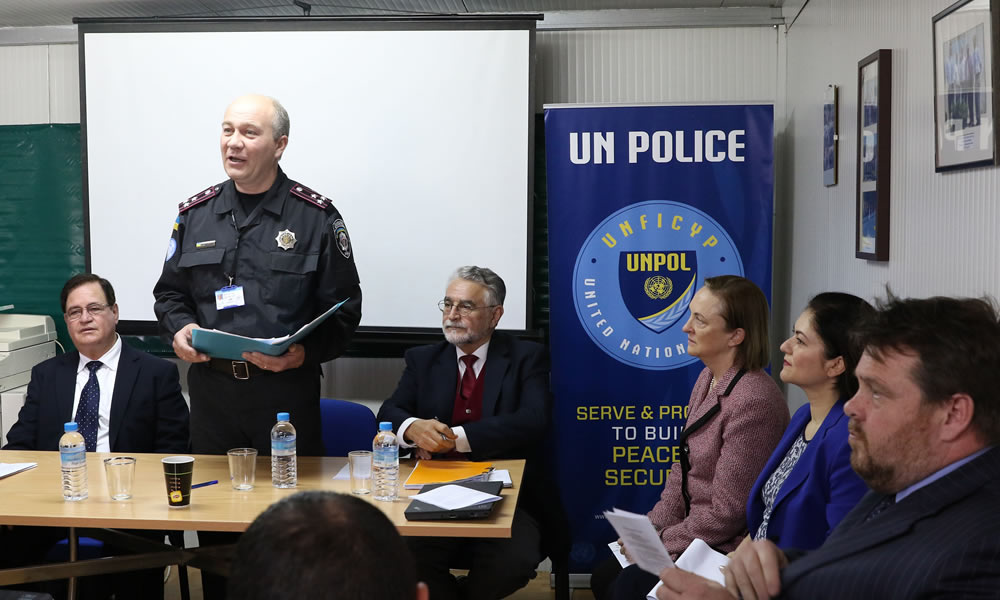
Political interference and structural weaknesses
While documenting these achievements, the report is blunt about the Committees’ vulnerabilities.
The most serious challenge identified is political interference. Committee members and co-chairs can be removed or replaced at the discretion of leaders, and projects can be delayed or blocked entirely. Following Ersin Tatar’s election victory in 2020, several Turkish Cypriot members were removed or resigned, while meetings were cancelled and projects stalled. The problem goes both ways. Pre-2020, the Greek Cypriot political reaction to holding theatrical productions in the north put an end to those, while many Turkish Cypriot proposals were rejected because of Greek Cypriot recognition phobia.
A second problem is lack of transparency and access to information. Most committees have no websites, no public reporting, and no clear explanation of their mandate. As a result, even civil society actors remain largely unaware of their work, and the public often benefits from outcomes without knowing they resulted from cooperation.
Third, the report highlights uneven international ownership. No single body is responsible for ensuring continuity or resolving disputes over mandate. Different international actors interpret the role of the Committees differently, sometimes seeing them as purely technical, sometimes as confidence-building instruments linked to negotiations. But who fights in their corner when needed, the Good Offices, for example, did not consider it part of their mandate to intervene when ‘Imagine’ was suspended.
Recommendations: protect, communicate, coordinate
The report’s core recommendation is clear: if the Technical Committees are to remain effective, they must be protected from political micromanagement and supported to address the island’s key challenges that cannot be addressed without collaboration.
“The role of the Technical Committees is far from symbolic. They matter in very practical ways,” said the report.
Among its proposals:
- Establish clearer, transparent rules of operation agreed by both sides.
- Guarantee continuity of membership, regardless of political changes.
- Improve public communication and visibility of projects.
- Strengthen coordination with the UN and EU to clarify mandates and responsibilities.
- Build bridges to work with experts from civil society, enhancing legitimacy and public relevance.
“The Technical Committees have played an important role in normalising bicommunal work and sustaining hope, even during times when the overall political climate has been less than positive. Their continued functioning has shown that, despite political deadlocks, cooperation on practical issues between Greek and Turkish Cypriots is not only possible but essential,” the report concludes.