
In an interview with AFP, UN Secretary-General Antonio Guterres spoke about the high-level gathering next week at the UN General Assembly, where up to 10 countries, led by France, are expected to recognise a Palestinian state.
The move has sparked strong reactions from Israel and its main ally, the USA, which only recently used its veto in the UN Security Council to block a resolution calling for a ceasefire in Gaza. The US also appeared to give diplomatic cover to Israel – through the visit of Secretary of State Marco Rubio – after it tried to blow up Hamas negotiators gathering in the Qatari capital Doha to assess a US-sponsored ceasefire proposal on Gaza.
Israel has gone so far as to threaten annexation of the West Bank in response to mainly European states, along with potentially Australia and Canada, recognising Palestine at the UNGA.
For its part, Washington decided to revoke Palestinian leader Mahmoud Abbas’ US visa, preventing him from attending the global diplomatic gathering in New York. On Friday, UNGA members voted to allow Abbas to address the Assembly via video.
In the interview with AFP, Guterres said, "We should not feel intimidated by the risk of retaliation."
"With or without doing what we are doing, these actions would go on and at least there is a chance to mobilize international community to put pressure for them not to happen," he said.
‘Horrendous suffering, death and destruction’
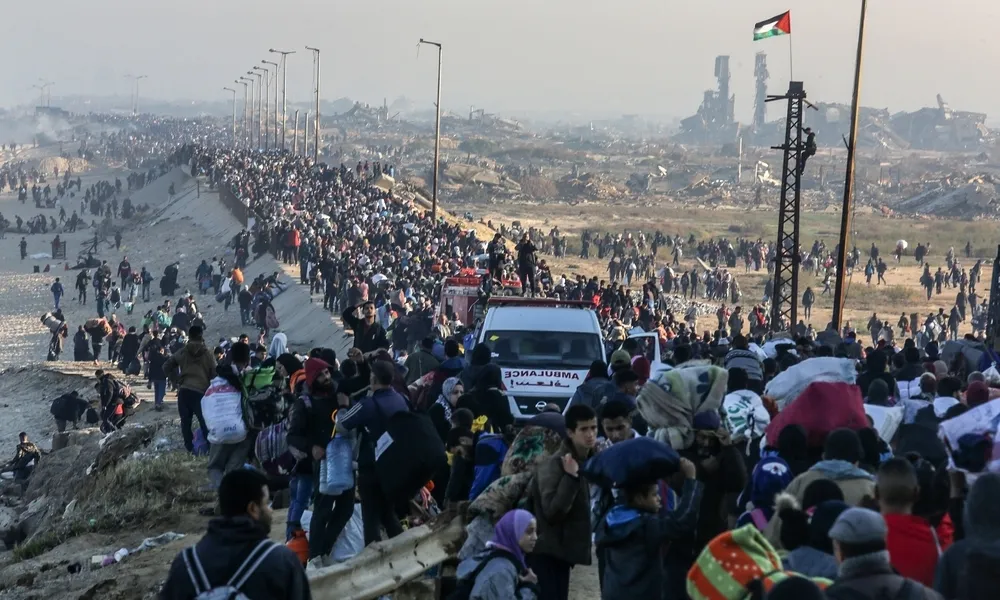
"What we are witnessing in Gaza is horrendous," Guterres said as Israel threatened "unprecedented force" in its ongoing assault on Gaza City.
"It is the worst level of death and destruction that I've seen my time as Secretary-General, probably my life and the suffering of the Palestinian people cannot be described – famine, total lack of effective health care, people living without adequate shelters in huge concentration areas," he said.
Efforts to limit global warming collapsing
On efforts to combat climate change by capping global warming at 1.5 Celsius above pre-industrial levels, Guterres warned, "We are on the verge of this objective collapsing."
"We absolutely need countries to come... with climate action plans that are fully aligned with 1.5 degrees (Celsius), that cover the whole of their economies and the whole of their greenhouse gas emissions," he said.
"It is essential that we have a drastic reduction of emissions in the next few years if you want to keep the 1.5 degrees Celsius limit alive."
The climate is already on average 1.4C warmer today, according to current estimates from the European observatory Copernicus, reports AFP.