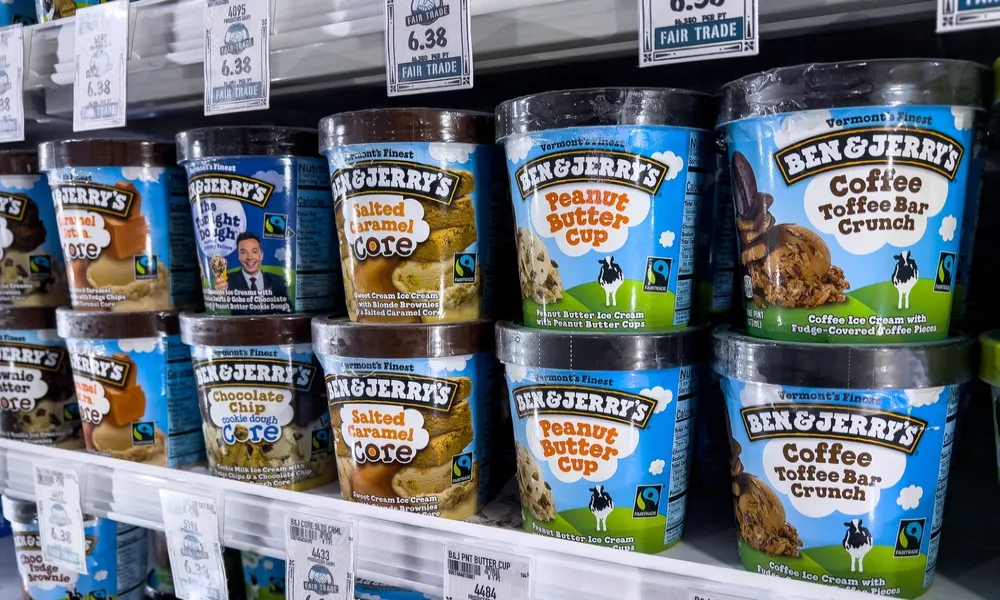

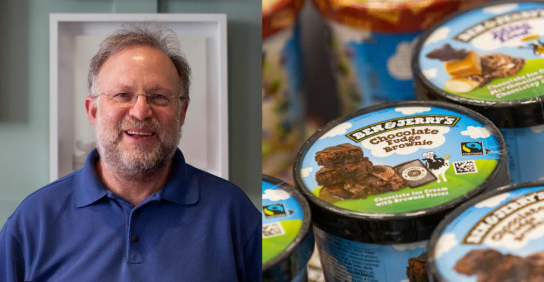
Ben & Jerry’s co-founder Jerry Greenfield has resigned from the company he and Ben Cohen started in 1978, saying the brand no longer has the independence to speak out on social justice that was promised when Unilever acquired it in 2000. In an open letter addressed “to the Ben & Jerry’s community,” Greenfield wrote that, after 47 years, he could not “in good conscience” remain with a company that has been “silenced [and] sidelined” for fear of upsetting those in power.
Why he stepped down
Greenfield’s letter frames the move as a protest over values rather than people. He praises employees as the “soul” of the company but argues that the unique merger agreement -which gave Ben & Jerry’s an independent board to safeguard its social mission- has effectively been hollowed out. That independence, he says, was the basis of selling to Unilever; he now believes it is “gone.”
He ties his decision to the broader political climate, pointing to mounting threats to civil and voting rights, immigrants, women and LGBTQ communities, and contends that the company has been prevented from responding as it once did. He writes that the real test of values is when “you have something to lose.”
Protests and flashpoints
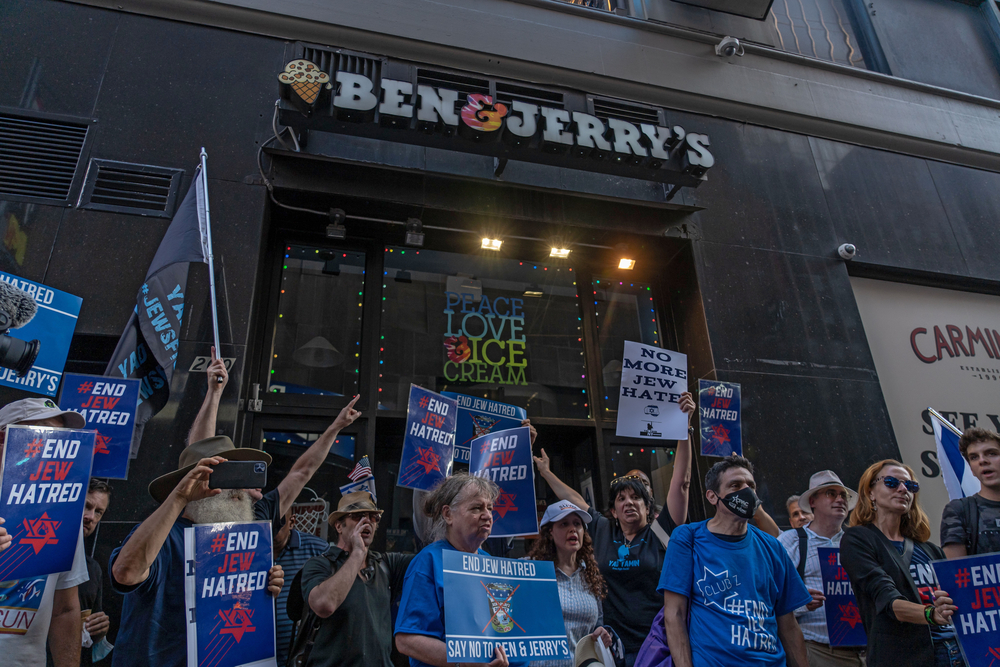
The brand has long been a magnet for street activism: in 2018, Migrant Justice organised coordinated pickets outside Ben & Jerry’s scoop shops in 16 U.S. cities over dairy-worker conditions. More recently, demonstrations have clustered around corporate venues, last week Ben Cohen protested outside the London site of the Magnum Ice Cream investor day, urging Unilever to “free Ben & Jerry’s,” while Ben & Jerry’s employees staged a walkout at HQ in March. And in Washington on May 14-15, 2025, Cohen was removed (and cited) after standing to shout during a Senate hearing on Gaza, an episode widely reported at the time.
The long-running rift with Unilever
Tensions between the Vermont brand and its parent have simmered for years. In 2021, Ben & Jerry’s said it would stop sales in Israeli-occupied West Bank settlements on ethical grounds, a stance that sparked a corporate and legal fight. In 2022, Unilever moved to sell the Israeli business to a local licensee; Ben & Jerry’s board then sued, arguing the parent was overriding the brand’s values-based governance. Reporting since has detailed further disputes over activism and leadership.
In recent months, the co-founders have also pushed for a way out: they’ve floated buying the brand back, valuing it in the $1.5-$2.5 billion range, an approach Unilever has rejected, according to Reuters.
What Unilever/Magnum says
Unilever, which is spinning off its ice-cream portfolio (including Ben & Jerry’s) into a separate Magnum Ice Cream Company, has disputed Greenfield’s characterisation but publicly thanked him for his contribution. A spokesperson has emphasised efforts to engage constructively with the co-founders and says the company remains committed to Ben & Jerry’s social mission, as AP News reported.
What the letter signals
Greenfield’s departure escalates the standoff. The letter’s core claim, that the governance safeguards protecting Ben & Jerry’s voice have been eroded, goes to the heart of the 2000 deal that made the brand a case study in mission-driven business under a corporate owner. Whether the pending spin-off changes that calculus -or reopens talks on ownership- now becomes a key question.