
Behind the glass displays of school canteens in Cyprus lies one of the country’s most understated yet critical public health concerns: children’s daily nutrition. Although there is clear legislation outlining what may be sold in schools, in practice, numerous canteens operate outside the regulatory framework. Crêpes, biscuits, ice creams, sugary drinks, and juices marketed as “healthy” alternatives form a daily offering that contradicts the core objectives of preventing childhood obesity.
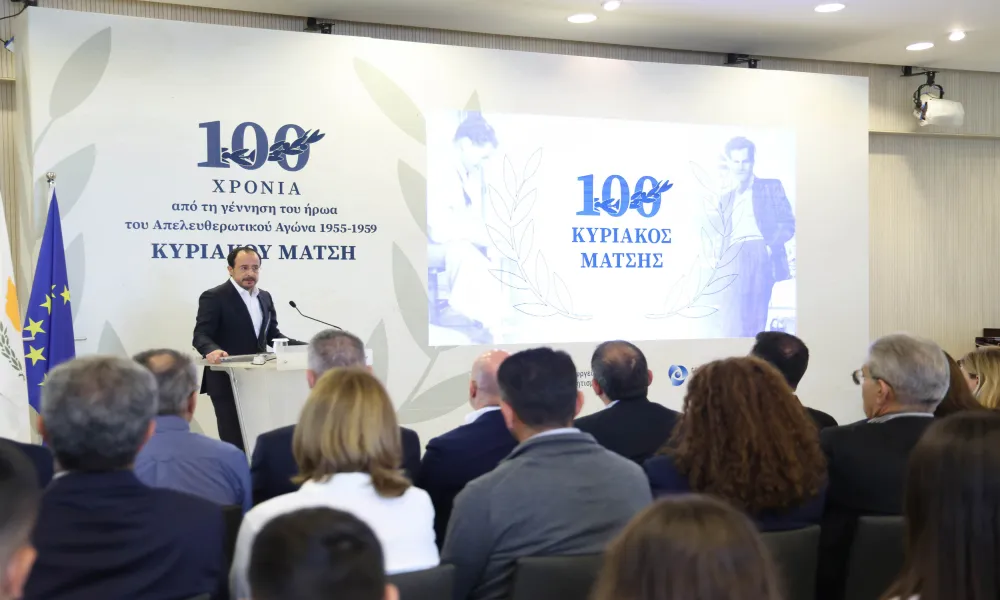
The urgent need for stricter and unannounced inspections was strongly emphasised during the 11th Pan-Cyprian Public Health Forum, held this week. Among the participating experts were Dr Constantinos Makris (Cyprus University of Technology), Dr Michalis Anastasiades (Cyprus Paediatric Society), Dr Charalambos Hadjigeorgiou (Institute of Child Health), and Dr Irshad Shaikh (World Health Organization). They stressed the importance of targeted preventive measures within the school environment, combining healthy eating, physical activity, and nutritional education.
According to the findings presented, violations in school canteens are not isolated incidents but represent a recurring pattern requiring immediate and robust response. As noted by several speakers, “Prevention – the cornerstone of public health – must begin in schools, not in hospitals.”
Right under authorities’ noses
Despite regulations, prohibited products continue to be sold in many school canteens across Cyprus. While the Ministry of Education has issued an official list of approved food items, shelves are still stocked with products high in sugar, salt, and fat - from processed snacks and fizzy drinks to crêpes and biscuits.
In several schools, such products are sold alongside healthy options like fruit or wholemeal sandwiches, creating the illusion of free choice, when in reality, unhealthy consumption patterns are being reinforced. Health experts warn that these practices are far from harmless:
“When children learn to choose sweets, fizzy drinks, and pre-packaged snacks at school - their primary space of socialisation - it sets nutritional habits that are difficult to reverse later in life,” experts at the Forum noted.
Ministry of Education: Violations do exist
Speaking to Politis, Education Minister Athena Michaelidou acknowledged that the Ministry is aware of ongoing issues in school canteens. Emphasising the Ministry’s commitment to promoting healthy eating and reducing childhood obesity, she explained that inspections are being carried out to monitor what is sold on school grounds.
“We’re not only checking prices; the Ministry’s committee, in collaboration with the Cyprus Dietitians’ Association, has compiled a list of approved products to prevent the sale of unhealthy goods in schools,” she said.
Nonetheless, she admitted that some canteen operators deviate from the approved list and sell unhealthy food or beverages.
“In such cases, we urge teachers, parents, and even students to report what they observe,” the Minister said, conceding that current inspection efforts are inadequate and announcing that more frequent unannounced inspections have already been ordered.
She added that the Ministry promotes healthy lifestyle education across all school levels, from pre-primary to lower secondary, within the Health Education curriculum.
‘Champions’ in childhood obesity
Cyprus continues to report some of the highest rates of childhood obesity in Europe. Data presented at the Forum by the Cyprus International Institute for Environmental and Public Health and the Cyprus Children’s Health and Environment Observatory revealed significant disparities between urban and rural areas, as well as across different income levels. These inequalities are also reflected in access to nutritious food.
In some schools, children have easy access to high-calorie, low-nutrient meals, while in others, the only available options are cheap, processed foods.
Obesity rates remain particularly high among children aged 6–9. According to OECD data (2018–2020), 62% of children in that age group in Cyprus were overweight — the highest percentage in the EU.
A 2025 study conducted on 1,664 primary school pupils as part of the WHO’s Childhood Obesity Surveillance Initiative (COSI) found that 22.2% were overweight and 21.0% obese, with higher rates among boys and children aged 8–9.
Meanwhile, a 2022 global ranking from the Obesity Observatory placed Cyprus 67th worldwide, with an obesity rate of 11.1%. Other data show Cyprus topping the Mediterranean region with a 19% childhood obesity rate, compared to a European average of 25% and 17% in Greece.
These figures underscore the urgent need for coordinated prevention, intervention, and awareness campaigns on childhood obesity, both nationally and within schools.
Health experts are clear: childhood obesity is not a matter of aesthetics or lifestyle. It is a serious risk factor for chronic conditions such as type 2 diabetes and non-alcoholic fatty liver disease, now the most common liver disorder in children.
In Greece, they noted, current efforts focus on promoting water instead of sugary drinks, balanced school meals, and screen time limitations, a model that, they argued, could serve as a useful blueprint for Cyprus.
Transparency and enforcement
Enforcement cannot rely on scheduled inspections, which allow canteens to temporarily comply. Experts called for independent and surprise audits, a clear sanctions framework, and public transparency of results. The goal, they stressed, is not punishment, but the cultivation of a culture of responsibility around children's health.
Calls were also made for a review of how school canteens are licensed and monitored, and for stronger oversight by municipal authorities and school boards.
“Schools must operate as small-scale public health communities,” said Dr Constantinos Makris, Professor of Environmental Health at the Cyprus University of Technology, emphasising that “prevention begins at recess.”
Green spaces
Beyond nutrition, the Forum’s findings highlighted several other school-related factors linked to children’s health. These included the need to maintain and expand green spaces in and around school grounds and to increase the use of natural materials in playgrounds, both of which have been shown to boost immune resilience.
There were also calls for a regulatory framework on screen use and artificial intelligence exposure among children and adolescents. Finally, participants stressed the importance of collaboration between the Ministries of Health and Education in building a comprehensive national network for school-based prevention and health education.