
Dozens of tasers have been stored for years inside the MMAD armoury, yet none can be used because the current law classifies them as illegal. This has fuelled a long-standing debate centred on whether these devices enhance safety or introduce new risks for the public.
Tasers, fire dart-like projectiles that deliver an electric shock, causing temporary paralysis and immobilising the targeted individual. Internationally, they are widely used during arrests and crowd control when there is a perceived threat to people or property.
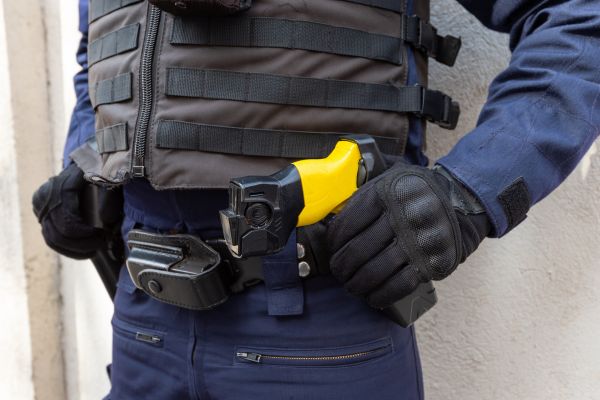
Several years ago, the government attempted to legalise their use by submitting a bill to parliament that would have permitted deployment by the Police, the National Guard, the Prison Department and the Game and Fauna Service. The effort stalled because, rightly or wrongly, tasers were associated with deaths linked to electric shock. During discussions, MPs raised a crucial question: what would happen if a taser were used on a person with a cardiac pacemaker? Would the individual survive or die instantly?
Despite a study submitted by the Police leadership, based on the experiences of other EU member states where tasers are used, MPs were not convinced. They chose not to take the risk.
Guidance for a new study
In a written response dated 21 November 2025 to DISY MP Nikos Georgiou, Justice Minister Marios Hartsiotis informed the House that the Chief of Police, Themistoklis Arnaoutis, has instructed that the earlier study prepared five years ago be updated. The goal is to create a complete and evidence-based framework for a possible re-examination of legislation that would allow tasers.
According to the minister, if the law is eventually adopted, implementation will involve several steps, including purchasing equipment, preparing and submitting regulations to parliament, and training police officers.
The provision that was removed
In March 2019, the Ministry of Justice submitted a bill that, among other provisions, legalised the use of tasers by the Police, the National Guard, the Prison Department and the Game and Fauna Service. The bill was titled the Firearms and Non-Firearm Weapons (Amending) Law of 2019.
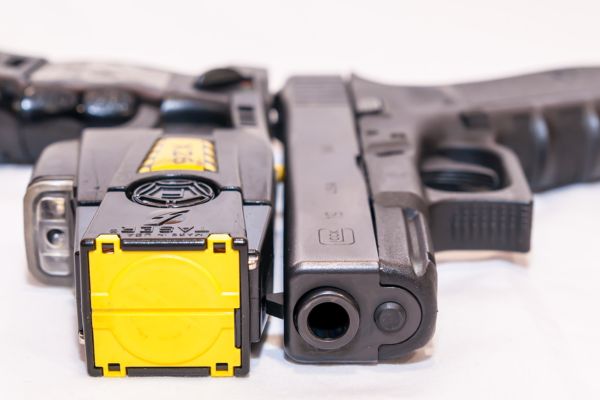
The relevant clause stated that tasers would only be used in very specific circumstances where the alternative would be the use of a service firearm, and only by specially trained personnel from the above agencies.
When the bill was approved by parliament in February 2021, the clause legalising tasers was removed.
Calls for self-protection
MP Nikos Georgiou, who requested the recent update, along with MPs from other parties, has received multiple appeals from police officers, prison guards and game wardens. They argue that tasers should be legalised, as in other EU states, to protect both their own safety and that of the public.
At present, their only available alternative is their service firearm, with all the risks this carries.
Following several incidents last summer that endangered officers’ lives, Nikos Loizidis, President of the Police Branch of the Pancyprian Union Isotita, raised the matter again. He stressed that taser use should be permitted for police self-defence and noted that many EU countries already allow it.
Are they ultimately dangerous?
The possible impact of tasers on the physical and mental health of individuals has long been debated internationally. Experts disagree on whether these weapons pose health risks that could lead to death.
Supporters argue that tasers provide a non-lethal alternative to firearms, allowing security forces to neutralise threats with a lower risk of fatality. Proper use, in theory, helps maintain public safety and protect lives.
The opposing view highlights cases where tasers have contributed to deaths. Although studies indicate that they do not interfere with pacemakers and do not cause permanent harm to healthy individuals, real-life incidents have produced fatal outcomes. These include cases involving a Polish migrant in Vancouver and a Brazilian tourist in Sydney who died after repeated exposure. Contributing factors included prolonged or repeated shocks, physical restraint and pre-existing health conditions.