Whenever a scandal comes to dominate public conversation, the reaction tends to follow a familiar trajectory. Initial outrage is quickly replaced by competing interpretations, partial narratives and, often, confusion about what is known, what is alleged and what remains unresolved.
The discussion that follows draws on conversations with people of different ages and social backgrounds, offering a snapshot of the main ways in which Videogate is being understood and debated.
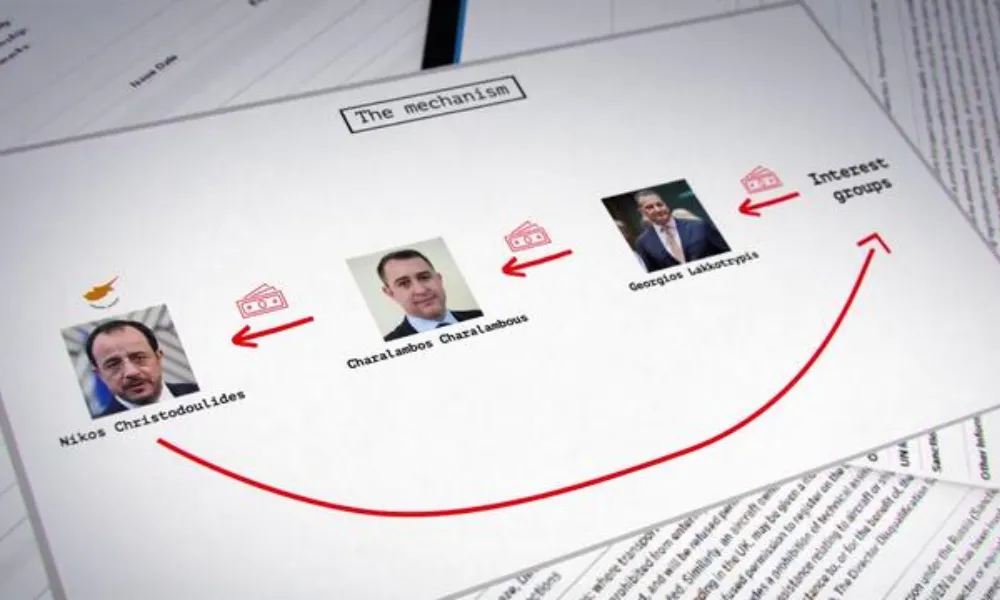
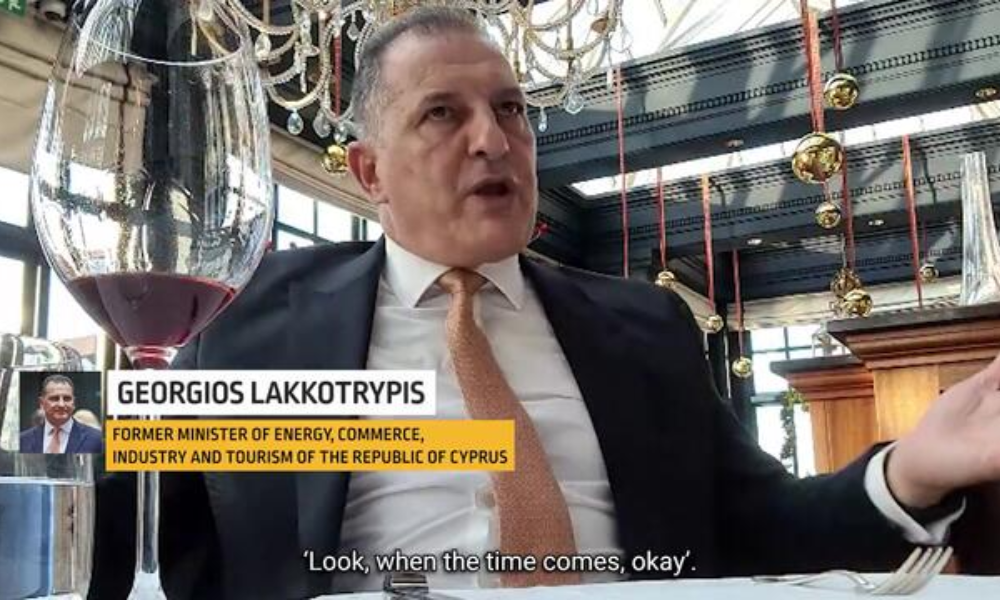
On 8 January, an eight-minute video began circulating on social media, purportedly capturing a private conversation involving close associates of the President of the Republic. Those featured include the Director of the Presidential Office, Charalambos Charalambous, former minister Giorgos Lakkotrypis, and the chief executive of a Cypriot private contractor company (Cyfield Group), George Chrysochos. The discussion in the video touches on potential investments, political access and funding arrangements that could be interpreted as exceeding legal limits or serving specific private interests.
From the outset, attention focused not only on the content of the video, but also on how it was obtained and why it was made public. The government described the leak as 'a targeted attempt to undermine state institutions', raising the possibility of a 'hybrid operation'. At the same time, the authorities launched investigations into both the substance of the claims and the circumstances under which the conversation was recorded and released.
The political impact was swift. Charalambos Charalambous resigned from his position as Director of the Presidential Office. Shortly afterwards, the President’s wife, Philippa Karsera, stepped down as president of the Independent Social Support Agency, which -according to the video- was used to supply the Christodoulides 2028 presidential campaign with cash through private donations. The resignations intensified the political fallout and shifted the debate from the video itself to broader questions of responsibility and institutional credibility.
A sense of déjà vu
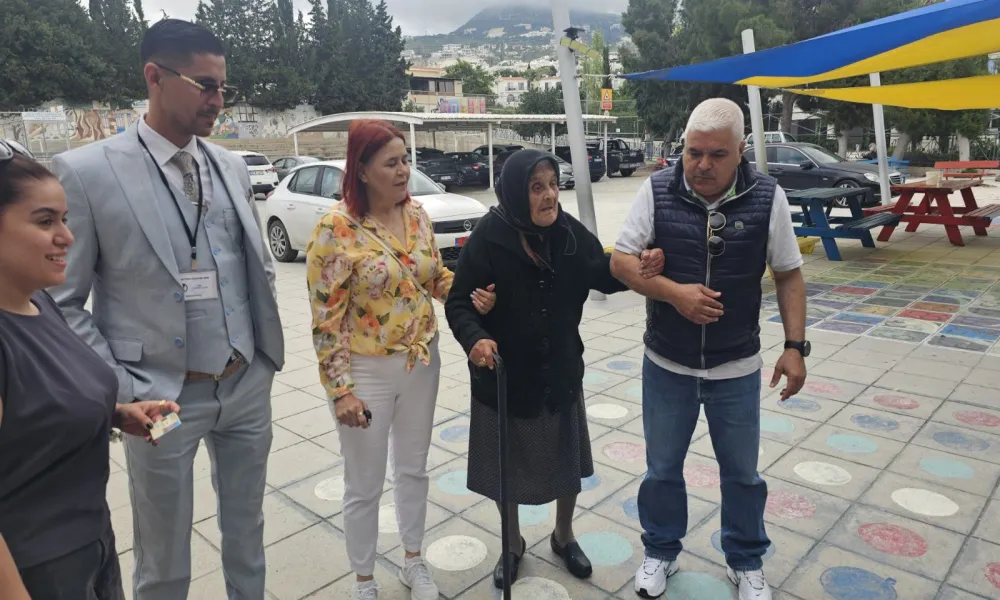
One prominent strand of opinion frames Videogate as confirmation of long-held suspicions. Maria K., 78, a pensioner, captures this sentiment succinctly. Hidden funding, she says, “has always existed.” Christos P., 56, a public servant, and Alexandros Z., 30, a banker, express similar views, describing a recurring pattern in which public outrage flares briefly before giving way to resignation.
This perspective does not necessarily accuse specific individuals of wrongdoing. Instead, it reflects a deeper erosion of trust, where suspicion has become almost automatic and faith in political processes is already weakened.
Shifting the focus to the source
Running alongside this is a second, equally strong current that moves the focus away from what was said and towards how the information emerged. Georgia G., 29, an accountant, points to the uncertainty surrounding the leak itself. The fact that the source remains unknown, she argues, inevitably undermines the credibility of the material.
Christos P. echoes this concern, noting that doubts over whether the video is selective, edited or taken out of context shape public judgement before the substance is even examined.
Information overload and fatigue
A quieter but significant theme also emerges, that of exhaustion. Several participants describe struggling to follow the story in full. Georgia G. admits she did not watch the video from start to finish, relying instead on discussion and media coverage to form an overall impression. Andreas S., 22, a student, describes a similar experience, saying it was difficult to grasp all the dimensions of the case while developments were unfolding so rapidly.
Maria K. speaks of the same fatigue, attributing it to constant exposure to updates, commentary and speculation. In practice, many people are forming opinions through fragments and reinterpretations. In an already polarised environment, those fragments tend to reinforce existing assumptions rather than challenge them.
Resignations and their meaning
Inevitably, the debate turns to the resignations and what they represent. Here, opinions diverge sharply. Some view them as an act of political responsibility and a necessary step to ease institutional pressure. Others see them as premature, taken before investigations have reached any firm conclusions.
Maria K. frames her position in terms of fairness, arguing that resignations should follow, not precede, official findings. Christos P. shares this view, stressing that institutional processes must come before public judgement, even when emotions are running high.
At the same time, the resignations themselves have taken on a political life of their own. Regardless of where the investigations ultimately lead, they have already shaped public perception and redefined the stakes of the debate.
Public interest and accountability
Finally, there is a perspective that places public interest at the centre of the discussion, even when disclosures are uncomfortable or incomplete. Stelios A., 54, a mechanical engineer, argues that revelations of this scale must be treated as a matter of public concern, with no room for concealment.
Yiannis P., 31, an accountant, agrees that public pressure often remains the only force capable of compelling institutions to respond. Alexandros Z. extends the argument further, suggesting that society should be more attentive to how it treats those who bring serious information to light, rather than defaulting to suspicion.
Within this framework, questions about the source are simply not allowed to become an excuse for inertia.
A fragmented consensus
What ultimately emerges is not a single dominant narrative, but a layered and sometimes contradictory public mood. Many people hold more than one position at once. They may see hidden funding as an old problem, yet still demand that there be no cover-up. They may distrust the source, but insist that institutions provide clear and credible answers.
Videogate, in this sense, functions as more than a political scandal. It becomes a case study in how society processes controversy in real time, amid incomplete information, heightened political tension and a lingering question that remains unresolved. In a landscape of competing claims, how is trust supposed to function?