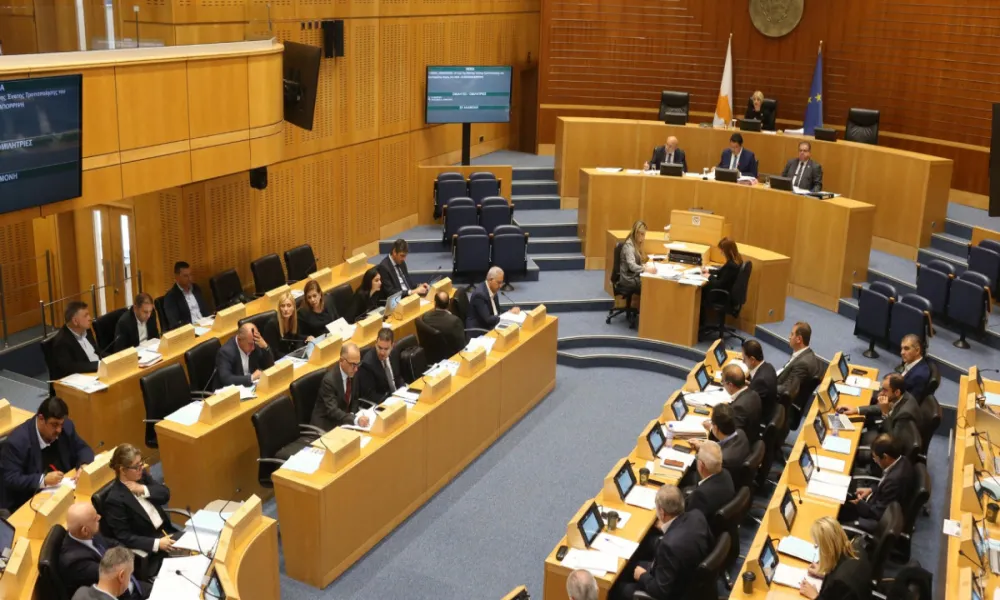

It would be unthinkable for a European institution such as the Organization for Security and Co-operation in Europe (OSCE) not to send a clear and unequivocal message to the authorities of the Republic of Cyprus regarding the recent majority decision of Parliament, which handed the Police a unilateral and arbitrary right to impose restrictions or even dissolve public assemblies.
This decision by the House of Representatives was nothing short of scandalous and unprecedented. It blatantly violates fundamental human rights and undermines both collective responsibility and the people’s right to express themselves through public gatherings. The arguments put forward by the bill’s sponsors, now enacted into law, are flimsy at best. Instead of ensuring a reasonable framework for spontaneous assemblies, the state has shirked its duty to safeguard this right, treating it instead as a nuisance to be curtailed.
The OSCE and its Office for Democratic Institutions and Human Rights have made the legal shortcomings plain: the law passed by Parliament is incompatible with Cyprus’ international obligations. It leaves a dangerous vacuum, fosters excessive state reactions, and does nothing to facilitate the right of peaceful assembly.
In essence, the Republic of Cyprus is being urged not to discourage but to enable peaceful gatherings with an explicit call to revisit and amend the key provisions of this problematic law.
The findings of the OSCE’s dedicated unit on assemblies and protests are well within reason. They highlight the legal dimensions at stake, and no one should imagine that a law pushed through by the government and backed by a parliamentary majority is beyond scrutiny or correction.
Far from reassuring, the Justice Minister’s first responses reveal a troubling carelessness in handling matters that expose Cyprus on the international stage.
If the minister himself cannot grasp the need to work towards amending the law to bring it in line with OSCE standards, then it falls to the government to summon its political reflexes, even if belatedly, and correct the unacceptable provisions.