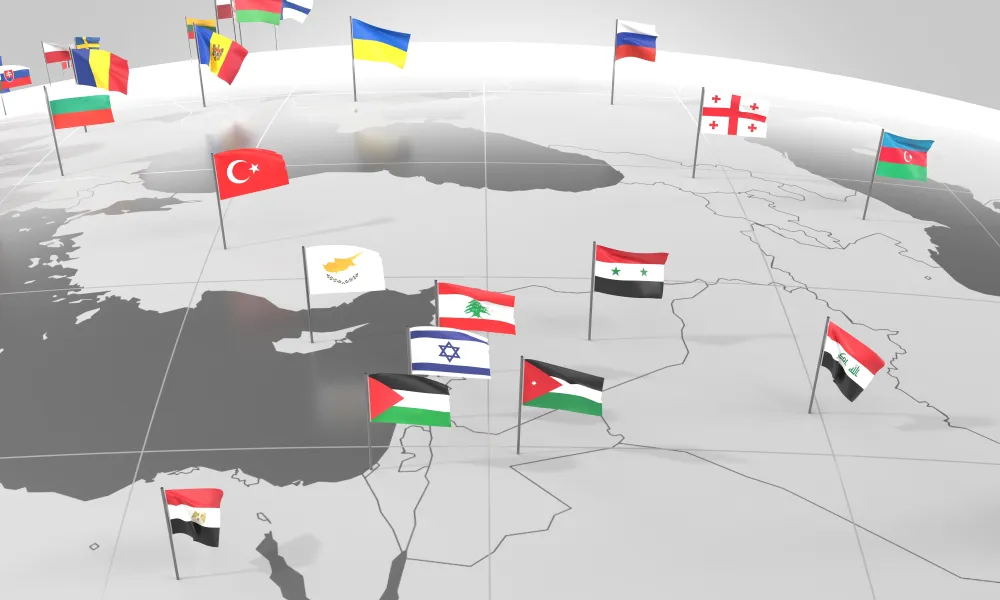

The debate that reopened after the drone strikes on the British Bases is neither technical nor incidental. It is deeply political and strategic. Yes, Cyprus belongs to the West. Yes, its geography makes it an inevitable part of the Eastern Mediterranean security environment. The question, however, is not whether it should take risks as part of the West. It is how and under what terms.
Today, Cyprus does not take risks as an active decision-maker. It is exposed without deciding. Why? Because we want to be seen as compliant?
The problem
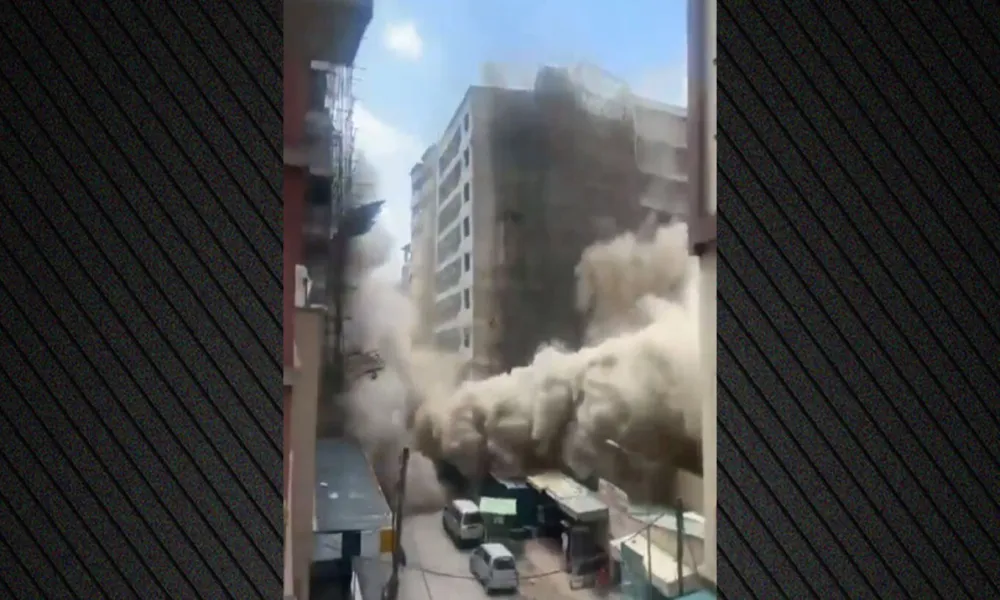
Nicosia’s stance following the incident in Akrotiri and the subsequent attacks does not amount to a conscious assumption of risk in favour of the West. It amounts to a denial of reality. When President Nikos Christodoulides assures that “Cyprus is not under attack”, while military installations on Cypriot soil are placed on alert, airports are evacuated, residents are moved to safer areas, flights are cancelled and European ministerial meetings linked to the Cypriot presidency are postponed, the President is not shielding the country. He is leaving it exposed between rhetoric and facts. Additionally, in the short and medium term, enormous risks are being created for the Cypriot economy with regard to tourism, investments, and business activity in Cyprus in general.
Let us clarify something. The West does not ask its member states to be naive. It asks for a clear position, a coherent narrative and a credible stance. That is precisely what is missing.
Who took risks?
It is worth examining how other small Western states have acted when faced with similar dilemmas.
The Baltic countries – Estonia, Latvia and Lithuania – took major geopolitical risks in relation to Russia. But they did not act blindly.
They did so:
- with full NATO membership,
- with allied forces stationed on their territory,
- with explicit collective defence guarantees,
- and with a clear political message to their citizens: this is the cost and this is the benefit.
Ireland, by contrast, remains militarily neutral despite belonging to the Western core. It hosts no foreign bases, does not participate in military operations and has built international credibility on the consistency of that stance.
Malta, also a small Mediterranean state, has constitutionally enshrined its neutrality and turned it into diplomatic capital rather than a weakness.
The common denominator? None of these countries hides behind vague reassurances.
The Cypriot particularity
The Republic of Cyprus finds itself in the most problematic in-between position:
- it is not neutral,
- it is not militarily integrated,
- it does not control the use of the British Bases,
- it does not control the northern occupied part of Cyprus due to the Turkish occupation,
- it provides military facilities in the south to Americans and Israelis without explicit deterrence guarantees,
- it carries the full geopolitical weight of their presence.
This is not strategy. It is structural asymmetry.
Worse still, instead of building a realistic narrative that acknowledges this reality, the Presidency opts for communicative detachment, telling citizens that “nothing is happening” while the security environment shifts by the hour.
We belong to the West. But how?
Belonging to the West does not mean:
- speaking on behalf of others, as the President repeatedly does when engaging with British Prime Minister Starmer or French President Macron,
- denying risk while Cyprus has been hit by a drone, faces threats from Iran and previously Hezbollah, and has arrested Iranian agents on its territory,
- presenting itself as an “innocent observer” while the West is in confrontation with Russia, Iran and their proxies.
If belonging to the West means anything, it means:
- knowing where we stand, who our friends are and who could be our adversaries,
- being honest about the possibility of bearing costs,
- demanding security and political counterbalances.
If Cyprus and its citizens choose to assume risk as part of the Western strategic space, they must do so under clear terms and without illusions. If the Republic of Cyprus does not wish to do so, it must also state this clearly and adjust its stance accordingly.
The real stake
Cyprus is not at risk because it “belongs to the West”.
It is at risk when it pretends it does not need to choose, when it claims it is not part of the conflict, while the President speaks at length without substance.
In a region on fire, the greatest luxury – and the greatest risk – is the illusion that one can be both inside the game and outside responsibility.