
This article was first posted in Parathyro, Politis' cultural page.
The project to convert Nicosia's Old Municipal Market into a Research and Innovation Centre has reached the final stage of the REGIOSTARS Awards 2026, and now houses the permanent home of the CYENS Centre of Excellence. The project was selected from 274 entries submitted from across Europe, and is now among the 25 top Cohesion Policy projects in Europe for 2026.
The project, officially named CYENS Hub Nicosia, was carried out under the Cohesion Policy Programme "THALIA 2021-2027," co-funded by the European Union, the Republic of Cyprus and the Nicosia Municipality, and is competing in the "A Competitive and Smart Europe" category.
Finalists will present their projects before the jury and the public on 13 October 2026, during the European Week of Regions and Cities in Brussels. The winners of the five categories, along with the winner of the Public Choice Award, will be announced on 14 October.
Reaching the finals represents European recognition for a project that combines the preservation of architectural heritage with urban regeneration, research, innovation and entrepreneurship.
The REGIOSTARS Awards are organised each year by the European Commission's Directorate-General for Regional and Urban Policy, and showcase projects funded under Cohesion Policy that stand out for their innovation, developmental impact and the benefits they generate for local communities.
Anthi Filippidou, Director of Development at the Ministry of Finance's Directorate-General for Development, described the project's selection as a significant distinction for Cyprus, noting that it highlights Cohesion Policy's contribution to development, innovation and the sustainable regeneration of cities. She said the recognition also confirms the importance of the THALIA 2021-2027 programme, through which European and national resources are combined to fund projects of long-term value for the country and its citizens.
From historic landmark to research and innovation hub
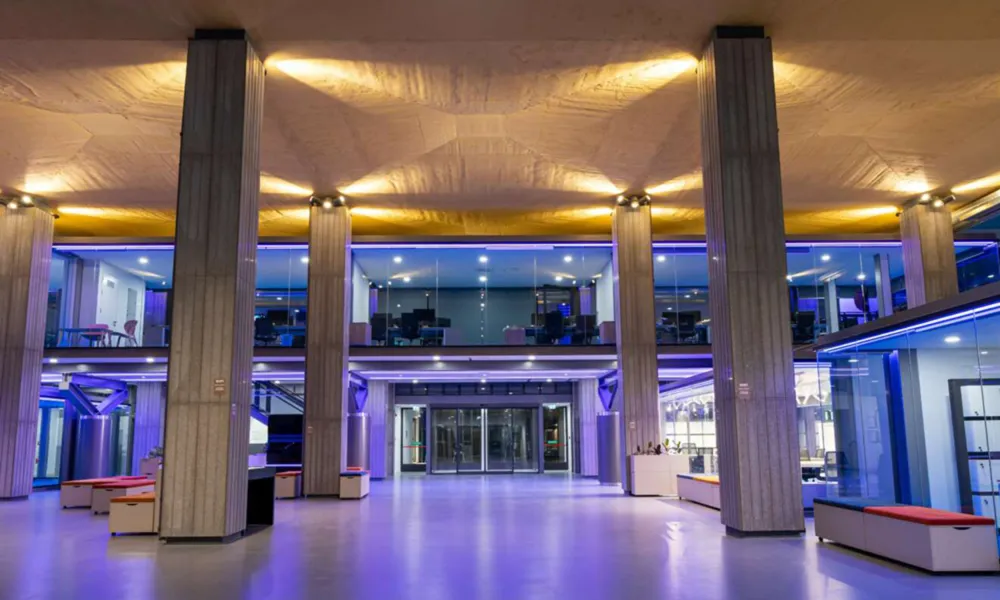
With an investment of €7.8 million, Nicosia's Old Municipal Market was transformed from a historic landmark within the walled city into a modern ecosystem of research, innovation and entrepreneurship. The restoration preserved the historic character of the emblematic building while incorporating modern architectural and functional specifications, so that it could meet the needs of an international research and innovation centre.
Today, the building houses core functions of the CYENS Centre of Excellence, including research laboratories, collaborative spaces, seminar rooms, a multimedia studio, areas for demonstrating and testing applications, and specialised infrastructure supporting research, technological development and the creation of innovative businesses.
The project forms part of Nicosia's Integrated Territorial Development Strategy, and is presented as an example of how European Union Cohesion Policy investments can combine the protection of cultural heritage with innovation, economic growth and sustainable urban regeneration.
Strengthening the innovation ecosystem
According to those behind the project, the investment was not limited to restoring a historic building. It also strengthened Cyprus' research and innovation ecosystem, supported the growth of CYENS' activities, and created new opportunities for collaboration between researchers, universities, businesses, creators and the wider community.
The project has also contributed to creating new jobs, attracting businesses, researchers and visitors, upgrading the urban environment, and developing synergies with other projects and organisations within Nicosia's walled city.
CYENS forms the core of the Nicosia Municipality's "Creative Industries Quarter" initiative, which aims to regenerate the walled city and establish the capital as a regional hub for creativity, technological development and entrepreneurship.
The CYENS Centre of Excellence is a partnership between the University of Cyprus, the Cyprus University of Technology, the Open University of Cyprus, University College London (UCL) and the Max Planck Institute. Specialising in interactive media, smart systems and emerging technologies, it is active in fields including artificial intelligence, cultural technology and user experience, functioning as a meeting point for research, entrepreneurship and society.