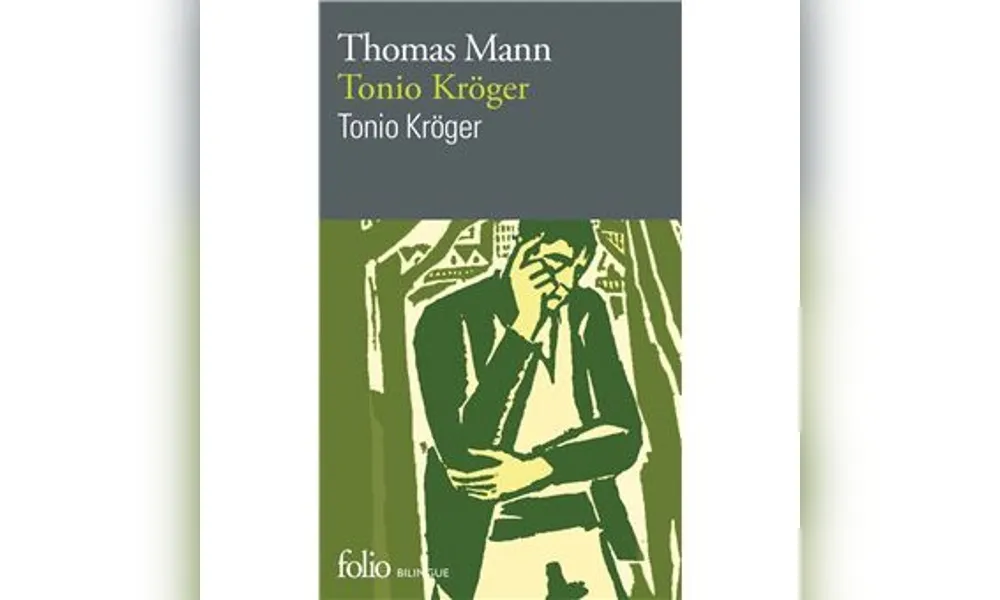

Tonio Kröger can be read as a gateway to Mann's broader intellectual universe, anticipating themes that would later find fuller expression in The Magic Mountain, Death in Venice and Doctor Faustus. At its centre lies a question that would become one of the most enduring tensions in his work: what is the cost of being an artist?
Between two worlds
The novella's protagonist, Tonio Kröger, is widely regarded as one of Mann's most transparent self-portraits. His mixed background, his simultaneous sense of belonging and alienation, his attraction to the world of art and his longing for the apparent stability of bourgeois life all closely mirror the author's own experiences.
Even the character's initials hint at the close relationship between creator and creation. Yet the novella's enduring appeal lies not in its autobiographical elements but in the clarity with which it captures the artist's inner conflict.
Tonio finds himself suspended between two worlds. On one side stands life itself: spontaneity, emotional immediacy and the natural ease of those who participate fully in society. On the other stands art, which demands distance, observation and, often, solitude.
The artist's dilemma
Mann transforms this personal struggle into a broader reflection on the role of the artist in society. Tonio admires the people whose lives seem uncomplicated by self-consciousness, yet he remains unable to join them completely. His gift for observation simultaneously sets him apart, making him both participant and outsider.
This tension between life and art, involvement and detachment, becomes the novella's central drama. It is also one of the defining themes of Mann's literary career and one of the most fertile ideas in 20th-century European literature.
More than a century after its original publication, Tonio Kröger remains a remarkably insightful meditation on identity, creativity and belonging. Compact yet philosophically rich, it offers an early glimpse of a writer already grappling with the major questions that would shape his masterpieces and secure his place among the giants of modern literature.