Agreement has also been reached on graduated increases in tax deductions and on raising the family income threshold. Questions remain over the absence of other parties from such an important meeting.
The consultations held by Finance Minister Makis Keravnos with political parties, involved bodies and organised groups, together with society’s demand for additional support for the middle class, are yielding results.
The window left open by the Minister for further improvements to the tax reform was thrown wide open yesterday, with the tax-free income threshold rising to €22,000 from the current €19,500, providing significant relief to citizens who have been noticeably affected by rising prices and the loss of purchasing power.
During yesterday’s meeting between Makis Keravnos and representatives of DISY, DIKO and DIPA, convergence was identified, resulting in the formation of a majority trend for further strengthening the middle class, families with children and students, and low-income earners, within the framework of the tax reform that will be taken to the plenary session on December 22. The agreed changes fall within the state’s fiscal margins, so as not to undermine the country’s economic stability.
According to information, DISY, DIKO and DIPA will today submit joint amendments to Parliament raising the tax-free income threshold to €22,000, with the possibility for other parties, which were not present at yesterday’s meeting, to co-sign the amendments.
At the same time, the annual family income ceiling for granting tax deductions is being significantly increased. Specifically, deductions will apply to family income of €100,000 instead of the current €80,000 for one or two children, with a graduated increase depending on the number of children. For three to four children, the ceiling rises to €150,000, and for five children it increases to €200,000 from €100,000.
The parties’ amendments will also include provisions for a graduated increase in tax deductions aimed at supporting the middle class. For one child, the deduction will remain at €1,000, as provided for in the initial proposal, while it will increase gradually to reach €1,500 for more than three children.
In addition, deductions for interest on serviced housing loans and for rent payments are increased to €2,000 from €1,500. Finally, the amendments also include the abolition of stamp duty.
He set the tone, says the Finance Minister
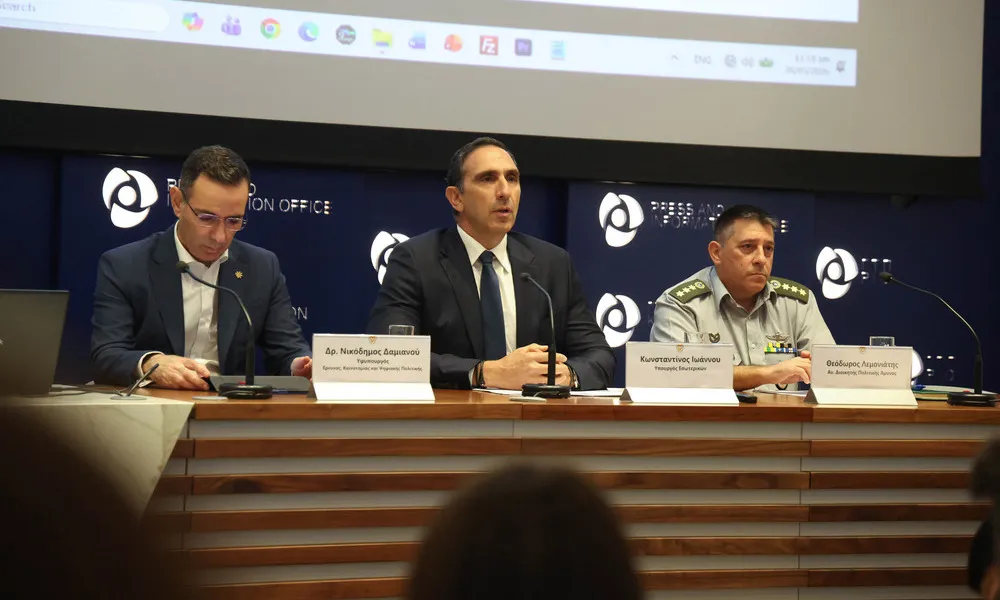
Yesterday’s meeting between the three parties and Mr Keravnos lasted approximately two hours. Following the meeting, the Minister expressed the government’s readiness to accept “some increase in the tax-free threshold”, announcing the increase of the income ceiling for families with five children to €200,000 and the abolition of stamp duty.
According to the Finance Minister, “there was significant convergence of views and I expect that, within the margins accepted by the government, amendments will be submitted by parties so that we can move forward with tax reform”.
“We, as a government, are ready to accept some increase in the tax-free threshold. We have accepted and understood the issue of graduated support in relation to the number of children and the increase of income criteria limits,” Mr Keravnos stressed.
“The Ministry of Finance has identified the points on which it can consent, weighing the need to maintain fiscal stability,” he added.
Within fiscal limits
The Chair of the House Finance Committee and Deputy President of DIKO, Christiana Erotokritou, thanked the Finance Minister for the very productive cooperation they have had in recent weeks during the demanding process of discussing the tax reform package. “At DIKO, on economic matters, we always act responsibly. We seek the broadest possible consensus, but we also seek the broadest possible cooperation in Parliament, because this is how cooperation is built and how trust is built, which ultimately determines stability,” she said.
DISY MP Onoufrios Koulla stated that “the amendments we wish to introduce to the tax reform, as outlined by our party president last week, move in the same direction as DIKO, DIPA and possibly other members of the Finance Committee”. “We fully understand that, in order to have a positive outcome for our country,” he said, “a parliamentary majority is required, along with the consent of the government and the Ministry of Finance, always within fiscal margins, in order to preserve fiscal stability, which has intangible value in the medium to long term. We are moving in a common direction to achieve what is best for the economy, improvements for our fellow citizens, with priorities being what we have been saying for two years now: to further support the middle class and families with children and students who face high expenses, and to maintain a favourable business environment.”
DIPA MP Alekos Tryfonidis said that there appears to be convergence between the amendments proposed by various parties and the Finance Minister. “The proposals of DIPA that we have submitted and discussed over several days are aimed at helping low-income earners, the middle class, low pensioners, vulnerable groups, single-parent families, while also supporting businesses,” he said. “Within this framework,” he added, “there is convergence with the proposals of DIKO, EDEK and DISY. These proposals are always within fiscal margins, to ensure economic stability and growth for the economy and businesses. Proposals that would put the country’s economy at risk will never be submitted,” he stressed.
This article was first published in the Politis newspaper.