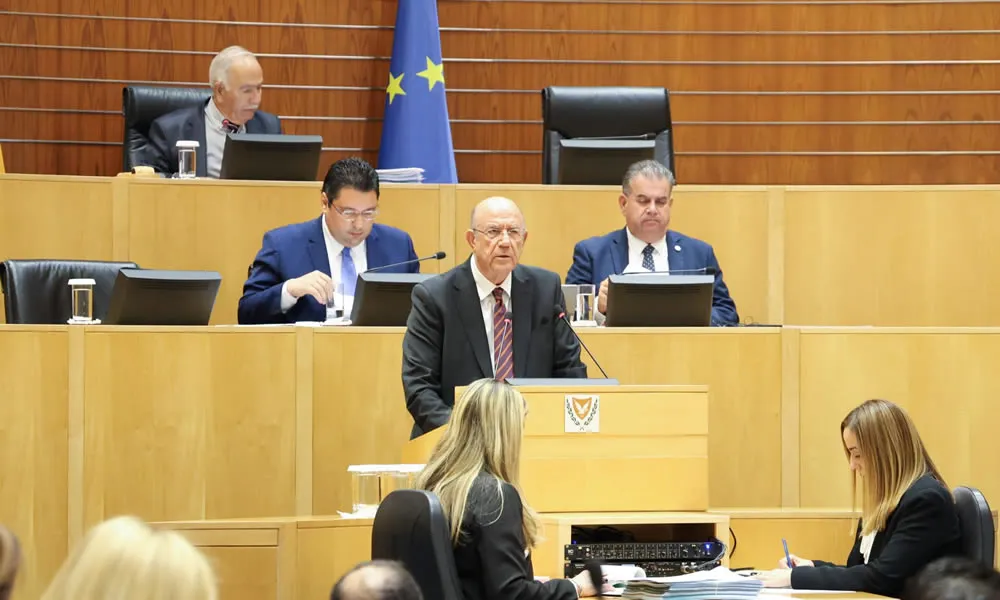
Finance Minister Makis Keravnos, presenting the 2026 state budget to the plenary session of the House of Representatives, emphasised the need to maintain macroeconomic stability and sustainable growth. He explained that the ongoing period of challenges and geopolitical developments necessitates a budget that anticipates potential negative developments. “Market uncertainty, geopolitical tensions, and global trade conditions create an unstable political and economic environment,” he said.
Budgetary control and surpluses
The Minister explicitly stressed the need to continue the current policy of generating primary surpluses, as a key prerequisite for Cyprus’ long-term economic stability. Within the framework of the EU’s new Economic Governance, the deviation observed from the maximum levels of primary expenditure growth cannot be repeated, as there is no room for deviations from fiscal targets.
As Keravnos explained to the legislative body, under the new framework, the European Commission determines the maximum limit of net primary expenditure a member state can incur during the programming period. For Cyprus, the Commission has set an average net primary expenditure growth of 5.2% at the General Government level for 2024–2028.
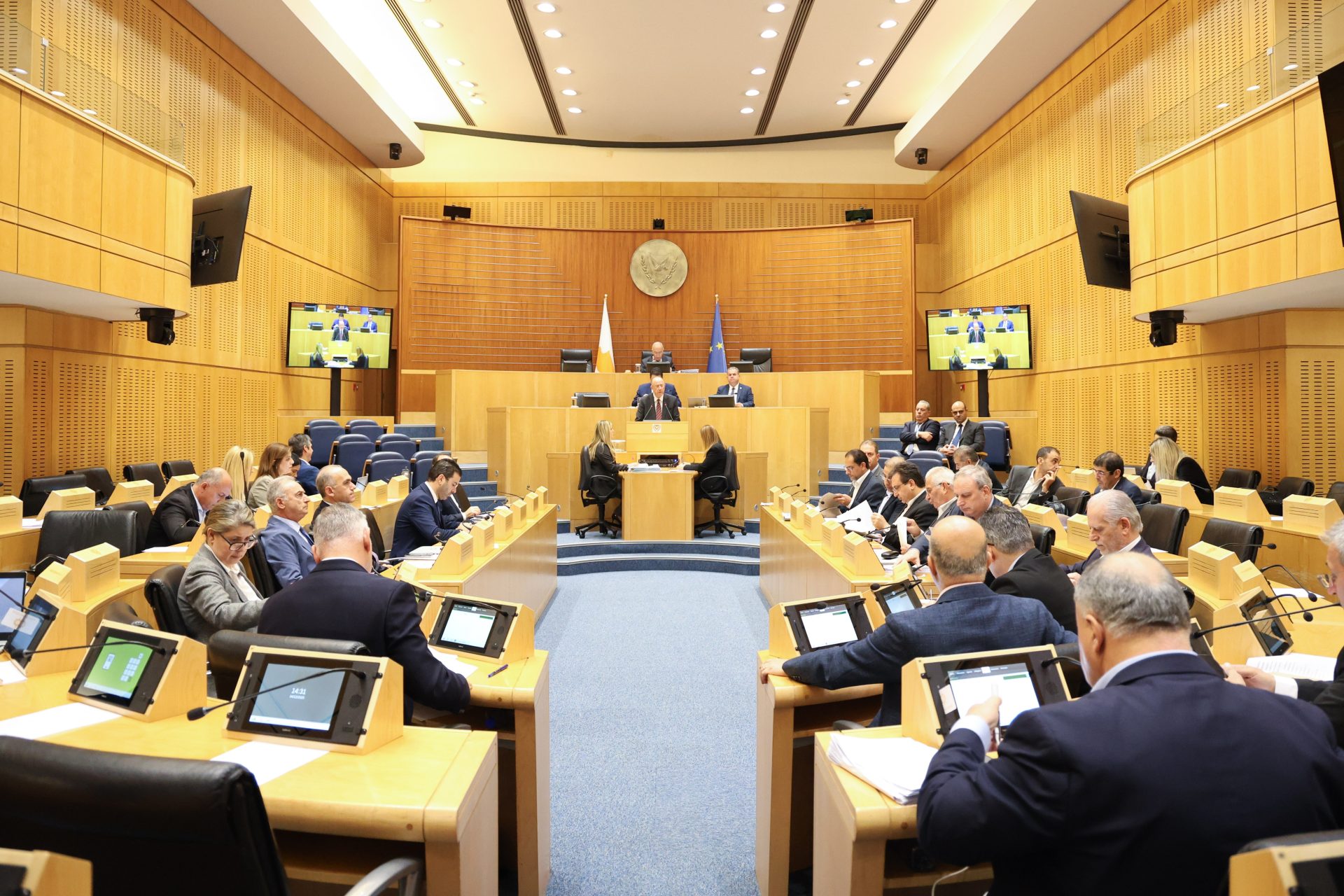
session of the House of Representatives.
“This rate is among the highest of EU member states due to our strong macroeconomic performance, capabilities, and needs of our economy”, the Minister noted. However, Cyprus is expected to fall short of the permitted growth rate of net primary expenditure in 2025 and 2026 compared to the original targets of 6% and 5%, respectively, due to measures taken after the submission of the National Medium-Term Fiscal and Structural Plan in October 2024.
The deviation is mainly due to the National Solidarity Fund Replenishment Plan, with €65 million paid so far to haircut depositors and bondholders, the continuation of cost-of-living measures such as zero VAT on essential goods, reduction of the electricity VAT rate from 19% to 9%, subsidies for household and small business energy costs, and relief measures following the mountainous Limassol fire at the end of July 2025, which reached around €90 million. This deviation is expected to be corrected in the coming years.
“Based on the capabilities provided by a sound and proactive economic policy, it is important to note that in the medium term, up to 2028, the horizon of the Medium-Term Fiscal Framework, the average annual growth rate of net primary expenditure is estimated at 5%, 0.2 percentage points below the Republic’s commitment, as a result of strict and targeted planning, thereby correcting the deviation within acceptable time frames,” explained Keravnos. The Finance Minister described this as a “mini-austerity” to correct the overshoot in primary expenditure growth in 2025 and 2026 by 2028.
Favorable framework
The positive aspect is that the current economic policy is implemented in a favorable environment.
“Despite the challenges, the Cypriot economy maintains its momentum, with strong growth, low unemployment, and healthy public finances,” he emphasised.
According to the recent European Commission assessment report under the European Semester, published last week, our economy’s growth rate in the first half of 2025 reached 3.6%, and investments increased by 10.4%, while our fiscal position continues to show strong surpluses (3.3% in 2025 and 3.0% in 2026). Service exports remain high, particularly in the technology and IT sector, while the tourism sector records a record number of arrivals.