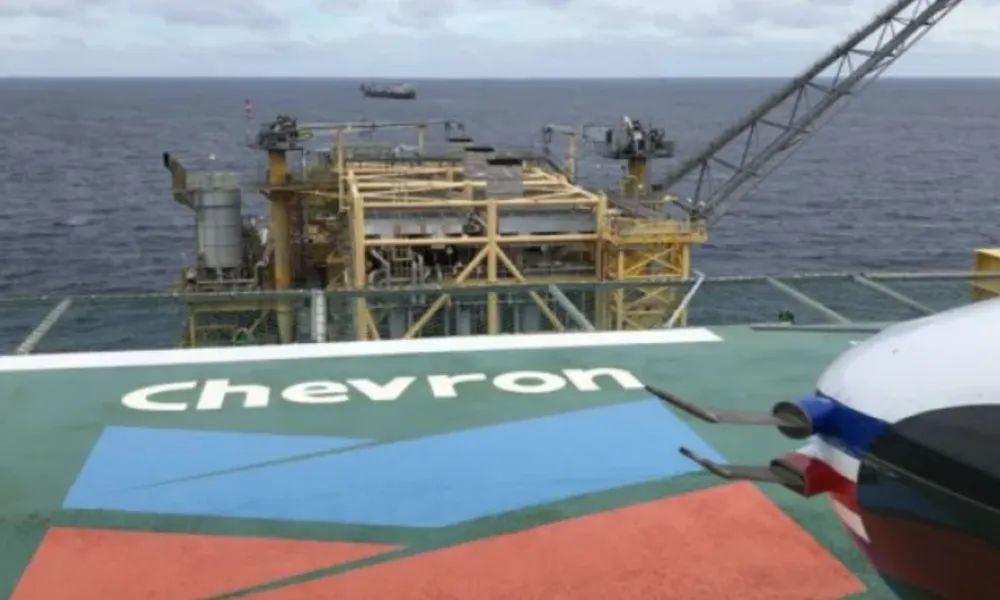
Greece is formally relaunching hydrocarbon exploration with the signing of four concession agreements between the Greek State and the consortium of Chevron and HELLENiQ Energy. The ceremony is taking place at 11.00 this morning at the Maximos Mansion in the presence of Prime Minister Kyriakos Mitsotakis.
The agreements concern offshore areas considered among the most promising geological zones in the country and are presented as a significant step in the development of domestic energy resources.
The concession agreements and signing ceremony
The contracts cover the areas “South Peloponnese”, “A2”, and the offshore blocks “South of Crete I” and “South of Crete II”.
The signing ceremony is being held at the Maximos Mansion in the presence of the Prime Minister, members of the political leadership and the heads of the contracting companies.
On behalf of the concessionaires, the agreements are signed by Chevron Vice President Gavin Lewis and HELLENiQ Energy Chief Executive Officer Andreas Siamisis. The Greek State is represented by Minister of Environment and Energy Stavros Papastavrou and the Chief Executive Officer of the Hellenic Hydrocarbon and Energy Resources Management Company, Aristofanis Stefatos.
Following the ceremony, an event is scheduled at the Acropolis Museum, where the main pillars of the exploration programme and the next steps are expected to be presented.
Entry of Chevron into the Greek market
The groundwork for Chevron’s presence in the Greek hydrocarbon market was laid last September, when the company, in consortium with HELLENiQ Energy, was declared the sole bidder in the tender announced by the Greek government for four offshore concessions south of Crete and the Peloponnese.
The development confirmed growing investment interest in the Greek maritime area and led to the formalisation of the contracts signed today.
Chevron’s entry, combined with the existing strong presence of ExxonMobil, is described as reinforcing the credibility of the Greek exploration programme and creating conditions for further investment in hydrocarbon research and development.
Exploration and drilling in the Ionian Sea
Interest from major United States energy groups was further strengthened last November during the Partnership for Transatlantic Energy Cooperation summit, where the expansion of ExxonMobil’s presence in Greece was announced through its participation in the Ionian block in consortium with Energean and HELLENiQ Energy.
ExxonMobil already holds a majority stake in the “West of Crete” and “Southwest of Crete” concessions. The most mature project is located in the Ionian Sea, specifically in offshore “Block 2”.
In that area, the first exploratory drilling in Greece in approximately four decades is scheduled for early 2027. The drilling is considered critical, as it is expected to provide data on the existence and potential commercial exploitation of hydrocarbon deposits, influencing subsequent investment decisions and overall energy planning.
Prospects south of Crete
Particular attention is focused on the area south of Crete, where previous geological analyses have indicated significant potential. According to past data assessments, one of the geological structures in the region is estimated to host natural gas reserves of around 280 billion cubic metres.
If confirmed, such a volume could theoretically cover domestic natural gas consumption for a period approaching 50 years, significantly enhancing energy security and autonomy.
Next steps and timeline to 2030
Following the signing and ratification of the contracts by Parliament, the next key step is the approval of the Environmental Action Plan for the conduct of two-dimensional seismic surveys. This approval is estimated to be completed in the coming autumn.
If the timetable is maintained, the first geophysical surveys are expected to begin towards the end of the year. The exploration process will unfold in three main stages over approximately seven years, including seismic surveys and exploratory drilling.
According to current estimates, by the end of the decade, around 2030, there is expected to be a clearer picture of the country’s offshore energy potential.
The increased presence of major international energy companies, including Chevron and ExxonMobil, is presented as reinforcing Greece’s role in the Eastern Mediterranean and supporting efforts to enhance energy security and attract significant investment.