As Brussels counts down to Cyprus taking over the rotating Presidency of the Council of the EU on 1 January 2026, diplomats at NATO and the EU are openly debating how Nicosia’s complex relationship with Turkey will shape Europe’s defence agenda. A Politico article published last Tuesday captured unusually candid concern within European and NATO circles about whether Cyprus might slow or block efforts to deepen EU-Turkey defence cooperation, particularly around the new Security Action for Europe (SAFE) programme and broader EU-NATO coordination.
Several senior officials quoted by Politico were oddly blunt. “We are very worried,” one European government official said, warning that Cyprus’ long-standing tensions with Turkey could “interfere with Europe’s defence priorities” at a moment when the Union is trying to build a more coherent security architecture. The concern centres on whether Nicosia will block or slow initiatives such as Turkey’s potential involvement in the SAFE programme and efforts to deepen EU-Turkey military coordination.
A NATO diplomat echoed that anxiety, calling the situation a test of allied cohesion. “We need to show unity,” the diplomat said. Excluding Turkey from upcoming EU defence plans, they argued, would “undermine that,” especially given the overlap between the two organisations and the need for seamless EU-NATO coordination after Russia’s invasion of Ukraine. They also pointed to the ongoing freeze on NATO-EDA (European Defence Agency) information sharing, blocked by Turkey. This stems from Greek and Cypriot objections to Turkey’s participation. “You can only have more in-depth discussions when both sides of town know the same things,” the diplomat noted.
Politico also quoted Selim Yenel, former Turkish ambassador to the EU, who predicted that “for six months, EU integration with NATO, especially with Turkey will be stuck,” reflecting Ankara’s expectation that the Cypriot presidency will harden positions rather than ease them.
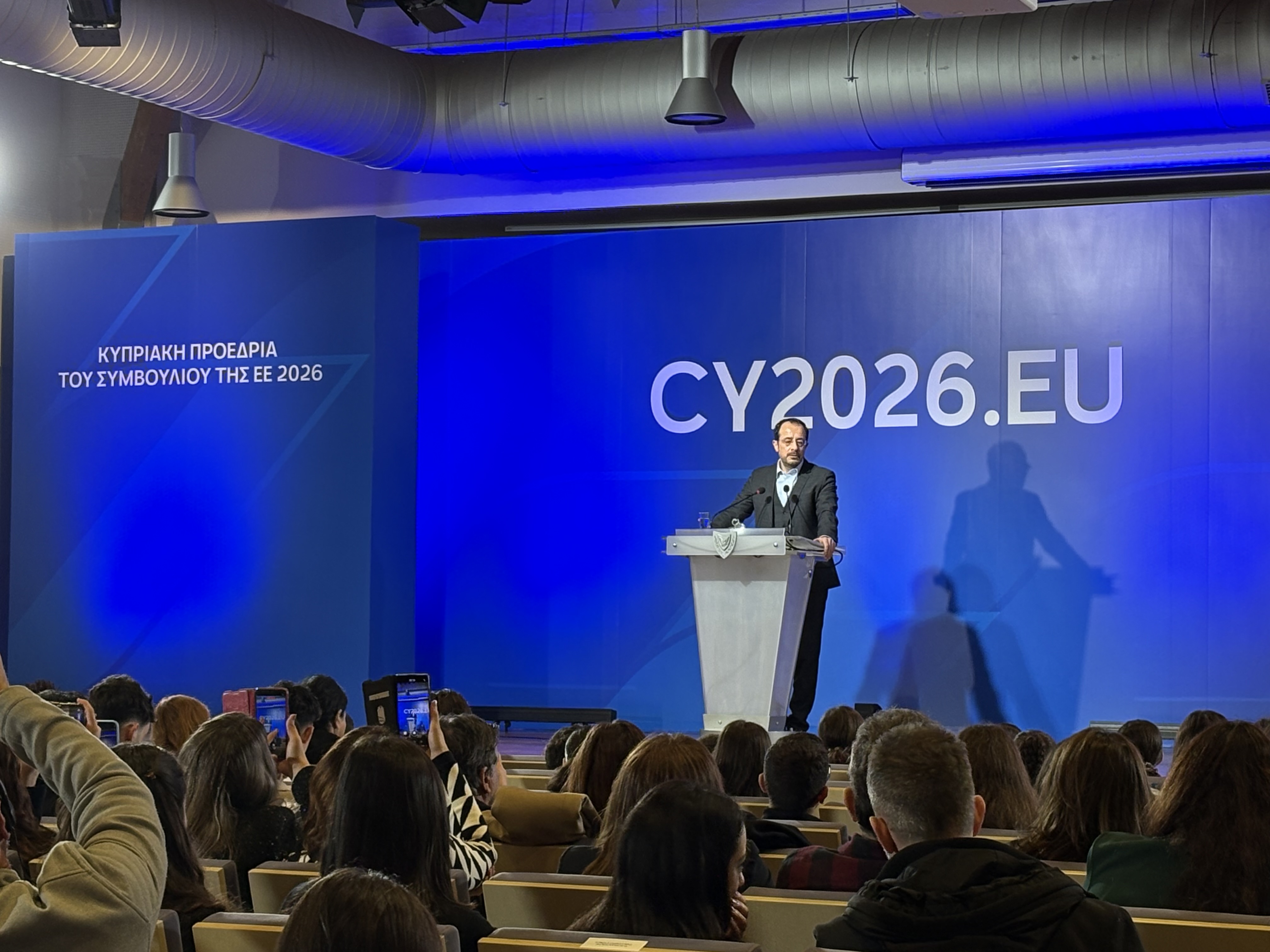
Against this backdrop, President Nicos Christodoulides has been signalling that he intends to use this moment to turn this tension into leverage. In recent interviews with Politico, HuffPost Greece and the Financial Times, he has outlined variations of a step-by-step opening that link Cyprus’ NATO aspirations with potential EU-Turkey confidence-building measures.
Talking to Politico: NATO entry, PfP and a step-by-step opening
In his interview with Politico, Christodoulides argued that the presidency could, in principle, help reduce tensions rather than fuel them. His proposal focuses on Cyprus joining NATO’s PfP, a prerequisite step toward full membership that Ankara has blocked for years. If Turkey were to lift that block, he said, Nicosia would be willing to gradually ease certain objections to EU-Turkey cooperation, always tied to measurable progress on the Cyprus issue.
This approach is consistent with remarks he made to HuffPost Greece in October, where he said he would apply for NATO membership “immediately” if the outcome were guaranteed. He described NATO accession as a natural evolution for a country increasingly aligned with Western security priorities but acknowledged that political conditions, particularly Turkey’s veto, do not yet permit it.
In his Financial Times interview, Christodoulides went further by floating a specific confidence-building idea. He said Cyprus would consider supporting limited visa liberalisation for Turkish citizens in targeted sectors, such as business travel, if Ankara opened at least one Turkish port to Cyprus-flagged vessels. He presented it as a mutually beneficial, practical step that could ease longstanding trade obstructions without prejudging the political settlement.
SAFE and the presidency’s central dilemma
Much of the immediate friction concerns SAFE, the EU’s 150-billion-euro defence instrument intended to strengthen joint procurement and capability development. The collective security agreement with the EU requires unanimous approval. Both Cyprus and Greece have been unequivocal in signalling they cannot support Turkish participation under current conditions.
Christodoulides has argued that EU defence funds cannot be extended to a country that continues to occupy part of an EU member state, challenges maritime zones in the Eastern Mediterranean and refuses to align fully with EU sanctions regimes. Cypriot officials also note that Turkey’s block on NATO-EDA information sharing directly contradicts the EU’s effort to deepen structured cooperation with the Alliance.
Nicosia has repeatedly maintained that the presidency will not be used to escalate tensions with Ankara. In Berlin and Copenhagen, he tied any future openings to clear commitments on the Cyprus issue, adherence to EU principles and alignment with Europe’s broader security posture.