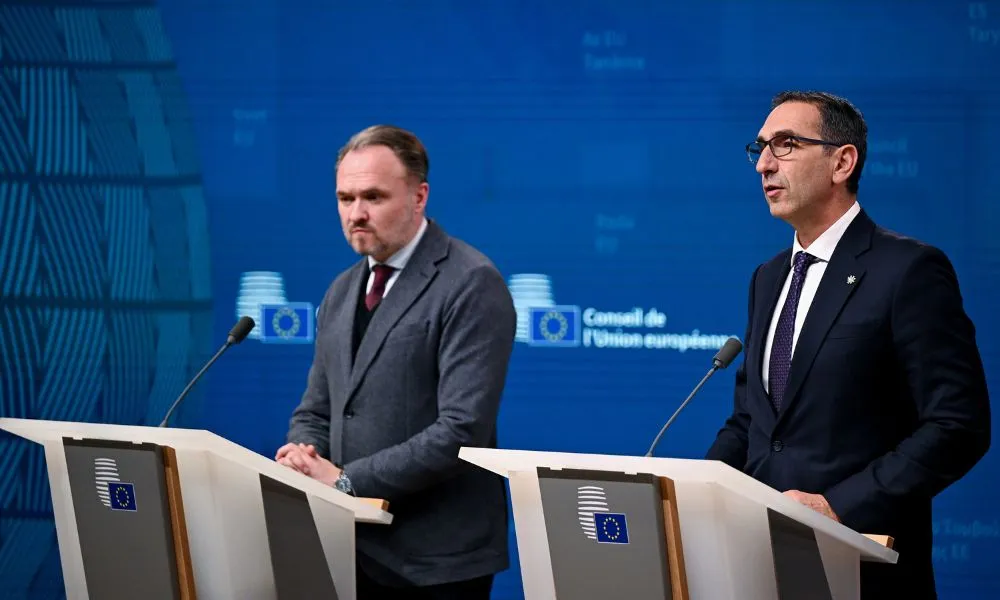
Housing affordability and access were at the centre of an informal videoconference of Housing Ministers from the 27 EU Member States, held under the Presidency of Cyprus. The discussion took place against the backdrop of an acute housing crisis affecting millions of Europeans and followed the European Commission’s presentation of the European Affordable Housing Plan.
Informal ministerial discussion under Cyprus Presidency
Following the meeting, Cyprus Interior Minister Konstantinos Ioannou and European Commissioner for Energy and Housing Dan Jørgensen outlined the framework of the exchange of views, which the Minister described as open, constructive and timely.
Ioannou stressed the need for a strong European approach that complements national and local policies, while fully respecting the principle of subsidiarity.
Housing affordability challenges across Europe
The Interior Minister highlighted the pressures faced by citizens, noting that rising prices and rents, limited access to financing and insufficient supply are making housing increasingly unaffordable. According to Ioannou, the impact extends beyond the most vulnerable groups to include middle- and low-income households, young people and families, single-parent households, persons with disabilities and individuals at risk of poverty or social exclusion.
He underlined that inadequate housing affects people’s health, access to employment and education, and their ability to participate fully in society, describing housing as a social right.
European Affordable Housing Plan and EU role
Referring to the role of the European Union, Ioannou said the housing portfolio can support coordinated and targeted action, particularly where housing intersects with climate change, energy and construction policy.
He described the European Affordable Housing Plan, presented by the Commission last December, as a crucial step towards a comprehensive European framework. According to the Minister, the plan includes measures to increase housing supply, reduce bureaucracy, encourage investment and reforms, and support the areas and population groups most affected by the crisis.
Investment dimension and future discussions
Asked about the investment dimension of the real estate market and its impact on the housing crisis, Ioannou said the issue was not part of the current discussion but would be examined in future meetings. He noted that the role of the Cyprus Presidency is to advance the agenda and strengthen dialogue, with the aim of reaching a common approach and translating the Commission’s plan into concrete action delivering tangible results across EU cities.
Commission perspective on democracy and housing
Commissioner Dan Jørgensen described the housing crisis as a threat to democracy, stressing the urgency of action as millions struggle to secure a home. He referred to situations in which people in essential professions, such as nurses, police officers and teachers, cannot afford to live where they work.
According to the Commissioner, the lack of affordable housing is not only an individual problem but one that risks undermining Europe’s social models if left unaddressed.
Key elements of the Commission’s action plan
Jørgensen outlined that solutions will require action at national and local level, with the EU facilitating cooperation and decision-making. The plan places emphasis on increasing housing supply through new construction, as well as renovating and converting existing buildings into sustainable and affordable homes.
He also referred to the creation of a European Housing Platform aimed at attracting investors, developers and local authorities to deliver the necessary investments.
Reducing bureaucracy and reviewing legislation
The Commissioner stressed the need to reduce bureaucracy related to construction and renovation. He said the Commission intends to review relevant EU legislation, identify areas requiring simplification and consult Member States, regions and cities to deliver practical solutions.
Short-term rentals and legislative initiative
On short-term rentals, Jørgensen stated that the issue is repeatedly raised by mayors, warning that inaction risks driving up housing prices and displacing residents from urban areas. He confirmed that the Commission will present a legislative proposal by the end of the year to address the issue.
The proposal will define criteria for designating so-called pressure areas, where the impact of short-term rentals is considered unsustainable. In such areas, cities will be able to use a range of tools to address the problem, without being obliged to adopt measures they do not wish to implement.
According to the Commissioner, the proposal will be developed through a broad and inclusive process, drawing on experiences from cities that have already taken action and removing potential obstacles stemming from EU legislation.
Next steps at EU level
Following this first informal ministerial discussion on the European Affordable Housing Plan, housing is expected to feature prominently on the agenda of the EPSCO Council meeting scheduled for 9 March.