
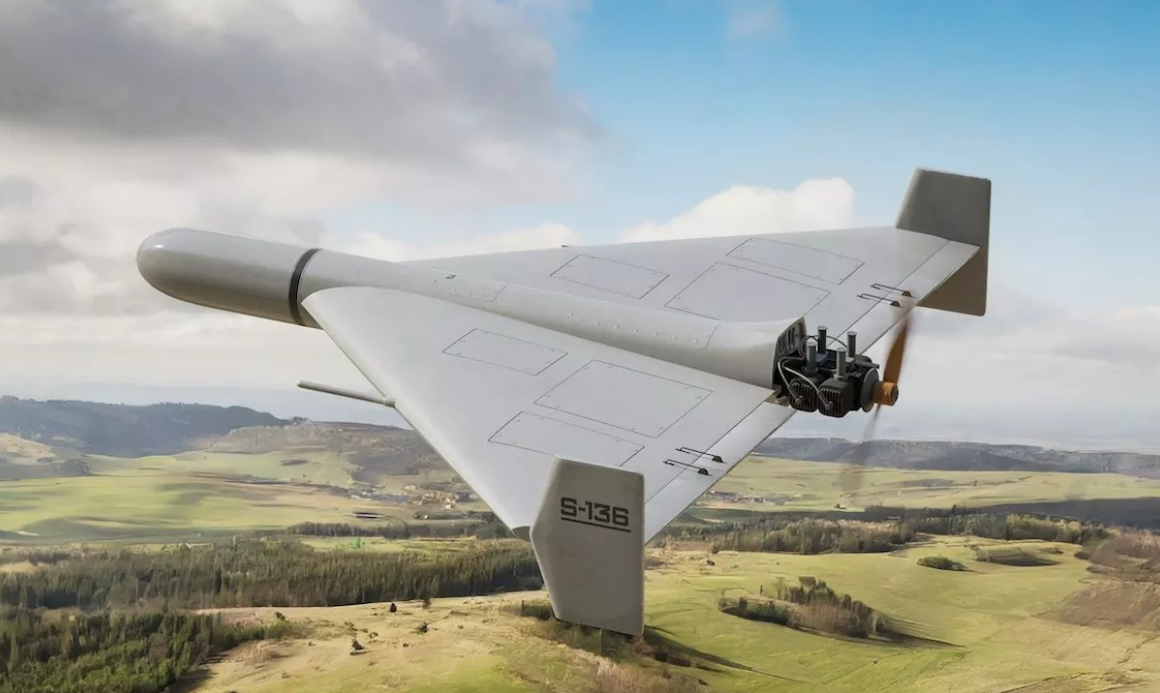
In the third minute of the second day of March, a Shahed drone struck a hangar at RAF Akrotiri on the island’s western coast, marking the first of five attempted attacks that day on British bases in Cyprus.
The Shahed drone, launched from southern Lebanon, was the only attempt that reached its target. It fell under the radar, due to its low altitude and slow speed, landing on a hangar that reportedly housed American U-2 spy planes, leaving a one-metre hole.
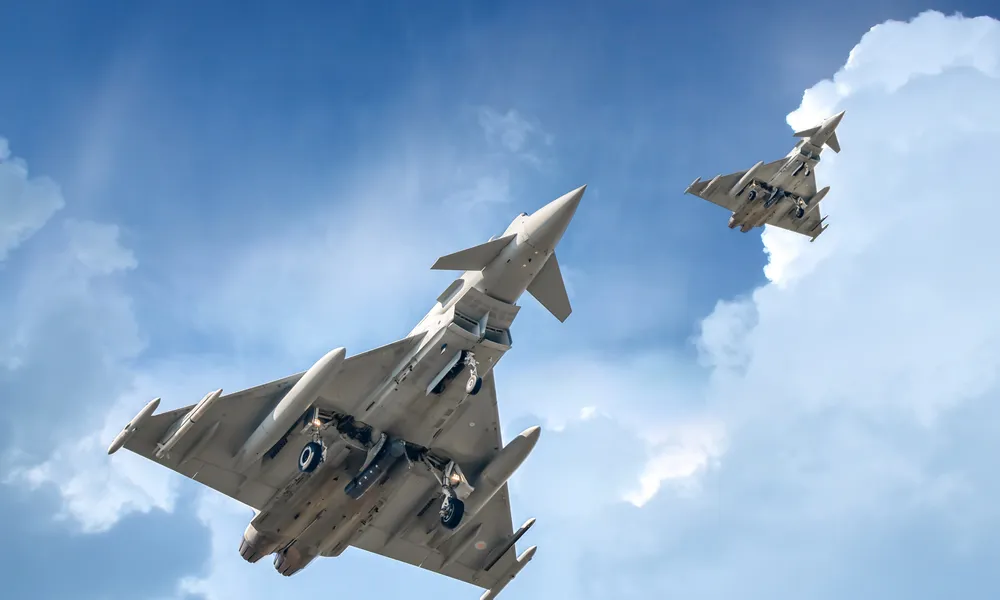
According to Politis sources, on the same day, two more drones were launched from southern Lebanon in the direction of the bases. Two fighter jets, including a Eurofighter Typhoon, took off from RAF Akrotiri in response. They returned, reporting that the drones had fallen in the water.
Also on Monday, two missiles launched from Iran were caught on radar from a distance, flying at high altitude. The missiles were believed to be heading for the British bases in Cyprus, until at some point, they disappeared, likely changing course for another target in the region.
Alarm raised
The five attempts to strike the British bases – including one successful – marked the first direct attack from the air on the bases by a state actor or one of its proxies.
The fact the Shahed drone made it to Akrotiri undetected was also an issue of concern, raising the need to have more fighter jets patrolling the skies, as this increases the chances of picking up signs of the small, relatively cheap but impactful Iranian-made drones in flight.
The attack saw the partial evacuation of Akrotiri village and the closure of nearby schools. As Cypriot High Commissioner Kyriacos Kouros told British media on Wednesday, people were scared and panicked. He argued that one cannot separate the bases from the rest of the island, as 11,000 people live in the non-military areas of the bases. At the same time, 5% of the population of the Cyprus Republic is British, noted Kouros, highlighting the need for the UK to do more to protect, not just the bases, but the island.
Cyprus seeks coordination and protection
The incident brought home the potential negative impact of the British military bases on the people of the island – beyond the deeper legal issue of qualified decolonisation.
“That’s why we are very adamant, we don’t want to be dragged into this conflict. That’s why we want coordination with the British government so that they do not take decisions that affect our lives and the lives of our people,” Kouros told Sky News.
Drones launched from Iran would take five to six hours to reach the island, while from southern Lebanon, they need around an hour and a half. However, missiles launched from Iran – depending on the type, speed and trajectory – could take approximately 10-15 minutes to land.
The Cypriot government was at pains to stress it plays no role in the US-Israel conflict with Iran. At the same time, it called on the British government to do more to protect, not just the bases, but the people living on them, against such attacks.
Cypriot officials expressed their displeasure to British counterparts, noting that the threat of attack has been there for a number of years now, particularly from Hezbollah and the Houthis.
Tighter defences deployed
Since then, both Cypriot and British radars are picking up a host of unidentified aerial objects of different sizes and at different distances away, resulting in the numerous false alarms that have been recorded in the Akrotiri area – as the British authorities understandably err on the side of caution.
Cyprus is operating the Israeli-made Barak MX integrated air and missile defence system, whose radar extends to 350km. It can intercept targets – from low-flying drones to high-altitude ballistic missiles up to 150km away.
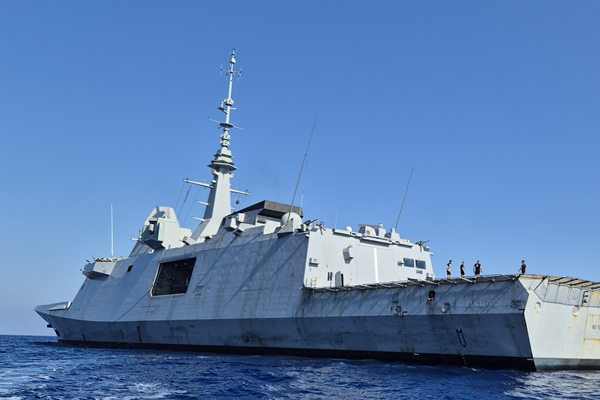
To boost the island’s defences, Greece sent two frigates – the Kimon and Psara carrying the Centaur anti-drone system – and four F-16 fighter jets based at Andreas Papandreou airbase in Paphos. France sent its frigate Languedoc with multiple capabilities, while its flagship aircraft carrier Charles de Gaulle was given the order to make its way to Cyprus from the Baltic, accompanied by Spanish frigate Cristobal Colon and a Dutch frigate – the latter being subject to Dutch parliamentary approval. Italy has also agreed to send a frigate to Cyprus while Germany opted out for now though remains at Cyprus’ disposal.
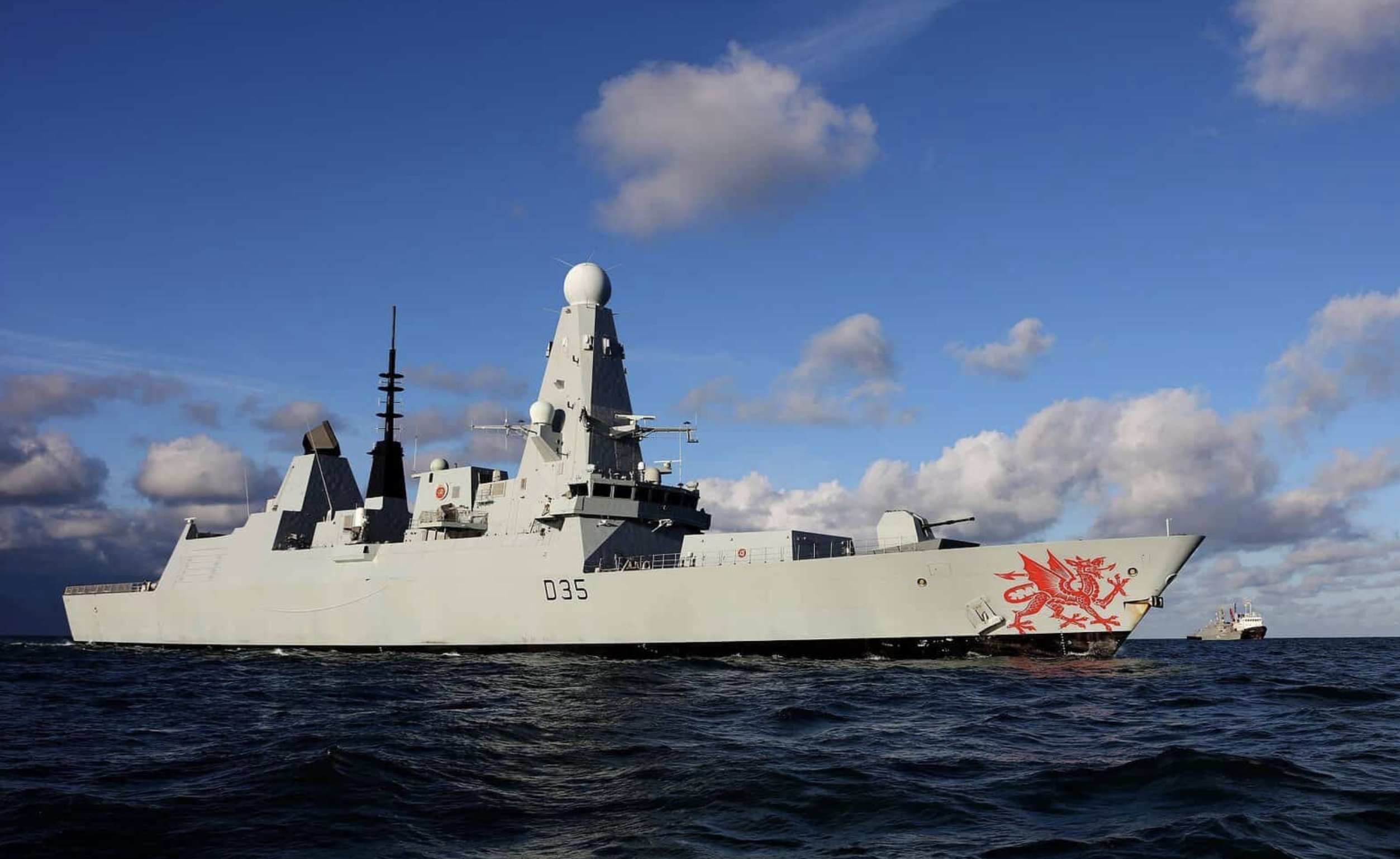
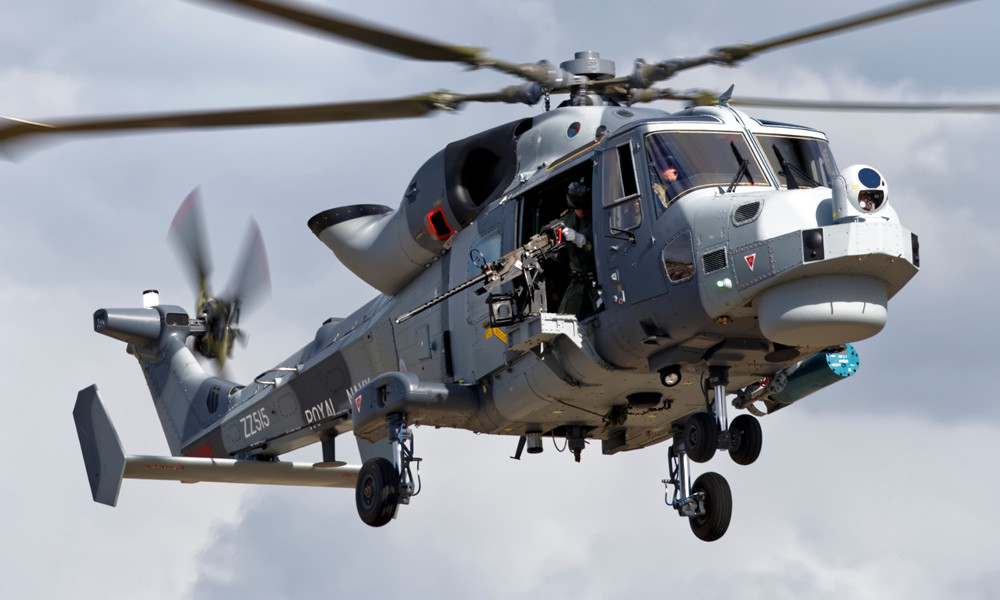
In addition to its own air-defence systems and the Typhoons and F-35 fighter jets stationed at RAF Akrotiri, the UK also agreed to send two Wildcat helicopters with anti-drone capability and its state-of-the-art destroyer HMS Dragon to Cyprus – due to arrive this week.
Cyprus under a protective umbrella
The island appears to be under a protective umbrella from UK and other European forces during this volatile and unpredictable period as Iran seeks to increase the cost of war for the US, Israel and its allies – including those not engaged in the fight.
The leaders of Italy and France – Giorgia Meloni and Emannuel Macron –reaffirmed their shared commitment to the security of Cyprus on Thursday, while Macron and Greek premier Kyriacos Mitsotakis also discussed the latest developments in Iran, Cyprus and Lebanon.
War with Iran a ‘mistake’
Spain’s Prime Minister Pedro Sánchez said on Friday that the US-Israeli war against Iran was a “huge mistake”. Regarding Madrid’s decision to send a frigate to Cyprus, he said: “With the same determination with which we say, ‘No to the war in Iran,’ we stand in solidarity with and will assist a European Union member state that is a victim of this war.”
Sources with knowledge of military and operational matters told CNA that all multinational assets are in coordination and communication.
They provide security and support as a preventive measure for Cyprus and its infrastructure, but at the same time, they may also contribute to the evacuation of foreign citizens from the region if needed, said sources.
NATO prospect
"The fact that these countries are members of NATO helps us because the language of communication is common and we are also gaining experience. A meeting was also held in Paphos on the rules of engagement," they said, adding that there has been communication with the US from the very beginning.
The same sources explained that there is now a Cypriot officer at the Bases and when the sirens sound there is complete coordination on the next steps.
As for the future, when asked whether Cyprus would discuss the issue of the bases after the conflict ends, President Nikos Christodoulides said he rules nothing out. He also made his intention to join NATO clear, when circumstances allow. The UK Deputy Prime Minister David Lammy appeared to find the circumstances most amenable on Friday, when he said in a live interview with the BBC that the safety of the British bases in Cyprus was important not only for the UK, but also the region. “Of course, we work very much with our allies because Cyprus is a NATO country,” he noted in error.
A brief history
The last time the British bases came under attack was on August 3, 1986, by a pro-Libyan group that fired mortars, grenades and machine guns from the perimeter of RAF Akrotiri, injuring three people. A group calling itself the Unified Nasserite Organisation claimed responsibility for the attack, citing Akrotiri’s role in the US attack on Libya and attempted assassination of then Libyan leader Muammar el-Qaddafi on April 15, 1986. The group also charged that Akrotiri was used to provide information that helped Israeli warplanes attack the Tunis headquarters of the Palestine Liberation Organisation (PLO) in October 1985, as well as play an instrumental role in the invasion of Egypt during the Suez Crisis in 1956.
The British bases in Cyprus have operated for decades as the UK’s unsinkable aircraft carrier in the region, used for operations across the Middle East and Gulf – including by US spy planes – and for intelligence gathering, acting as the ‘eyes and ears’ of Western powers.
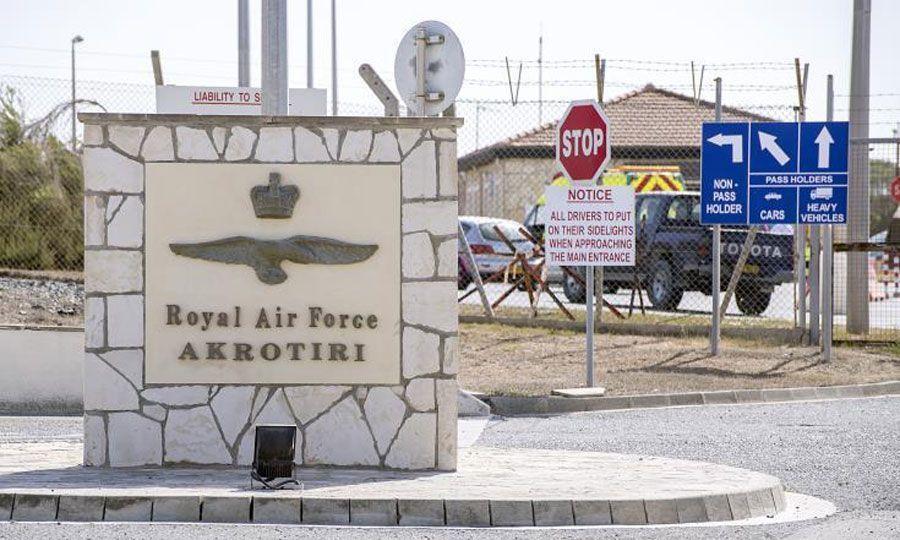
The 2010 WikiLeaks diplomatic cables between the UK and US revealed the political and operational importance of RAF Akrotiri to both countries. While the UK expressed concern about being complicit in CIA “extraordinary rendition” flights passing through Akrotiri, the US found the UK’s concerns “burdensome”, noting that restricted access to the RAF airbase would “hinder, if not obstruct” vital counter-terrorism efforts. The leaked diplomatic cables also revealed that the UK was concerned that Cypriot hypersensitivity about the use of the bases could lead Cyprus to “turn off the utilities at any time”. A senior UK Foreign Office official noted in the cables that the British government “desperately needs” the British bases for its own intelligence gathering and operations but was committed to keeping them available to the US and France.
The 2013 Edward Snowden Leaks revealed the intelligence and surveillance value of the British bases and retained sites on the island, which host “a wide range of UK and US intelligence facilities”.