
By Neuza Oliveira
As someone with memory of the analog days – when you could hop on your bicycle and disappear for long afternoons having shoulder-to-shoulder adventures with friends, with a healthy dose of mischief – I feel sad that we are depriving our own children of such simple joys. The modern child is left starving for genuine human connection in the wild-west of the virtual world.
Under House-Arrest
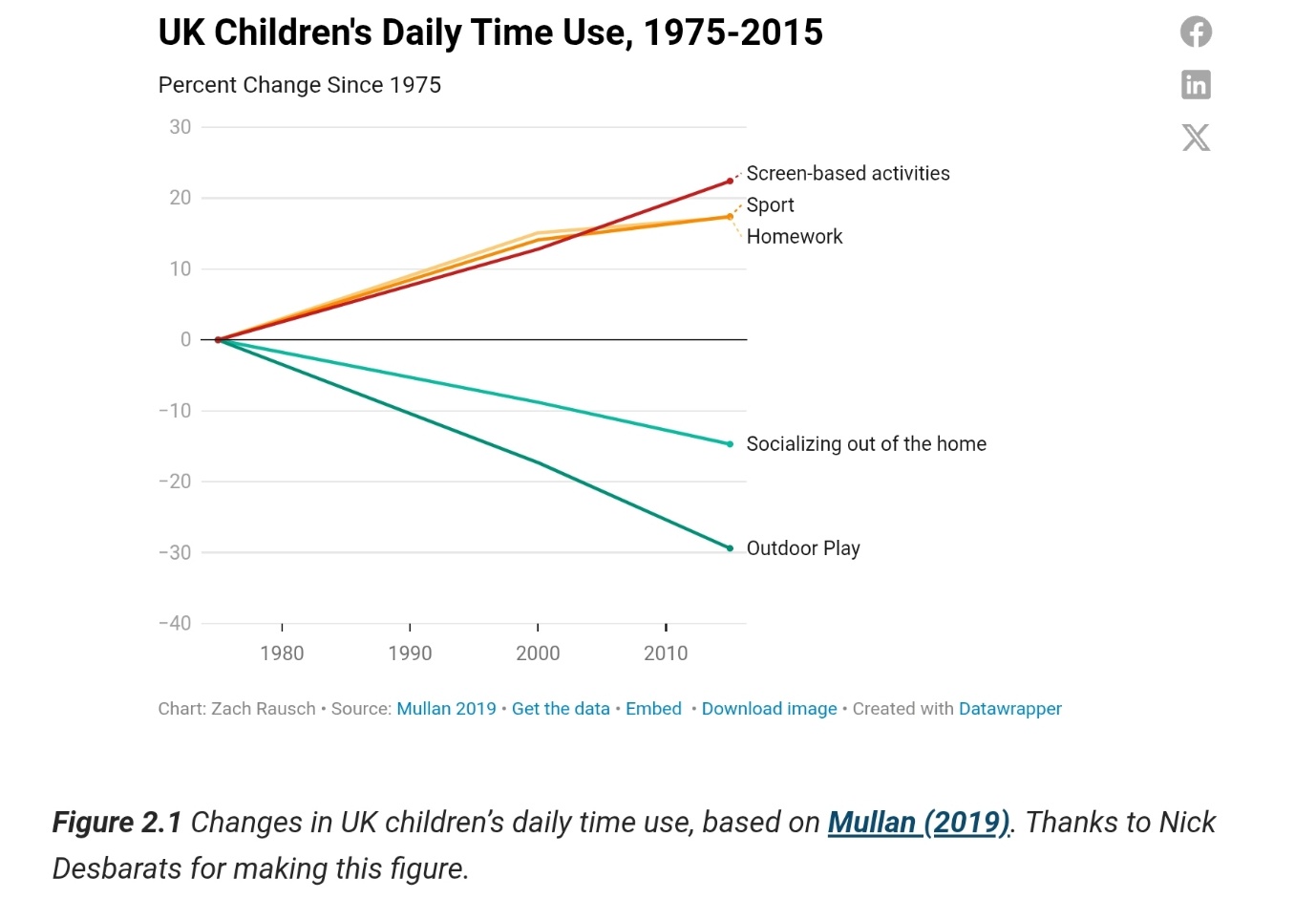
Did you know that most Western children today are spending less time outside than prison inmates? You read that right. The UN guidelines for prisoners mandates that prisoners be given at least 1 hour of open-air time daily. However, in 2016, a large survey of 5-12 year olds in the UK found that 74% of those children spent less than an hour playing outside each day11. This likely applies to most children in the Western World, especially since the spreading use of smartphones amongst older children. The result is a cohort of children largely shuttered away from outside play and socialising, which undoubtedly hinders their psychological wellness and development of fundamental social skills.
The War On Screens
We’ve all noticed: our kids have lost interest in anything that doesn’t come with a screen. It’s really not their fault. These devices are designed to hijack their attention. All that it take is access to a smartphone or tablet. These devices are so dopamine triggering, so addictive, that everything else feels dull in comparison.
Like with other addictions, we need to cut back, ride out the withdrawal and retrain their brains to enjoy the healthier things. According to a world-leading addiction psychologist, Dr. Anna Lembke, we can help re-wire our childrens’ brains to enjoy a screen-limited childhood in a matter of months17. But I know, it’s much easier said than done! Trust me, I’m struggling in the trenches with you. Here are some expert-backed strategies that might actually work.
- Set clear, firm and consistent boundaries around device usage. For children, the advised maximum screen time per day is 2 hours, but under-2s, screens are a no-go zone. You can utilise parental control tools to set time limits. If they’re finding this difficult, try switching their screen to grayscale. Suddenly, it all looks a lot less exciting. If that fails, change the passwords and keep them guessing.
- Absolutely no social media apps or short video content – that is Instagram, TikTok, Snapchat, or regular Youtube. I’ll add Roblox to this list too, which alongside Snapchat are widely used by child sex abusers19. These are by far the worst offenders for their mental health and for lowering their attention span. If you’re curious to know the inner workings of this, I recommend the terrifyingly insightful books ‘The Anxious Generation’ by Dr. Jonathan Haidt and ‘Dopamine Nation’ by Dr. Anna Lembke. Youtube has developed a kids version (Youtube Kids) which doesn’t show ads and generally only shows age appropriate content. Plus it has controls to limit short video content, which is particularly harmful to their developing brains.
- Establish meal-times as a phone-free time and bedrooms as no phone or tablet zones. Set up a device drawer or a charging station somewhere out of sight, so gadgets aren’t sneaking into dinner or bedtime. That way, you might actually get a conversation going at the table, and everyone stands a chance of getting some sleep.
- Model the change you want to see. Yes, that means putting your own phone down too. I know, it stings. But if you show your kids that you can survive without constant scrolling, they might just follow suit. If your family thrives on competition, turn it into a game: whoever racks up the least screen time in a week wins breakfast in bed, pancakes and all. Bragging rights included.
- Swap screen time for actual fun: sports, board games, crafts, comic books, or even the ancient art of calling a friend on a landline. Yes, those still exist.
- Failing all that, just get a brick phone. Yup, bring back the basic Nokia that can’t handle any app use. Sorted. We’ll all rediscover the joys of Snake.
Missing People Skills
Instead of free play, we’ve become maestros of the after-school schedule, filling every hour with something ‘productive’. We’ve gotten really good at getting our children to excel in their academic performance, but when it comes to people skills, we’re dropping the ball. We need face-to-face interactions to develop the necessary social skills to thrive, but we’re keeping our kids indoors because, let’s be honest, “inside is easier, inside is safer” and “I don’t have time to take them here and there”.
I’ll admit, I’m guilty of the same. But guess what, you don't have to chauffeur them about town to play. Our parents didn’t chaperone us throughout adolescence. We transitioned into independent activities earlier than our children and we're fine; better than that, we are better for it!
Our kids need the same chance to figure things out for themselves, to realise they can do things without us hovering. That’s how they build confidence and a sense of agency. Instead, we’re passing down our own overprotective jitters, and our kids are left nervously tiptoeing through their personal evolutions.
Childhood Now Ends at 25
Somehow, we’ve managed to make ourselves indispensable for longer than ever before. Childhood now seems to stretch into the mid-20s, children are not flocking our nests or landing steadily on two feet. Alongside more urbanised environments and less social cohesion in communities, the age-old free-range childhood and the sense of community have eroded away bit by bit. In its place has stepped in a paranoid version of parenting, with overestimation of dangers.
We used to rely on our neighbours and community members to look out for our young. If they saw them misbehave or in need, they would step in. As we have become more individualistic as a culture, looking out for ourselves above others, this shift has made us less trusting of others and more likely to feel awkward about intervening with someone else’s child. We fear that others are a potential threat to our precious spawn, when in reality this is almost never the case, especially in Cyprus, which has a relatively low crime rate20,21.
This new age of parenting alone is damaging us and our children. It was never meant to be done by one or two persons. The saying "it takes a village" is undeniable - but we've bulldozed our village and put up a fence.
Children Are not as Fragile As We Think
Kids are naturally anti-fragile – think of them like immune systems in trainers. Just as our bodies get tougher by facing down a few germs or a vaccine, children need to tackle manageable challenges to build up their resilience muscles. If we shield them from every bump and bruise, we’re not protecting them—we’re leaving them unprepared for the bigger battles ahead.
We need to "prepare the child for the road, not the road for the child" – life comes with potholes. We’ve insulated them from frustration and negative emotions. We cleared their path of obstacles creating a 'bubble of satisfaction' – so when they face ordinary disappointments, they feel unmanageable. So let your child take small risks, get a few scrapes and learn from the bruises. Incrementally, this will develop their ability to take on bigger beasts.
So What Can We Do?
We need to delay their entry into the virtual world, allowing them more time in the real world developing life skills. Here’s the catch: we’re all stuck in a ‘collective action problem’. If only a handful of us send our kids outside, there’s no one for them to play with. The strategy falls apart. Ιf we work collectively, however, they can start getting their happiness fixes from being in each others’ companies than getting their hits from pressing buttons on a screen.
Like in dating, someone needs to make the first move. Start with getting to know your neighbours who have kids. You see them leaving their house? Strike up a conversation, invite them over for a coffee for the kids to play. Before you know it, you might have a casual open-door policy: school-aged kids can just ring the bell and play. Remember those days?
A few ideas to fill the non-screen time.
- Let them play with the local kids at the neighbours’ house, and vice versa. Take turns. Things don't have to be orchestrated and they don't need professional-level catering – popcorn, fruits and juices will suffice. If they’re 6+, you’ll barely have to watch them.
- Organise playground shifts between local parents. We don’t all need to go – no need for a full parental SWAT team. One adult is usually enough if they’re of school age. Incremental steps are the key.
- Give them escalating responsibilities. This could be household chores, walking and feeding the dog, putting away the food shop, etc. There are plenty of age-appropriate suggestions out there on the web, even for a 3-year-old!
- If they are teenagers, let them get a summer job or do a 'cultural apprenticeship' by shadowing a relative or family friend at work. It’s character-building, and gives you a break from their eye-rolling.
- And let them be bored. Seriously, it’s good for them. Don’t micromanage every minute – let their minds wander into daydreams and do useless sh*t. No harm will come to them.
Take these idea embers and start a raging fire with them! Inch your way into giving them more freedoms. Baby steps, but with bigger shoes.
I’d love to hear your suggestions in the comments!