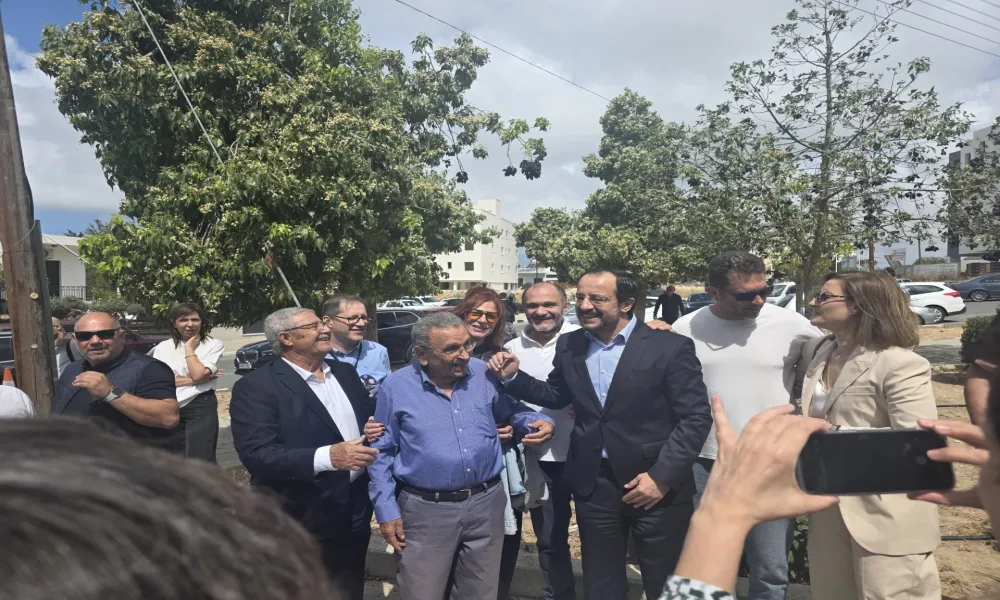
Voters across Cyprus are participating in parliamentary elections today, with political leaders heading to their respective polling stations from early morning to cast their ballots. The electoral process commenced at 07:45 in Strovolos and is scheduled to continue throughout the afternoon, concluding at 14:30.
Leaders outline visions during early voting
The political figures expressed their hopes for the country, emphasizing issues ranging from the Cyprus problem to economic and social challenges.
Nicholas Papadopoulos, the President of the Democratic Party (DIKO), voted at 09:15 in Engomi accompanied by his family. He stated that the next parliament would determine the future of the country, its families, and its youth. He urged all citizens to participate in the democratic process to protect established achievements, safeguard economic performance, and maintain stability.
Stefanos Stefanou, the General Secretary of AKEL, cast his ballot at 09:00 at the Geri First Primary School. He described voting as a primary act of responsibility rather than just a right. He called on citizens to vote with awareness of the deep problems facing society, the necessity for a solution to the Cyprus problem that frees and reunites the island, and the needs of the younger generation.
Marios Garoyian, the President of the Democratic Alignment (DIPA), cast his vote at the Engomi Second Primary School, issuing a call for national unity and a collective effort to manage the significant challenges confronting Cyprus.
In statements immediately following his vote, Garoyian declared that the post-election period must be a time for consensus, cohesion and synthesis, asserting that collective decisions are vital to moving the country forward. He reflected critically on the preceding campaign, describing it as an exercise marked by tension, toxicity, personal disputes and unproductive conflicts that deflected attention away from the genuine issues affecting society.
The DIPA leader highlighted that Cyprus faces compounding economic, institutional, social and moral challenges, compounded by external risks stemming from geopolitical developments and ongoing conflicts in the wider region and across Europe. He maintained that these complex problems cannot be resolved through slogans or wishful thinking, emphasizing that no single political entity can manage these challenges in isolation.
Despite acknowledging a prevalent sentiment of pessimism within portions of the electorate, Garoyian expressed underlying optimism for the future. He noted that the electorate holds ultimate authority through the ballot box and stressed that the final verdict of the citizens must be fully respected by all political actors. Concluding his remarks, he urged voters to demonstrate their commitment to the country through constructive behaviour rather than rhetoric, ensuring a stable path forward for subsequent generations.
Christos Clerides, the President of Democratic Change, voted at 08:00 at the Lycavittos Primary School in Nicosia. He thanked the media and the 9,000 electoral officers managing the process. Noting the historical significance of his polling station, he expressed confidence that democracy would prevail and urged citizens to vote using their knowledge and logic.
Apostolos Apostolou, the leader of Popular Struggle, was the first to vote at 07:45 at the Agios Spyridonas Primary School in Strovolos. He declared that the core objective of his party remains the liberation of Cyprus.
Former President of the Republic Nicos Anastasiades cast his ballot at 09:30 at the Lanitio Lyceum in Limassol. He was accompanied by his wife, Andri Anastasiadou, and senior officials from the Democratic Rally (DISY), including Fotini Tsiridou and Efthymios Diplaros.
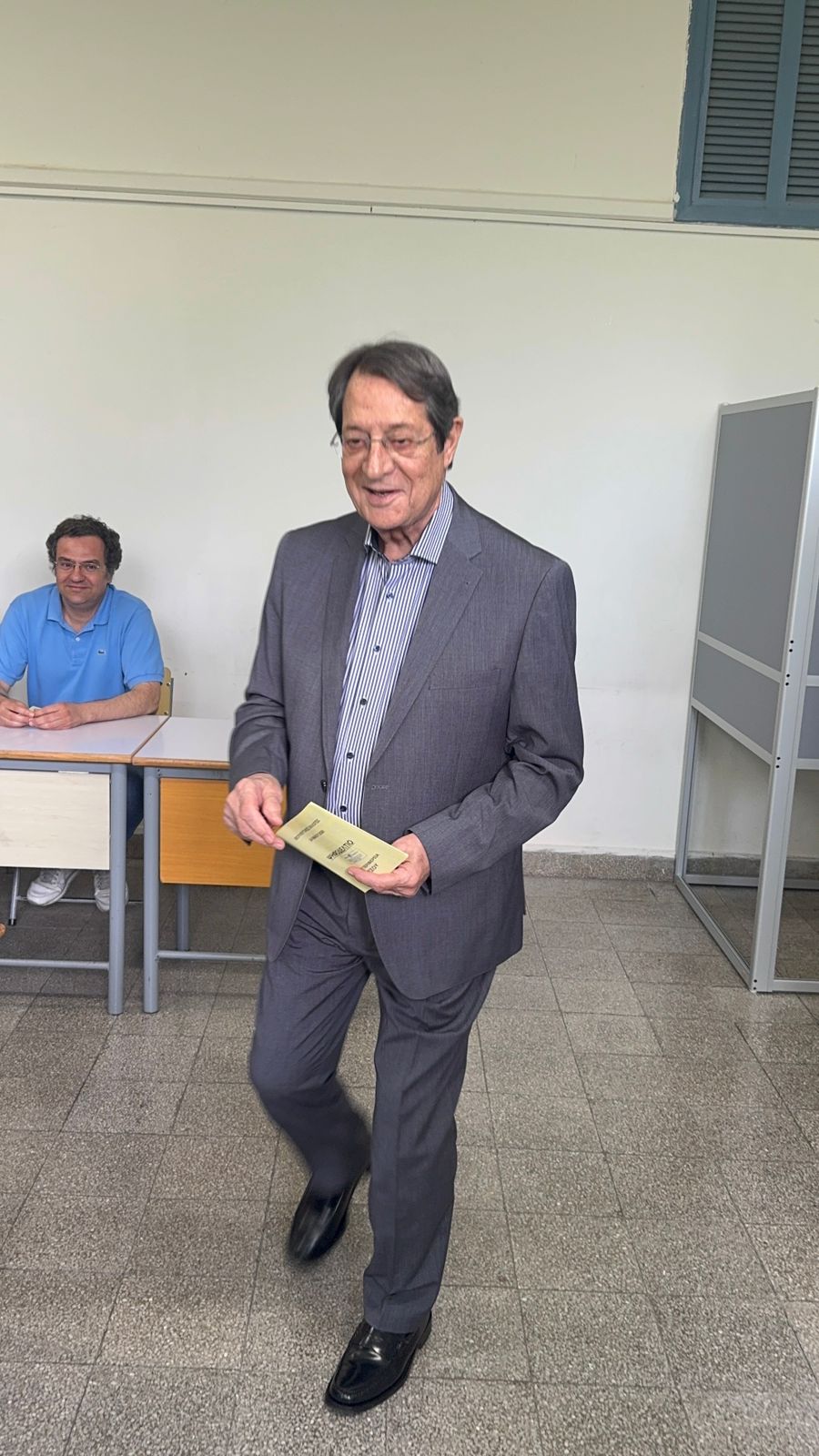
In statements following the vote, Anastasiades remarked that whilst election day is traditionally referred to as a celebration of democracy, he hoped this spirit would remain the following day. He urged the public not to allow negativity and confrontation to prevail, stressing the critical need for understanding and consensus for the benefit of the country.
When asked about the unprecedented number of candidates in this electoral contest, the former president observed that inflation does not always benefit an economy and often causes instability. He acknowledged, however, that every individual has the right to seek the trust of the electorate, and that choice must be respected.
Anastasiades concluded by warning that mistakes made at the ballot box cannot be undone, emphasizing that the country requires stability and political forces that do not operate with self-promotion as their primary motive. He characterized this requirement as the central stake of the election.
Nikos Christodoulides, the President of the Republic, cast his ballot at 10:00 at the Geroskipou First Primary School, accompanied by First Lady Philippa Karsera Christodoulides.
In statements following his vote, President Christodoulides characterised the electoral process as highly significant, noting its direct impact on the legislative branch and the functioning of the state. He expressed the executive power's desire for a parliament with which it can achieve excellent cooperation, primarily for the benefit of society and citizens.
The President highlighted that the government has advanced functional reforms, specifically referencing the automatic registration of citizens onto electoral rolls from the age of 17 for future elections. He called on citizens to participate in the process, underlining the importance of turnout and stating that abstention does not benefit democracy.
Regarding the eventual election results, Christodoulides stated he felt no anxiety, adding that the government would work with the new parliament to move the country forward. He affirmed that the government stands ready to cooperate with the political forces that emerge from the new House of Representatives, provided there are shared goals and visions based on the administration's ideological and political orientation.
Reflecting on the pre-election period, the President remarked that a greater level of dialogue and exchange of views regarding the Cyprus problem and other societal issues would have been preferable. Asked about his personal voting choices in the Paphos district, he noted that his decisions were made based on his ideological orientation and the principles of social liberalism.
Annita Demetriou, the President of the Democratic Rally (DISY), cast her ballot at 10:30 at the Troulloi Primary School. She was accompanied by her father, her sister, her husband, and a group of friends and associates from her party.
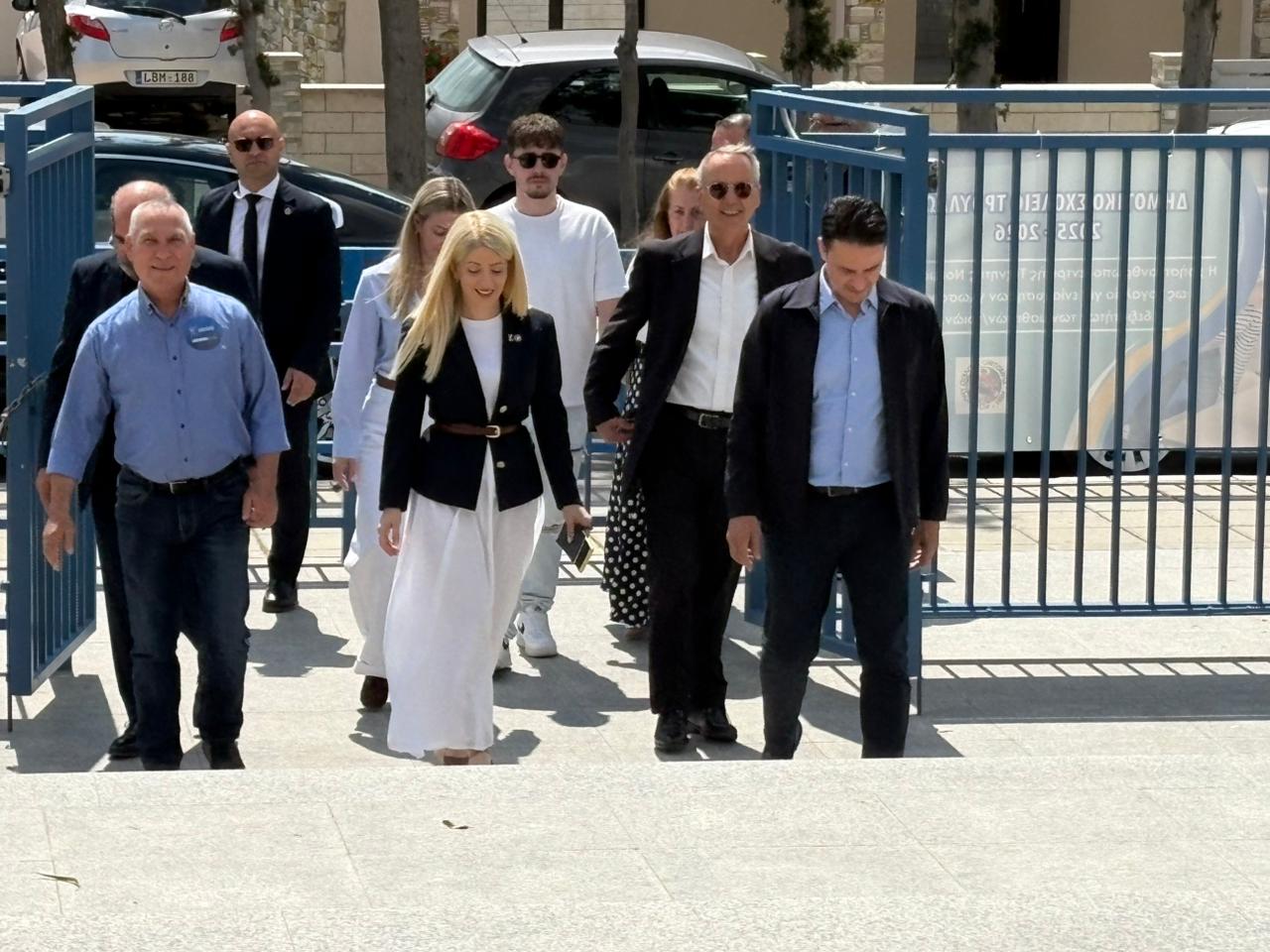
In statements following the vote, Demetriou characterised the occasion as a day of democracy, hope, and optimism. She noted that the outcome of the electoral process would determine how parliament proceeds and addresses difficult challenges during a critical juncture for the country.
The DISY leader expressed her confidence regarding stability, responsibility, and future prospects, stating her certainty that citizens would fulfil their duty for the present and future of Cyprus. Demetriou concluded by emphasizing that the public ultimately decides the outcome, and their decision must be respected by all sides.
Christos Christou, the President of the National Popular Front (ELAM), cast his ballot during the morning polling period, stating that election day represents the occasion when the citizens hold the ultimate say.
In remarks following his vote, Christou noted that his party is awaiting the verdict of the electorate, which he said will determine the political standing and corresponding legislative strength of each political formation.
The ELAM leader affirmed that the party stands fully prepared to assume whatever responsibilities arise based on the final results of the electoral contest. He concluded his appearance by issuing a general call to all citizens to attend their local polling stations and exercise their right to vote.
Nicos Anastasiou, the President of EDEK, cast his ballot at 11:00 at the Agios Georgios Second Primary School in Kato Polemidia.
In statements following his vote, Anastasiou extended his gratitude to the civil servants and personnel working to ensure the smooth conduct of the electoral process, as well as to journalists and studio staff covering the election.
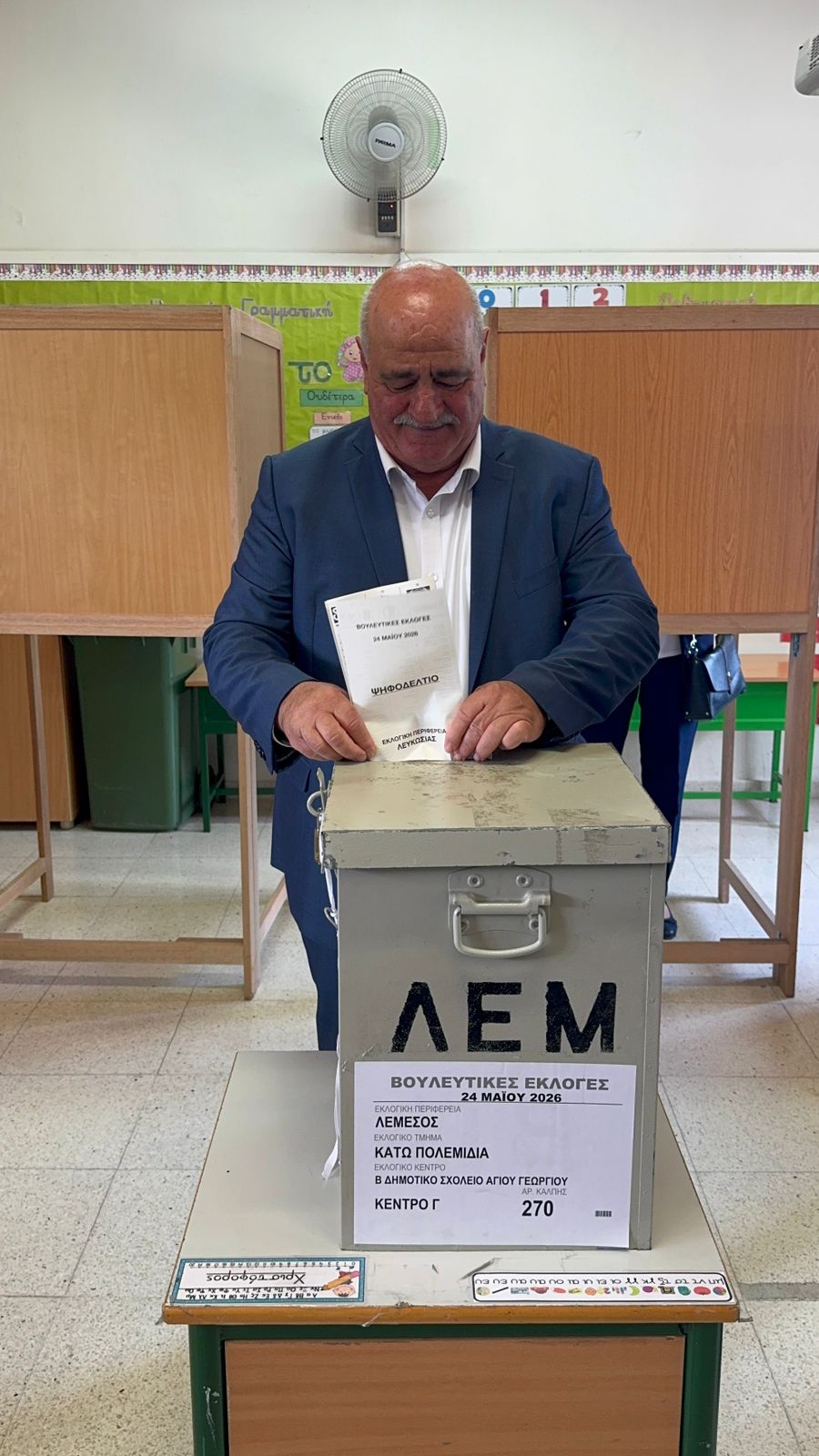
The EDEK leader emphasized that ultimate power rests with the electorate through the ballot box. He issued a strong call for high voter turnout, urging citizens to engage directly with the democratic process and stating that the public must move past offering criticism from the comfort of their sofas.
Anastasiou concluded by noting that Cyprus requires a functioning parliament where political parties can construct meaningful collaborations, a factor he described as essential for moving the country forward.
Stavros Papadouris, the President of the Movement of Ecologists – Citizens' Cooperation, cast his ballot at 11:15 at the Apostoloi Petros and Pavlos Lyceum in Limassol.
In his statements following the vote, Papadouris urged citizens to exercise their unalienable right by participating actively in the ongoing electoral process. He targeted online discourse, remarking that the public has spent enough time living with criticism channelled through various social media accounts and emphasizing that the ballot box remains the proper forum for expressing tangible opinions.
The Green Party leader also advocated for long-term electoral reform, noting that whilst casting his vote, he reflected on the need for the state to mature politically. He expressed the hope that future contests will move away from rigid, vertical party-line voting in favour of a more horizontal system, which he argued would foster a change in political culture and encourage broader cooperation between political forces.
Papadouris concluded by describing the current electoral contest as critical, though he contextualised the high stakes by comparing the dynamic to previous legislative elections in 2011, 2016 and 2021, suggesting that the political system is accustomed to navigating such challenges.
Andromachi Sofocleous, the co-president of Volt Cyprus, cast her ballot at 11:30 at the Agios Vasileios Gymnasium in Strovolos.
In statements following her vote, Sofocleous noted that Volt operates on the principle that hope is generated through direct action, which she stated aligns with the party's activities over the past two and a half years. She described the movement as a collective political effort by individuals who organized to present concrete proposals and a distinct vision for the future of Cyprus, backed by a slate of 56 candidates who embody the party's core values.
The Volt leader stated that the movement would remain proud of its campaign regardless of the final electoral outcome. Characterising election day as a critical juncture of democracy and civic responsibility, Sofocleous explained that the members of Volt chose to step forward rather than remain passive onlookers to a political direction that fails to satisfy them.
She expressed confidence that politics can become cleaner, more honest, more humane, and more directly engaged with the challenges confronting ordinary citizens. Sofocleous concluded by thanking the party's candidates, campaign staff, the Central Electoral Service and the media for ensuring an untarnished electoral process.
Odysseas Michaelides, the leader of the Alma movement, cast his ballot at 11:45 at the Kokkinotrimithia First Primary School.
In statements following his vote, Michaelides extended his thanks to everyone who has worked alongside him over the past year to present the electorate with a comprehensive plan and vision for the future of Cyprus.
The Alma leader described election day as a celebration of democracy where the citizens hold the floor, using the traditional proverb that the voice of the people is the wrath of God. Michaelides urged the public to attend polling stations, emphasizing that their own future is decided at the ballot box and underlining the necessity for society's voice to be clearly expressed through active participation in the electoral process.
Sotiris Christou, the President of SIKOU PANO, cast his ballot at the Macedonitissa Second Primary School, characterising the parliamentary elections as a celebration of democracy.
In statements following his vote, Christou remarked that institutional understaffing and unsuitability had exposed flaws within the democratic process, pointing to the critical need for accountability to prevent a repetition of such phenomena in future elections.
The SIKOU PANO leader issued a strong call for public participation, stating that election day represents the ideal opportunity for citizens to stand up and use their electoral power to send a new message. He emphasized that the public must demand respect from state institutions, noting that the state is ultimately comprised of its citizens. Christou concluded by urging voters to recognise that they are the owners of the state rather than its clients, reminding them that their choices at the ballot box will directly impact the next five years of their lives.
Nicolas Prodromou, the President of the Active Citizens – Movement of United Cypriot Hunters, cast his ballot at 13:45 at the Frenaros Primary School in the Famagusta electoral district. In statements following his vote, Prodromou declared that the people of Cyprus hold their destiny in their own hands today. He issued a strong call for all citizens to attend the polling stations in numbers and exercise their right to vote, emphasizing that high turnout and the eventual result would bring the change that the country requires.
The movement's leader warned that abstention inherently benefits the established major political parties. He concluded by stressing that the time has come for ordinary people to occupy the benches of the House of Representatives to deliver long-awaited reform across the island.
Andreas Themistocleous, the leader of the Democratic National Movement (DEK), cast his ballot at 13:15 at the Ipsonas First Primary School, accompanied by his daughter.
In statements following his vote, Themistocleous expressed his wish that the electoral process would leave Cyprus stronger and more determined to defend its rights and justice. He characterised the contest as the first genuine political battle for DEK, noting that it represents the movement's debut electoral test where the public has the opportunity to cast votes in their favour.
The DEK leader expressed hope that the legislative track and political footprint his party has established so far would influence the election outcome for both the movement and the country. He extended his appreciation to his fellow candidates and supporters, highlighting that the campaign was executed entirely without state funding or sponsorships, and argued that the state should provide greater institutional support to smaller political parties.
Themistocleous concluded by stating that the most critical factor is for citizens to base their choices on the present and future of Cyprus, ensuring that future generations can live securely, stably, and freely on their ancestral land.
Fidias Panayiotou, the President of Direct Democracy Cyprus and Member of the European Parliament, cast his ballot at 13:30 at the Meniko Primary School.
Panayiotou, who wore a suit for the occasion, utilized his digital identity credential via his mobile device to complete the voting procedure. He was accompanied to the polling station by his wife, Styliana Averkiou, and his parents.
In statements following the vote, Panayiotou extended his thanks to the electoral staff managing the polling stations, the media covering the election, and the citizens who had already cast their ballots. He reminded the public that voting concludes at 18:00, issuing a targeted appeal to young voters to participate in the process and urging them not to forget or delay their arrival at the booths.
The Direct Democracy leader noted that his party is highly pleased with the day's proceedings and extended his wishes for success to all competing political parties and candidates. He concluded by stating that the electorate is poised to turn a page regarding the future of democracy in Cyprus, asserting that this political trajectory commenced during the European elections and would find its continuation in today's legislative outcome.