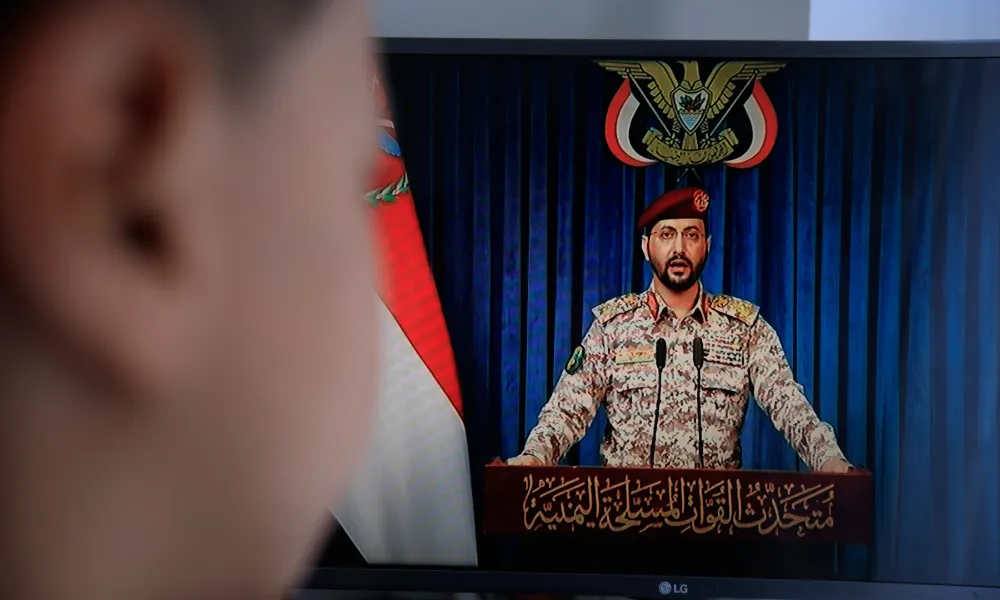

For weeks, Houthi rebels in Yemen had threatened to extend their campaign against shipping beyond the Strait of Hormuz conflict zone. On Thursday, that threat became reality. The group claimed responsibility for striking two Saudi-linked oil tankers in the Red Sea, and within hours the international oil price had briefly broken through $100 a barrel, a level not seen since May.
A blockade turns into an attack
The strike is significant less for its scale than for what it confirms: this was the first Houthi attack on a vessel since the group declared a blockade on shipping connected to Saudi Arabia. According to SABA, the Houthi-run news agency, the tankers Encelia and Layla were both hit and caught fire. Casualties have not been reported. Saudi Arabia confirmed the Encelia was struck overnight but has not commented on the second ship. The UK Maritime Trade Operations agency said it had logged a report of a tanker hit by an unidentified projectile roughly 130 kilometres southwest of the Saudi port city of Al Shuqaiq.
The Houthis frame the action as retaliation, pointing to Riyadh's blockade of Yemeni ports and a recent strike on Sanaainternational airport, in the Houthi-held capital. Their record complicates that framing: during a previous blockade declared against Israel-linked shipping, the group also struck vessels with no clear connection to the Gaza war, unsettling global trade well beyond its stated targets.
Why a second chokepoint matters
The real risk here is geographic. Roughly 12% of global trade, and close to a quarter of the containers moving between Europe and Asia via the Suez Canal, passes through the Bab el-Mandeb strait, the waterway the Houthis are now threatening. That matters more than usual because Saudi Arabia has been routing much of its oil through this exact corridor, via pipeline to the Red Sea port of Yanbu, specifically to avoid the fighting around the Strait of Hormuz further east. Shipping analysts at Lloyd's List Intelligence described the new attacks as a "double blow" to oil transport: the alternative route Saudi Arabia built to dodge one war zone is now exposed to another.
Washington's warning, Tehran's response
The attacks landed as the United States carried out strikes on Iran for a twelfth consecutive night. President Donald Trump warned of "great military punishment" if the Houthi attacks continue, and said Washington would hold Iran, which backs the group, directly responsible. "If they do it again, the US will hold Iran responsible, since the Houthis are its proxy and puppet, and there will be great military punishment imposed on both Iran and the Houthis themselves," he wrote.
Markets responded immediately. Brent crude rose more than 6% to around $100 a barrel.
Iran, meanwhile, continues to assert a right to control shipping through the Strait of Hormuz, previously open to all vessels without charge, and to strike vessels travelling routes monitored by US forces. Foreign Minister Abbas Araghchiwarned Iran would respond on an "eye for an eye" basis; US Secretary of State Marco Rubio countered that Trump's policy calls for disproportionate retaliation. "The price will continue to rise every night until they come to their senses," Rubio told reporters in the Philippines.
Iranian state media reported US missile strikes near Ahvaz, Ramshir and Andimeshk in western Iran, with two people killed in a strike on Salamtscheh, near the Iraqi border. US Central Command says the goal is to limit Iran's ability to threaten commercial and military shipping in the region. Iran has hit back at energy and desalination facilities in neighbouring Gulf states: Kuwait reported drone damage at an Iraq border crossing with no casualties, while sirens sounded in Bahrain and residents were told to seek safe shelter.
With information from Associated Press