
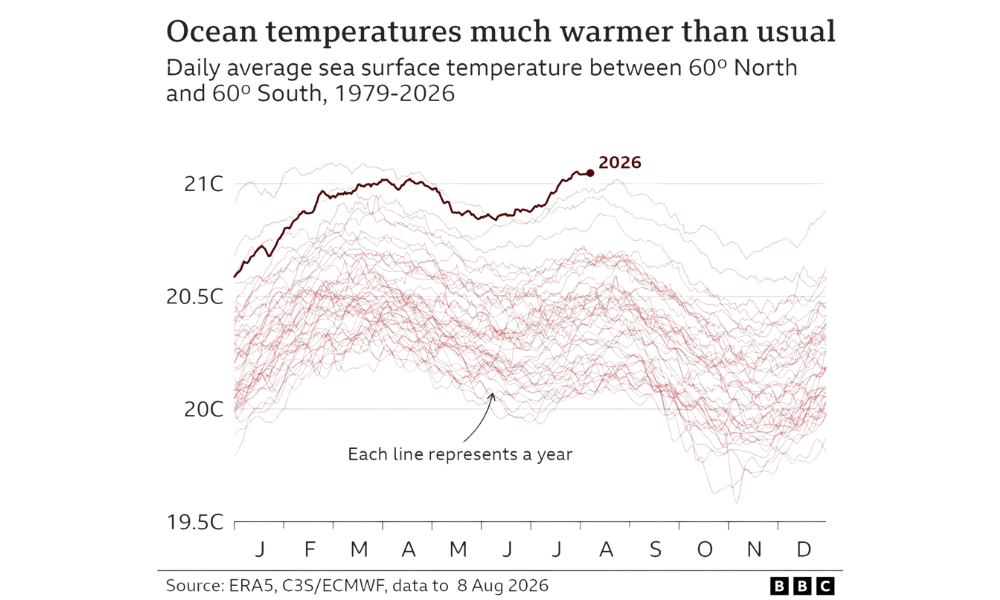
The world's oceans recorded their hottest-ever July temperatures, according to the Copernicus Climate Change Service (C3S), implemented by the European Centre for Medium-Range Weather Forecasts (ECMWF). The average sea surface temperature across the extra-polar oceans, between 60 degrees north and 60 degrees south, reached 20.96C last month, surpassing the previous July record of 20.89C, set in 2023.
A record driven by El Niño
The record was partly driven by developing El Niño conditions in the tropical Pacific, where sea temperatures remained exceptionally high and are forecast to strengthen further in the coming months. Around Europe, sea surface temperatures reached record highs for July along the Atlantic coast and in the western Mediterranean, contributing to widespread strong and severe marine heatwaves.
Globally, July 2026 was the joint second-warmest July on record, with an average surface air temperature of 16.90C, tied with July 2024.
Western Europe's hottest June and July
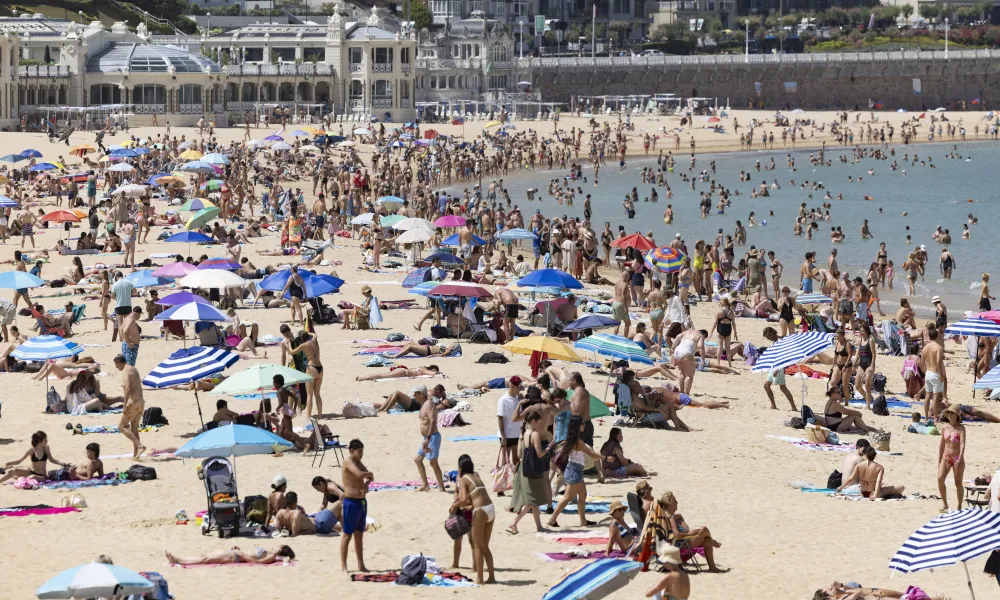
Western Europe recorded its hottest-ever June and July, with an average temperature of 21.62C across the two months, 2.79C above average. Samantha Burgess, strategic lead for climate at the ECMWF, said July 2026 was the third consecutive month of exceptional heat in western Europe. Persistent high-pressure systems trapped heat over the region, she said, while dry soils reduced the region's ability to provide natural cooling.
Rainfall and soil moisture were exceptionally low across France, Spain, parts of Germany and the UK. River levels fell well below average, with the Seine, Rhine and Danube among the rivers most affected, adding pressure to water supplies, irrigation, aquatic ecosystems, river transport and energy production.
Extreme wildfire activity
The prolonged hot and dry conditions created favourable conditions for wildfires, with Copernicus recording "exceptional activity" in terms of area burned and smoke and emissions generated across western Europe last month.
UK's driest July since records began
England and Wales recorded their driest July since Met Office records began, close to 190 years ago in 1836, according to the Met Office. Southern England recorded its driest month on record in the same series. Large parts of England and the whole of Wales have already been officially declared in drought, and the Environment Agency has said more areas of England could follow if dry conditions persist.
How ocean warming affects the wider climate
Oceans absorb most of the excess heat generated by greenhouse gas emissions and produce roughly half of the Earth's oxygen. As seawater warms, it expands, a process known as thermal expansion, which accounts for roughly a third of the sea level rise recorded by scientists to date. Warmer oceans are also linked to longer and more severe marine heatwaves, which have bleached coral reefs, and to warmer ocean surfaces evaporating more heat and moisture into the air, which can intensify tropical storms.
Scientists say the world is now roughly 1.4C warmer on average than it was in the late 19th century, with El Niño expected to push global temperatures temporarily higher still.
Source: Copernicus Climate Change Service (C3S)/ECMWF; UK Met Office