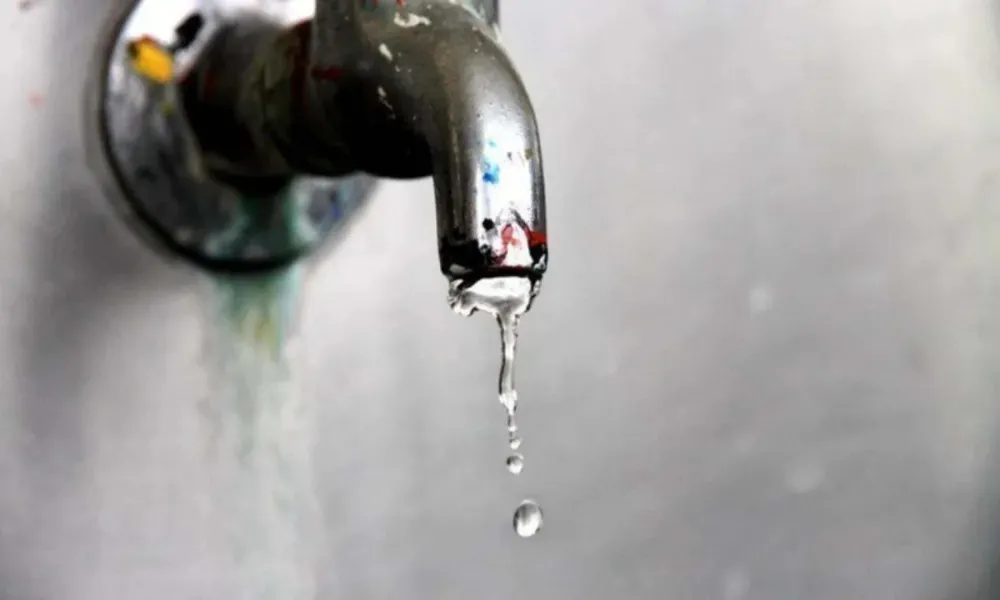

Every glass of treated tap water contains trace chemicals that have never been directly tested. Researchers know of several hundred disinfection byproducts, but the US Environmental Protection Agency (EPA) currently regulates only 11 of them. A team at the Stevens Institute of Technology has used machine learning to rank the rest by how dangerous they might be, according to a study published in January 2026 in the journal Environmental Science & Technology Letters.
Why tap water is chemically treated
Water utilities add chlorine or chloramine to kill bacteria, viruses and parasites, a practice that dates back to Jersey City, New Jersey, which began routine chlorination in 1908; typhoid deaths in American cities fell steeply as the practice spread. However, these disinfectants continue reacting after their job is done, combining with dissolved organic carbon, the leftover trace of leaves, soil and algae carried in from rivers and lakes, to form new compounds known as disinfection byproducts (DBPs).
Epidemiological studies have linked two families of DBPs, trihalomethanes and haloacetic acids, to bladder cancer and to problems in foetal development. These, along with bromate and chlorite, are the substances currently regulated by the EPA. Researchers have also tied PFAS detections in some US regions to higher cancer rates.
A testing bottleneck
Toxicity testing is typically carried out one chemical at a time, in cell cultures and animal embryos, a process that is slow and costly. Tao Ye, assistant professor of civil, environmental and ocean engineering at Stevens, said traditional laboratory toxicity testing is "often time-consuming, labour-intensive, and expensive." By the research team's count, experimental toxicity data exist for fewer than one in three known byproducts.
One recent example is the chloronitramide anion, identified by chemists at the University of Arkansas in November 2024, decades after researchers first noticed an unexplained product of chloramine breakdown. It was found in all 40 samples drawn from ten US water systems across seven states, though its health effects remain unknown. Alan Roberson of the Association of State Drinking Water Administrators estimated that the toxicology work required could take a decade once funded.
How the model was built
Ye, his doctoral student Rabbi Sikder, and Peng Gao of the Harvard T.H. Chan School of Public Health collected and published laboratory results for 227 byproducts, drawing on four types of tests: cell death in hamster ovary cells, cell death in human liver cells, DNA damage in hamster cells, and malformations in zebrafish embryos.
Earlier models, which typically learned from a single test type at a time, explained between 41 and 73 percent of the variation in their data. The team's combined model explained 86 percent, a result the researchers attribute to specifying which cell type and exposure length each data point came from. A further semi-supervised step allowed the model to make predictions for chemicals with no existing toxicity data by comparing their chemical structures to those that do, extending its reach by a further 18 percent of compounds. In total, the model produced predictions for 1,163 byproducts.
What ranked highest
Three unregulated chemical families, iodinated acetonitriles, halogenated diones and halobenzoquinones, scored between two and ten times more toxic than the regulated trihalomethanes and haloacetic acids. Haloacetonitriles ranked highest for cell damage and DNA damage, while halobenzoquinones scored highest for developmental harm, consistent with earlier zebrafish research linking the compounds to heart defects and curved spines at low doses.
Iodinated byproducts tend to form when source water contains iodide, including in coastal supplies affected by seawater; the specific byproducts formed in any given city depend on the organic matter present in the source water and the disinfectant used, both of which vary. Ye stressed that the findings do not mean a single tap delivers all 1,163 compounds at once. "All in all, our tap water is safe to drink," he said.
A screening tool, not a verdict
Ye described the research as a screening step rather than a definitive risk assessment: a high predicted score is a reason to prioritise a chemical for laboratory testing or monitoring, not proof that it causes harm. In April 2026, the EPA released a draft of its sixth Contaminant Candidate List, naming 75 chemicals and four chemical groups it may evaluate for future regulation, a process the new rankings are designed to inform.
The model has been made public, with Sikder posting the underlying code on GitHub so other laboratories can test their own compounds. For households concerned about exposure, Ye said widely sold carbon filters, including low-cost cartridge designs, remove many byproducts, while boiling water allows volatile compounds to escape. "Both methods are easy to do at home," he said.
Ye received a CAREER award from the National Science Foundation earlier this year to continue developing the approach, with the next goal being to translate the predictions into treatment decisions at real water treatment plants.
Source: Earth.com