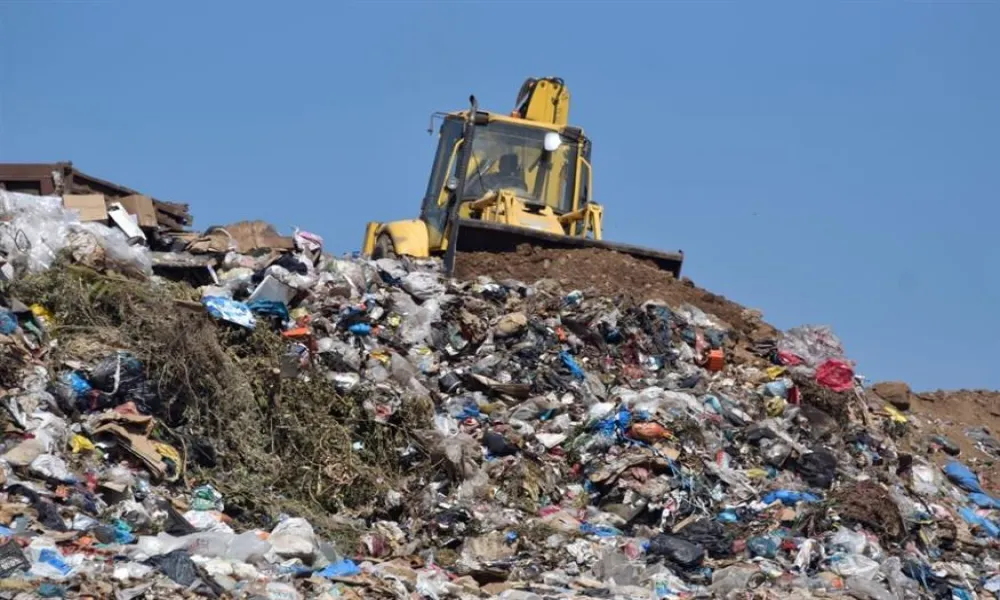

Permanent decisions on Cyprus's waste management infrastructure for the coming decades are expected in 2028, the Parliamentary Audit Committee heard on Thursday, as MPs examined possible accountability for the country's continued reliance on landfilling municipal waste and the decades-long failure to build adequate treatment facilities.
Where things stand today
Cyprus currently buries 65% of its waste, according to the Ministry of Agriculture's Director-General of Environment, Kostas Konstantinou, who described waste management as one of the most serious problems facing the country. The recycling rate stands at just 16%, far short of the targets Cyprus must meet: landfilling below 10% and recycling at 65% by 2035.
Separate figures presented during the session painted an even starker picture. Of the waste that was processed in 2024, 78.5% ended up in landfill, compared with a European average of around 23%. Recycling that year reached only 14.2%, composting 4.4%, and energy recovery just 2.9%. Average municipal waste generation was put at 688 kilograms per resident. One committee participant went further, arguing that when full landfilling rates in Paphos (100%) and Larnaca and Limassol (80–85%) are factored in, the true burial rate is closer to 90%, rather than the officially cited 65%.
Interim fixes at Koshi and Pentakomo
While the long-term plan is worked out, two ageing facilities are being kept running through interim upgrades totalling €162 million.
The Koshi (OEDA Koshi) plant, which has operated for 16 years and receives around 190,000 tonnes of waste annually, has reached the limits of its operational capacity. Pressure on the site increased after 2018, when the closure of the Kotsiatis site meant Koshi began absorbing Nicosia district's waste as well. A proposed upgrade, adding a third treatment line at a cost of roughly €100 million, would extend the plant's life by a further seven to nine years.
At Pentakomo, the state terminated its contract with the facility's contractor in 2023, and a police investigation into the matter is ongoing, limiting how much officials could disclose. However, the situation has reportedly improved significantly since the Water Development Department took over management of the site. The interim solution there is costed at €62 million.
A problem two decades in the making
The roots of today's crisis stretch back over 20 years. Planning for four waste treatment units between 2005 and 2013 was abandoned, and subsequent plans drawn up in 2006, 2013 and 2019 were also shelved without being implemented. The original 2006 design for the Kosti plant, in particular, did not deliver the results expected of it.
Cyprus has already been condemned at European level over uncontrolled waste disposal sites at Kotsiatis and Vati, with proceedings to determine penalties currently under way. Following the closure of those sites, Nicosia district's waste was redirected to Kosti and Limassol district's to Pentakomo, further straining both facilities. The Audit Service has monitored the issue since 2014, with its most recent report issued in 2022 and another expected within 2027.
What comes next
A study is under way covering existing infrastructure across the whole of Cyprus, the problems identified, and possible scenarios for a permanent settlement, ahead of the decisions due in 2028.
Separately, the "pay as you throw" system is planned for phased introduction, beginning with charges on mixed waste to discourage its generation, followed by measures targeting organic waste, and finally addressing uncontrolled disposal sites.
A further complication concerns the transfer of waste management responsibility to the District Local Government Organisations (EOA). The Ministry of Interior has recently proposed pushing this transfer back to 2029, from the 1 July 2027 date originally envisaged. Local government representatives raised concerns that any EU fines imposed on Cyprus over waste management shortfalls could ultimately be passed on to local authorities, and by extension to residents, and pointed to continued uncertainty over the timing and terms of the handover.