
The National Ambulance Service is preparing for its first run with a budget of €17.35 million. From 2027, it will change the way emergency pre-hospital care is organised in Cyprus. The new body comes under the Ministry of Health, taking over a role that the Ambulance Directorate of the State Health Services Organisation (OKYpY) will retain until the end of 2026.
The new body's operation is now also reflected financially in the 2027 Budget. The millions allocated will cover everything from staffing and running the ambulances to replacing vehicles and outdated medical equipment.
Where the money goes
The largest single amount is €8 million for the hourly-paid and contract staff of OKYpY who are being seconded to the new body. Other allocations include:
- €3 million for the purchase of ten new ambulances, replacing the same number of outdated ones, at an average cost of €300,000 per vehicle;
- €650,000 for the maintenance of ambulances and other vehicles;
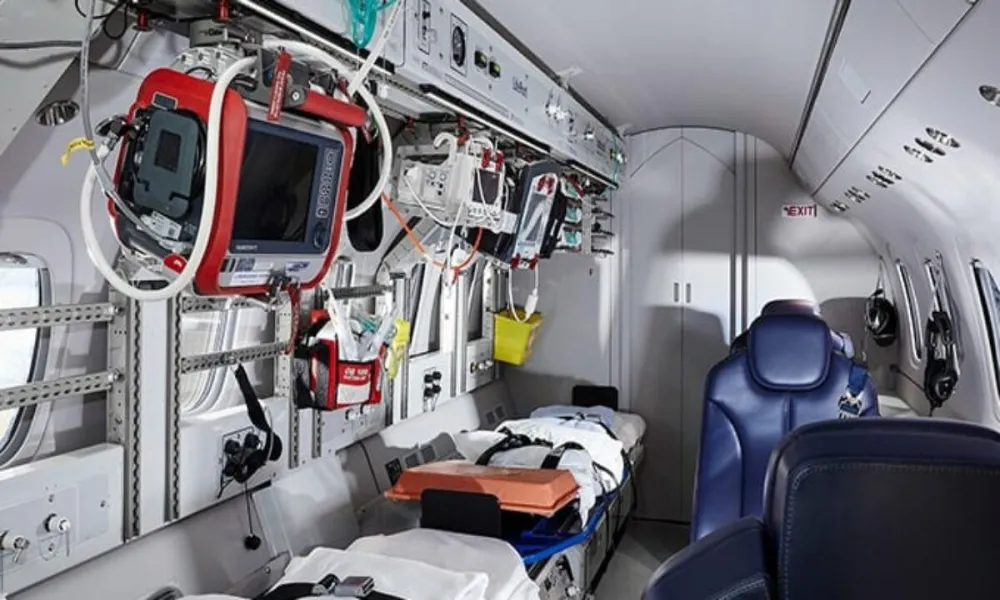
- €200,000 for replacing outdated medical equipment. Of this, €80,000 is earmarked for monitors, another €80,000 for ventilators, and the remainder for immobilisation boards, rescue bags and other equipment;
- €100,000 for new IT equipment to meet needs at the 30 ambulance stations.
What changes
The National Ambulance Service is being established as the central mechanism for the strategic planning, coordination, organisation, supervision and upgrading of emergency pre-hospital care services. Its responsibilities include transporting patients to the nearest appropriate Accident and Emergency department, as well as responding to emergencies, health crises and mass casualty incidents.
The new body's €8 million is earmarked for the hourly-paid and contract staff of OKYpY who will be seconded to the service, while another €3 million will go towards the purchase of ten new ambulances.
A key role in the new model will be played by the Operational Call Coordination Centre, which will manage calls and coordinate ambulances in real time. The legislation also provides for services to be delivered not only by land, but also by air or sea, depending on the needs of each case.
"White" ambulances for scheduled transfers
The transition to the new system also seeks to address a long-standing distortion: the use of the same services for both emergencies and scheduled patient transfers. This is where the "white" ambulances come in. These vehicles are intended for scheduled transfers, meaning cases in which the patient needs to be transported but is not in an emergency condition. With this separation, emergency ambulances will remain available for cases in which response time is critical.
The law also introduces:
- a system for registering and monitoring providers;
- a classification of ambulances;
- minimum professional qualifications for staff.
The new Type A1 and A2 vehicles for scheduled transfers, as well as Type B vehicles, will be white. The new Type Cambulances, for specialised support in emergencies, will be yellow.