
The government is being criticised over the €65 million package of 12 economic support measures it announced on Wednesday. It promoted the package as generous, but economists have doubts about how well it tackles the deeper causes of high prices.
The measures offer short-term relief. But the economists who spoke to Politis share a common criticism: these are interventions of limited effectiveness. Many repeat measures already in force, and they are short-term by nature. None of them address the structural causes of the high cost of living.
What the package includes
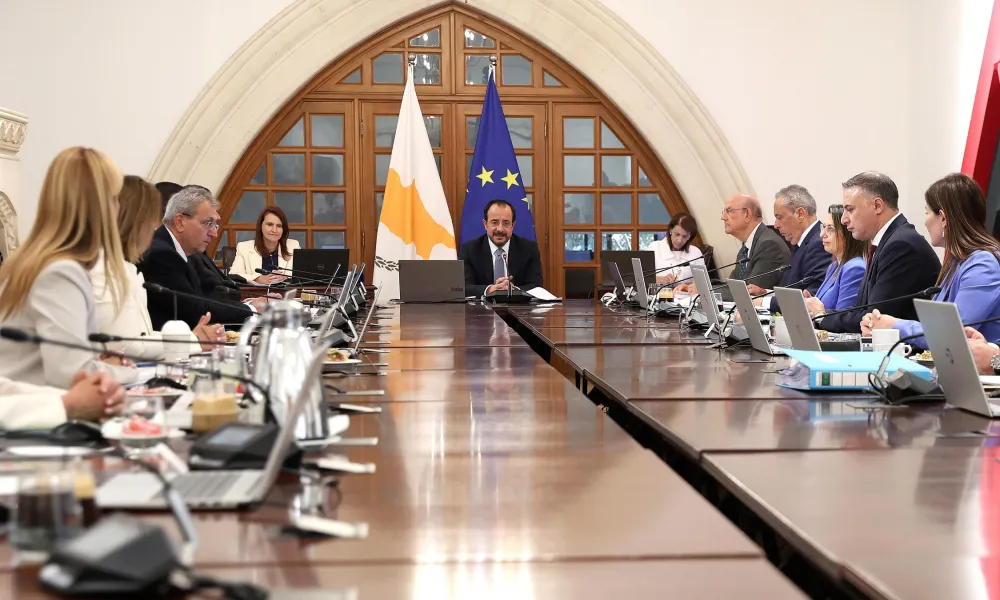
President of the Republic Nikos Christodoulides announced the new package in a televised message. It focuses on families with children, the middle class, low-income pensioners and vulnerable groups.
The main decisions are:
- a one-off emergency payment to families with an annual household income of up to €100,000
- an extension of the reduced excise duty on motor fuels until 31 March 2027
- the introduction of the CY ONE CARD, a prepaid bank card for paying targeted financial support
The one-off payment is for families with children and an annual household income of up to €100,000. The amount rises with the number of children:
- €100 for the first child
- €150 for the second child
- €200 for the third child
- €50 more for each additional child
This means a family with two children will receive €250 in total. A family with three children will receive €450, and a family with four will receive €700.
The cut in excise duty on motor fuels is extended until 31 March 2027. Rates stay at the lowest levels permitted under European legislation.
The CY ONE CARD
The President also announced the CY ONE CARD, a prepaid bank card. Targeted financial support and allowances will be paid to beneficiaries through it.
The new mechanism will first be used to pay €200 to low-income pensioners, to cover part of the cost of heating oil or fuel. The card will also be used for future social support measures.
Additional support for specific groups
The package also includes the following:
- Guaranteed Minimum Income and Public Assistance recipients will receive an extra amount equal to 80% of their family's basic needs for December.
- Low-income pensioners will receive additional support equal to their monthly low-income pension allowance, with a minimum of €100.
- Mothers who receive the Honorary Allowance for Mothers of Large Families will receive an extra €100.
- Recipients of the Single-Parent Family Allowance will receive an extra €100.
- Families receiving Child Benefit for three or more dependent children will receive an extra €100.
For enclaved persons, the government announced additional support equal to the monthly enclaved allowance for December.
The children of enclaved persons who live in the north and attend the nursery, primary school and gymnasium in Rizokarpaso will receive an extra amount equal to their December allowance. The same applies to the children of resettled persons who live in the north and attend the Kormakitis and Rizokarpaso primary schools.
Temporary relief
"Any measure that offers relief to households and our vulnerable fellow citizens is welcome. However, we must not confuse temporary relief with meaningful social policy. Most of the measures announced by the President are one-off payments through existing schemes. The €250 for a family with two children is certainly useful. But what happens next month, when that family has to pay rent, electricity, food and private tuition again?" economist Stelios Platis told Politis.
"We need a genuine democratisation of the economy. Permanent social protection, decent pensions, affordable housing, cheaper energy, better wages and real support for small and medium-sized businesses. Policies that tackle the causes of inequality, not just its consequences. A different economic philosophy, one that gradually reduces dependence on emergency measures through permanent reforms. And through growth, less poverty and more prosperity for all," he said.
Measuring real support
"Whether the measures are adequate is not judged by how many there are or how many millions are handed out. It is judged by whether they address the root causes of high prices and bring a real, lasting improvement in people's purchasing power and living standards," said economist Marios Souppasis.
As an example, he noted that the one-off €250 for a family with two children works out at just €20.83 a month over a year.
"Economic policy should not be limited to subsidising the costs created by the economy's structural weaknesses. It should focus on tackling those weaknesses," he said.
According to Mr Souppasis, dealing with high prices properly requires long-term planning and investment in key areas:
- Energy dependence: Diversifying energy sources, using renewables and reducing dependence on imported petroleum products.
- Electricity: Ensuring enough generating capacity, modernising transmission and distribution networks, and building energy storage infrastructure.
- Water supply and irrigation: Investing in desalination plants, upgrading networks, reducing losses and using recycled water, to secure water supplies and keep agricultural production sustainable.
- Housing: Substantially increasing supply by reviewing and selectively expanding planning zones, adjusting building coefficients, using state land and vacant properties, and speeding up permit procedures.
Not enough on their own
"The new measures offer useful short-term relief, but on their own they are not enough to answer the prolonged pressure of the cost of living. For households on limited incomes, an emergency payment can make a real difference in meeting immediate obligations. It does not ensure, however, that they will be able to cover the same needs in the months that follow," Dina Hasapi, Senior Auditor and Economic Analyst, told Politis.
"We also need to distinguish new support from the continuation of existing relief. Extending the reduced tax on fuel prevents the extra burden that would arise if it expired, but it is not an additional reduction in today's price," she said.
According to Ms Hasapi, the key question is how much of the rise in basic expenses the package actually covers for different households. "The success of support should be judged by the purchasing power it protects, not only by the amount made available," she said.
Measures within the budget framework
The Chairman of the Fiscal Council, Andreas Charalambous, told Politis that all social policy measures are better announced during the preparation of the state budget. That way they can be prioritised better and their effectiveness can be assessed.
"Some of the measures announced are targeted, meeting the targeting criterion we stress in our interventions," he said. He added that other measures lack sufficient targeting, such as the extended excise duty cut on fuel and the emergency payment for families, where the €100,000 threshold is rather high.
"With the emergency payment to families and the €100,000 threshold, small amounts are given to a large number of households, limiting the effectiveness of social policy, which should aim to combat inequality," he said.
Political reactions
The announcement also drew political reactions. DISY and AKEL called for a comprehensive strategy to tackle high prices.