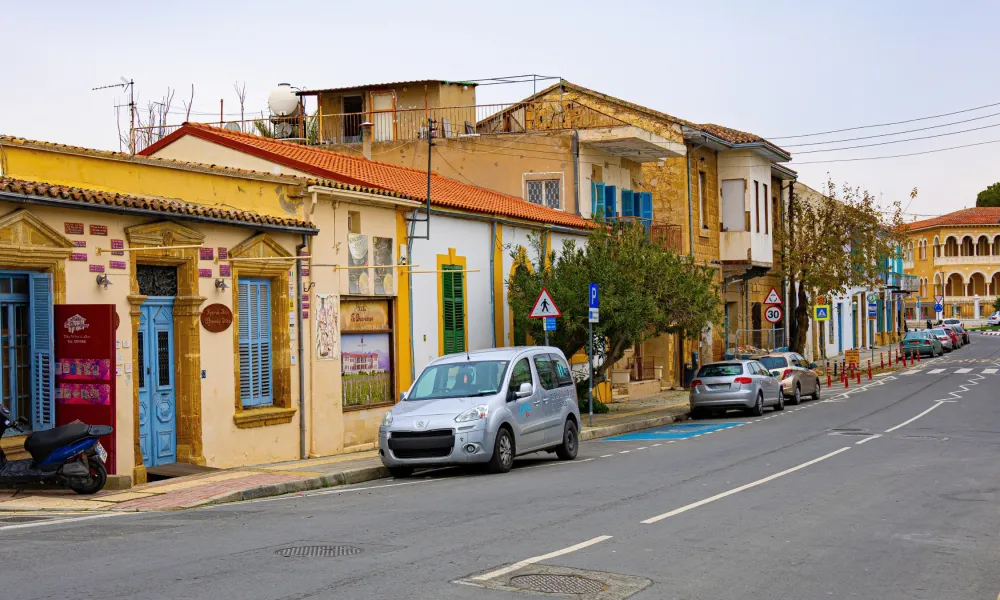

A car-free walled city, a tram, a two-lane Stasinou Avenue with wide pavements, fewer car parks and one million trees are among the proposals in a diagnostic study by the Academy of Urbanism for Team Nicosia, which puts radical changes on the table that would overturn the current model of how the centre of the capital operates. The study comes as the debate over central Nicosia has returned in force, with Makarios Avenue once again in the spotlight and Ledra and Onasagorou streets back in the discussion through proposals for the capital's future. Its recommendations are not limited to a single street or intervention. Instead, they examine how central Nicosia functions and develops as a whole, and range from simple to radical measures. Across 12 thematic sections, the study covers demographics, housing, retail, universities and students, tourism, technology and the creative industries, transport, climate change and greenery, cultural heritage, urban design, events, communication and delivery mechanisms. The Academy of Urbanism makes clear that the document is not a masterplan but a diagnostic approach, examining the city's trajectory, the obstacles it faces and the actions needed to revitalise the centre.
Bringing residents back to the centre
One of the study's main pillars is bringing a permanent population back to the centre and strengthening housing, so that the area does not depend solely on commercial and business activity at certain hours of the day. Proposed actions include revising or adding to the Central Nicosia Area Plan to reduce parking requirements and encourage a greater mix of uses. The study also proposes working with developers to increase affordable housing and making use of portfolios of repossessed properties in a way that supports the area's regeneration. Over a longer horizon, it recommends a new Area Plan and closer cooperation between the planning and transport authorities, while linking housing with work, education, cultural and leisure uses.
A new role for retail
A separate section deals with retail and the relationship between the traditional centre and the large shopping malls outside the urban core, placing weight on what makes the centre distinctive. For the old town, the study proposes a focus on local crafts, the arts, bookshops, food and drink and creative activities. For the commercial triangle of Makarios, Stasikratous and Evagorou, it proposes flagship stores, professional and digital services, hospitality, entertainment and spaces for start-ups. The large shopping malls would keep their role in larger-scale activities, with links to the centre. Proposed actions include a Retail and Commerce Forum, night markets, pop-up shops and events, while a City Centre Investment Zone is proposed to reuse properties and convert upper floors into homes and workspaces.
Students in the city
On students, the authors recommend integrating academic activity more closely into the life of central Nicosia. For the walled city, they propose more student housing and university uses in restored or underused buildings, alongside spaces for learning, exhibitions, cafés, collaboration and workshops. For the commercial triangle, they propose an innovation and entrepreneurship hub where universities, CYENS, start-ups and the private sector would develop research and business activities. The proposals include a University City Partnership Board, a student housing strategy and a University Quarter covering the old town and the commercial triangle.
Culture and conference tourism
The tourism chapter notes the capital's low tourism profile and the lack of recent data on visitors. It proposes a database on accommodation, occupancy and visitors, as well as a survey every two or three years on length of stay, activities and visitor profiles. It also recommends mapping conference venues and business events, with the aim of attracting specialised conferences linked to universities, historic heritage, city-making and international affairs. The study proposes that the new Archaeological Museum be integrated into a wider cultural offer, and records the return of themed walking routes linking museums, theatres, cultural centres and heritage sites, supported by technology and organised tours.
An innovation network
On technology and the creative industries, the Academy proposes a network linking activity in the centre with facilities outside it. The proposal envisages a Nicosia Innovation Partnership Board bringing together the municipality, CYENS, universities, Invest Cyprus and the private sector, and the use of empty or underused buildings in the old town and the commercial triangle. Over two to five years, it proposes a shared "Nicosia Innovation District" identity, joint management and promotion structures, an annual "Nicosia Innovation Week" and the relocation of creative businesses, start-ups and research organisations to the commercial triangle. Over the longer term, it lists data infrastructure, renewable energy microgrids and smart mobility systems.
Trams and mobility hubs
The study links transport planning with urban planning, stating that the two cannot be dealt with separately. It proposes expanding the bus network and introducing a tram or similar system, Park and Walk schemes within a radius of around 10 minutes from the walls, and Mobility Hubs that would serve as car parks, interchange points and energy hubs. The authors propose the gradual removal of surface car parks and more effective enforcement, with part of the revenue going into a fund for a tram or another public transport system. The land freed up would be developed into flats and professional premises focused on education, health, hospitality, culture and leisure.
The same chapter lists as first steps a ban on cars in the walled city, with exceptions, the removal of parking and related uses from the moat so that it can be used for greenery and water, and footbridges to connect the old and new city. It also proposes green corridors linking neighbourhoods and destinations, more trees, parks and shaded spaces, an app providing bus information and trial car-free days in the old town, on Makarios Avenue and in other areas.
The proposal for Stasinou
The study makes particular mention of Stasinou Avenue, which it describes as a barrier between the walled city and the commercial triangle. The authors recommend redesigning the avenue from four lanes to two, with a 30km/h speed limit, using the extra space for tree-lined walking and cycling routes, events and open-air markets. According to the study, new developments should include trees and shading between buildings to reduce the urban heat island effect. The programme includes the "1,000,000 Trees for Nicosia" initiative, while short-term interventions include planting, pergolas and parklets.
Protecting buildings
On cultural heritage, the study proposes maintaining protection for buildings dating from before the 1950s, both inside and outside the old town, while identifying features of low or negative value so that alterations or replacements can be allowed where appropriate. It also proposes faster archaeological excavations, public information, sponsorship and repayable loans for the maintenance and reuse of historic buildings. It refers in particular to reusing old buildings as workspaces, homes, shops, hotels, hostels and tourist accommodation, and proposes a geographic information system (GIS) and virtual reality to present the history of monuments and buildings.
More life in the centre
Developing a programme of events and activities is also part of the recommendations. The study proposes mapping existing activities and opportunities, strengthening relationships between organisations, and funding and evaluating each activity. The presence of around 40,000 students in Nicosia is noted as an opportunity for greater involvement of young people in the life of the centre, while the old town is proposed as a place where creative businesses can showcase their work and hold events. The study also refers to food or craft trails, to spread visitors across more parts of the city.
A single identity
The communication and branding chapter points to the need for a strong message about Nicosia, both in Cyprus and abroad. It proposes reviewing the city's branding, updating the data and broadening the guidelines so that the city's identity is not limited to a logo and a slogan. It suggests involving businesses and public bodies in a shared message, as well as a photo bank for businesses, universities and organisations to use for education, investment, development, culture and tourism.
Delivery
The final chapter focuses on the mechanisms for taking the proposals forward, since the development of central Nicosia involves the municipality, ministries, property owners, businesses, universities and organisations. It recommends a public, private and community partnership, "Team Nicosia", to share ideas, expertise and funding. The roadmap sets out actions in phases. For the first 24 months, it includes activating Team Nicosia, exploring a development agency, reusing empty historic buildings for student halls and creative uses, Mobility Hubs, reclaiming car parks, refreshing the city's identity and greening and shading interventions. For the period of two to five years, it proposes a funding mechanism for historic buildings, Business Improvement Districts, the City Centre Investment Zone, student housing, the University Quarter and a feasibility study for a tram.
As next steps, the Academy lists presenting the report and its recommendations to the mayor and the stakeholders involved, gathering feedback and, if necessary, updating the study. Organisations in Nicosia and across Cyprus would then be able to take forward the recommendations that are accepted, while the mayor and Team Nicosia are considering organising a future "International City Making Conference" on planning for Nicosia.