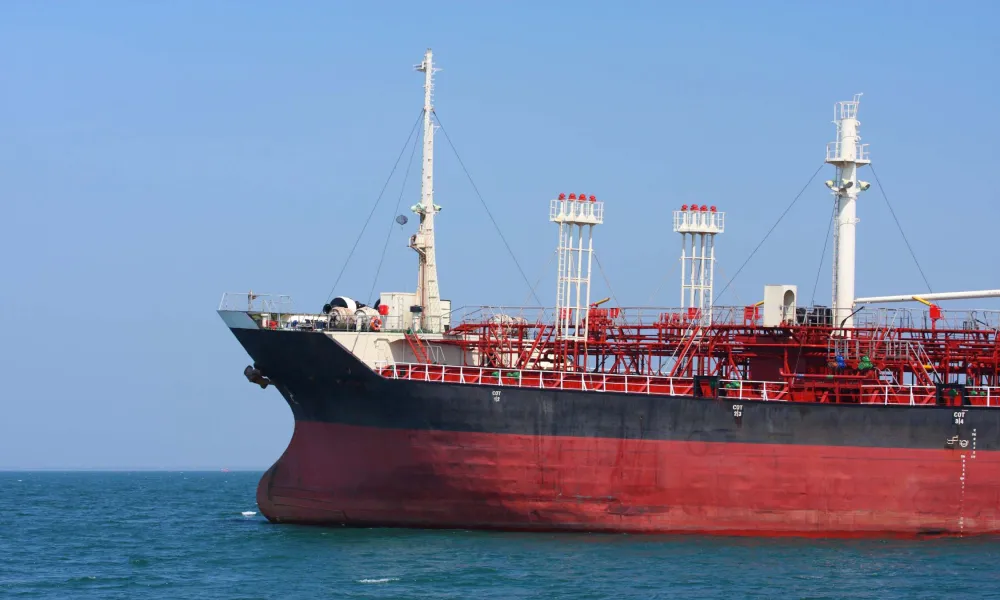

Oil prices continued climbing on Thursday as fighting between the United States and Iran and its allies escalated, deepening concerns over the safety of energy shipments from the Middle East. The Houthis, the Iran-backed militia in Yemen, said they had struck two Saudi oil tankers in the Red Sea, named Encelia and Layla, after earlier threatening a blockade of Saudi ports. Iran's Islamic Revolutionary Guards Corps separately said one of three oil tankers attempting to pass through a mined route south of the Strait of Hormuz caught fire following an explosion, prompting the other two vessels to turn back, according to Iran's state news agency.
The United States said it had completed a twelfth consecutive night of strikes intended to curb Iran's ability to threaten commercial shipping. Brent crude, the global benchmark, rose above $98 a barrel on Thursday, up more than 4% on the day and around $13 higher over the past week alone. The price of crude has risen by roughly a third since the war began. West Texas Intermediate, the American benchmark, climbed close to 3% to nearly $90 a barrel.
Analysts are watching two key chokepoints closely: the Strait of Hormuz, the narrow waterway between Iran and Oman through which a large share of Gulf oil exports pass, and the Bab al-Mandab Strait at the southern end of the Red Sea, which Saudi Arabia has increasingly used as an alternative export route. Kpler, a maritime data firm, said six vessels reversed course in the Red Sea earlier this week after the Houthis warned shipping companies to avoid Saudi ports, with some now rerouting toward the Suez Canal instead, a costlier and more complex route.
The escalation comes at a vulnerable moment for energy markets, with oil stockpiles lower than when US and Israeli strikes on Iran began in February, and Ukrainian attacks having severely damaged Russian refineries, tightening global supplies of diesel and other transportation fuels. Shipbroker Clarksons warned that any reduction in oil flows from Saudi Arabia's Red Sea port of Yanbu could push prices considerably higher still.
The rise in crude has already reached consumers. In the United States, petrol prices rose to $4.09 a gallon on Thursday, up 37% since the war began, while diesel climbed to $5.21 a gallon, a rise of about 39% over the same period. Global stock markets were largely unmoved by the escalation, with European shares slipping slightly while Asian markets, many of them major oil and gas importers, held broadly steady.
Sources: The New York Times, Bloomberg