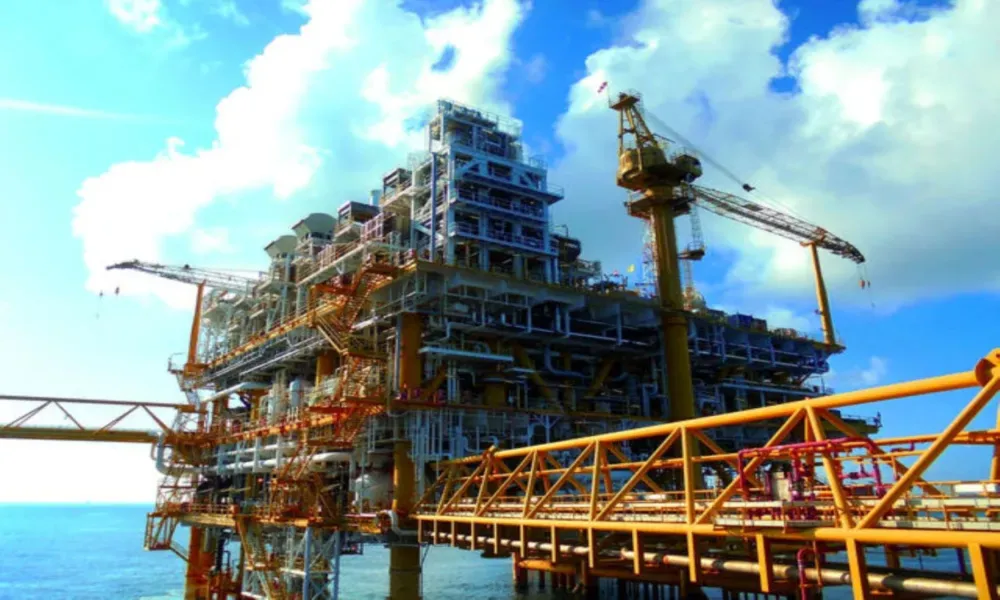

The Final Investment Decision (FID) by Eni and TotalEnergies to develop the Cronos gas field in Block 6 of Cyprus' Exclusive Economic Zone has cleared the way for the country's first commercial gas project, with production expected to begin in the first half of 2028.
The development marks the first time a Cypriot offshore gas discovery has progressed to full commercial development and is expected to bring the first Cypriot natural gas to international markets.
Under the project plan, gas from Cronos will be transported via a subsea pipeline to Egypt's Zohr facilities for processing before being liquefied at the Damietta LNG terminal and exported, primarily to European markets.
Production is expected to reach around 500 million cubic feet per day, equivalent to approximately 2.8 million tonnes of LNG annually.
Strategic significance highlighted
Both Eni and TotalEnergies have framed the project as significant not only for Cyprus but also for Europe's energy security.
Eni Chief Executive Claudio Descalzi described the project as a milestone that will help establish Cyprus as a gas producer and exporter while strengthening the Eastern Mediterranean's role as a regional energy hub.
TotalEnergies Chairman and Chief Executive Patrick Pouyanné said the project creates a new energy route into Europe and supports efforts to diversify LNG supply sources.
The Cypriot government has also welcomed the development.
Energy Minister Michalis Damianos described the decision as a "historic milestone" for the Republic, saying it signals Cyprus' transition from energy exploration to the commercial exploitation of its natural gas resources.
DIKO leader Nikolas Papadopoulos similarly described the decision as a historic step, arguing that nearly two decades of energy planning are beginning to yield concrete results.
Questions remain over state revenues
While government officials have focused on the geopolitical and strategic importance of the project, the financial benefits for Cyprus remain less clear.
The government argues that the project strengthens Cyprus' position within the Eastern Mediterranean energy landscape, deepens cooperation with Egypt and European partners, and reinforces the credibility of the country's long-term hydrocarbons strategy.
However, there is currently no definitive estimate of the revenues Cyprus could ultimately receive.
Speaking to Politis, Damianos acknowledged that it remains difficult to make reliable projections regarding the project's eventual financial return to the Republic.
Market conditions will be critical
The level of economic benefit will depend on a range of factors, including international natural gas prices, operating costs and future market conditions in the global LNG sector.
In an analysis published in Politis in May, Charalambos Ellinas, a senior fellow at the Atlantic Council, argued that while Cronos is likely to prove commercially viable for the companies involved, the financial gains for Cyprus could be considerably more modest than is often assumed.
According to Ellinas, Cyprus' dependence on Egyptian infrastructure, cost recovery arrangements and forecasts of lower LNG prices after 2030 could significantly limit future government income from the project.
He argued that Cronos may ultimately deliver greater political and strategic value than direct economic returns.
Complex negotiations preceded approval
The finalisation of the investment decision followed extensive negotiations between the Republic of Cyprus and the project partners.
According to information that emerged before the announcement, discussions centred on how additional commercial and investment risks would be shared between the parties.
Issues including cost recovery, commercial arrangements with Egypt and the terms governing the use of infrastructure linked to Zohr and Damietta were among the factors that delayed the final investment decision.
Despite those challenges, the approval of the project now places Cyprus firmly on course to become a gas-exporting country for the first time when production begins in 2028.