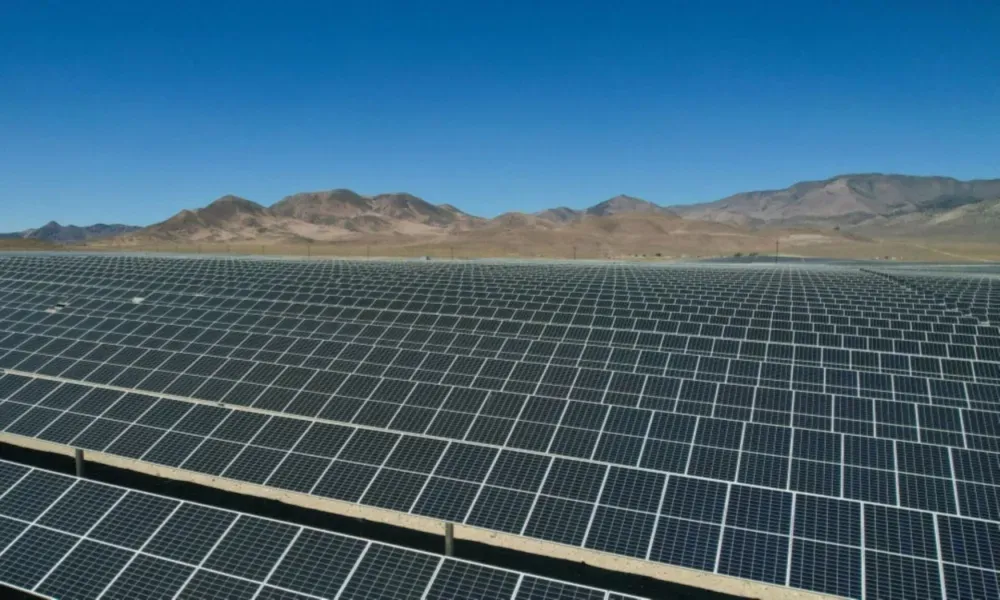

Energy Minister Michalis Damianos has outlined a series of measures aimed at reducing the need to curtail electricity generation from photovoltaic systems, including the rollout of large-scale energy storage projects and a new subsidy scheme for businesses.
Responding to questions submitted by MP Christos Christofides, Damianos said the Cyprus Transmission System Operator (TSO) is moving ahead with the installation of centralised electricity storage facilities. At the same time, private sector investments are proceeding in both standalone storage projects and storage systems combined with renewable energy installations.
According to the minister, the gradual integration of these projects into the electricity grid is expected to increase the system's ability to absorb renewable energy and significantly reduce the need for production restrictions.
Energy storage grant scheme
Damianos also announced that the ministry will soon launch a grant scheme for energy storage in businesses.
In addition, public funding agreements have already been signed for projects selected through a competitive tender process under the Energy Storage Systems Combined with Renewable Energy Sources Grant Scheme.
Those projects are currently in the process of securing the necessary permits.
Photovoltaics remain a viable investment
The minister rejected claims that photovoltaic systems have become economically unattractive.
He said solar installations remain among the most effective ways for households and businesses to reduce electricity costs, even where restrictions on electricity exports, known as zero-export requirements, apply.
However, he stressed that this depends on the correct sizing of the system in line with the consumer's actual energy consumption profile.
Questions raised by Christofides
Christofides asked the ministry to brief Parliament on what he described as prolonged uncertainty in the photovoltaic sector, which he attributed to delays by the Electricity Authority of Cyprus (EAC) in issuing clear regulations and technical specifications.
He argued that the situation has created significant challenges for architects, consultants and companies operating in the industry, placing financial pressure on businesses and affecting employment.
The MP also claimed that the transition from net metering to net billing has substantially reduced the financial benefits of installing photovoltaic systems, while frequent production cut-offs have raised concerns about equal treatment among consumers.
His questions focused on:
- Measures being taken to issue clear rules and technical requirements for the sector.
- Whether fair transitional arrangements are being considered for the move to net billing.
- The operating framework for large private solar parks and whether they face the same curtailment measures as household systems.
Existing regulatory framework
Responding to the first issue, Damianos said the regulatory framework governing self-consumption photovoltaic systems is already in force.
Since 1 January 2026, all new applications have been assessed under regulations adopted by the Cyprus Energy Regulatory Authority (CERA) governing active customers and renewable-energy self-consumers.
He added that the Distribution System Operator (DSO) has already published a guide covering the connection of active customers and self-consumers to the distribution system and has briefed industry professionals on the relevant procedures.
The minister also pointed out that, within Cyprus' competitive electricity market, suppliers are free to develop their own commercial products and may offer customers more favourable mechanisms for using self-generated electricity, provided these arrangements comply with existing regulations.
From net metering to net billing
Addressing concerns about the transition from net metering to net billing, Damianos said the change is necessary to ensure that compensation for excess electricity reflects actual market conditions.
He argued that maintaining net metering would place a disproportionate share of network and system costs on other consumers.
However, he noted that the net-billing model currently applied by EAC Supply first offsets electricity consumption and production within each billing period before applying account-based settlement.
As a result, and given that the overwhelming majority of residential consumers are still supplied by EAC, he said the financial benefit for households remains broadly similar to that provided under the previous system.
Large solar parks
On the issue of large private solar parks, Damianos explained that commercial photovoltaic projects operate within the competitive electricity market either through bilateral contracts with electricity suppliers in the Forward Market or by selling electricity through the Day-Ahead Market managed by the transmission operator.
He added that agreements between electricity producers and suppliers are private commercial contracts whose terms remain confidential and are not disclosed to, or managed by, the ministry.