
Cypriot authorities and the European Union are increasingly focusing their efforts on tackling energy poverty, introducing specific criteria aimed at identifying households most in need and directing support accordingly.
Giorgos Tsiamettis, deputy director of the Energy Service, explained to Politis the objectives of a draft decree currently under public consultation until 11 September.
According to the proposed Energy Efficiency (Determination of Energy-Poor Households) Decree of 2026, the goal is to create an objective framework for identifying households affected by energy poverty and for targeting support measures more effectively.
At the same time, the measure seeks to align national legislation with the European acquis, specifically Directive (EU) 2023/1791 on energy efficiency, which has been incorporated into Cypriot law through the Energy Efficiency Law.
The legislation establishes, for the first time, a legal definition of energy poverty.
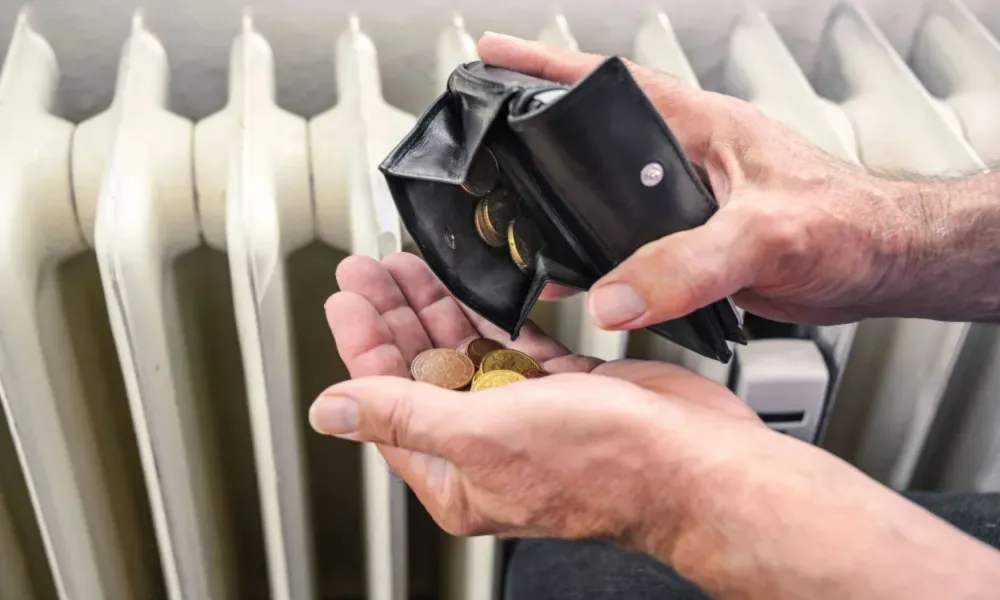
Under the law, energy poverty is defined as a household's inability to secure essential energy services, such as heating, cooling, lighting and hot water, necessary for a decent and healthy standard of living.
The condition may result from a combination of factors including:
- Financial hardship
- Insufficient disposable income
- High energy costs
- Poor energy performance of homes
Composite indicator
The Ministry of Energy commissioned a specialised study aimed at defining and quantifying energy poverty at national level.
The study led to the development of a composite indicator incorporating the main parameters of energy poverty as defined by law.
These include:
- Household disposable income
- Expenditure on energy needs
- The energy efficiency of the dwelling
Tsiamettis told Politis that the focus across Europe is now on combating energy poverty through clearly defined criteria applied at the household level rather than focusing on individual persons, as had previously been the case.
The aim, he said, is both to quantify the problem and ensure support reaches those genuinely in need.
"Our intention is not simply to issue a decree or grant scheme as was done in the past, but to create a broader framework for addressing and monitoring energy poverty."
Key initiatives
According to Tsiamettis, several measures are already being implemented.
These include the establishment of a National Energy Poverty Observatory, involving the relevant ministries, which will monitor developments and submit recommendations on support measures.
In addition, local support hubs involving welfare ministry officials, local authorities and non-profit organisations will help households affected by energy poverty access assistance.
At the same time, support measures and grant schemes for energy-poor households are being developed in a manner that prioritises energy savings before investment in renewable energy technologies.
"It is important for households to understand that energy savings should come first and investments in renewable energy technologies, such as photovoltaics, should follow."
Who qualifies as energy poor?
Under the draft decree, energy-poor households include those where one or more residents fall into one or more of the following categories:
- Recipients of public assistance.
- Recipients of the Guaranteed Minimum Income.
- Recipients of the low-pensioner allowance.
- Recipients of the single-parent family allowance, provided gross annual household income does not exceed €21,060 for a family with one dependent child. For each additional dependent child, the threshold increases by €6,620.
- Recipients of child benefit, provided gross annual household income does not exceed €28,080 for one dependent child or €34,465 for two dependent children. For each additional child beyond two, the threshold increases by €6,620.
Exemptions
Households will not be considered energy poor if they live in:
- A dwelling for which planning or building permit applications were submitted after 21 December 2007, or which includes a self-consumption renewable electricity installation.
- A dwelling whose roof has undergone an energy upgrade resulting in at least 60% primary energy savings, where this can be verified by the competent authority.
- A dwelling with an energy rating of B or higher under the Building Energy Performance Certificate.
Calls for major interventions
Environmental policy adviser and former chair of the House Environment Committee Charalambos Theopemptou told Politis that Cyprus was slow to implement building insulation standards.
As a result, he said, a large proportion of the island's approximately 400,000 buildings require significant energy-efficiency upgrades.
He also argued that energy poverty in Cyprus is worse than the European average.
In a letter sent to the Deputy Minister of Welfare in January 2026, Theopemptou stressed the need to ensure that building-renovation policies genuinely reduce energy poverty and do not exclude poor and vulnerable households.
He also put forward a series of recommendations aimed at ensuring support reaches those most in need.