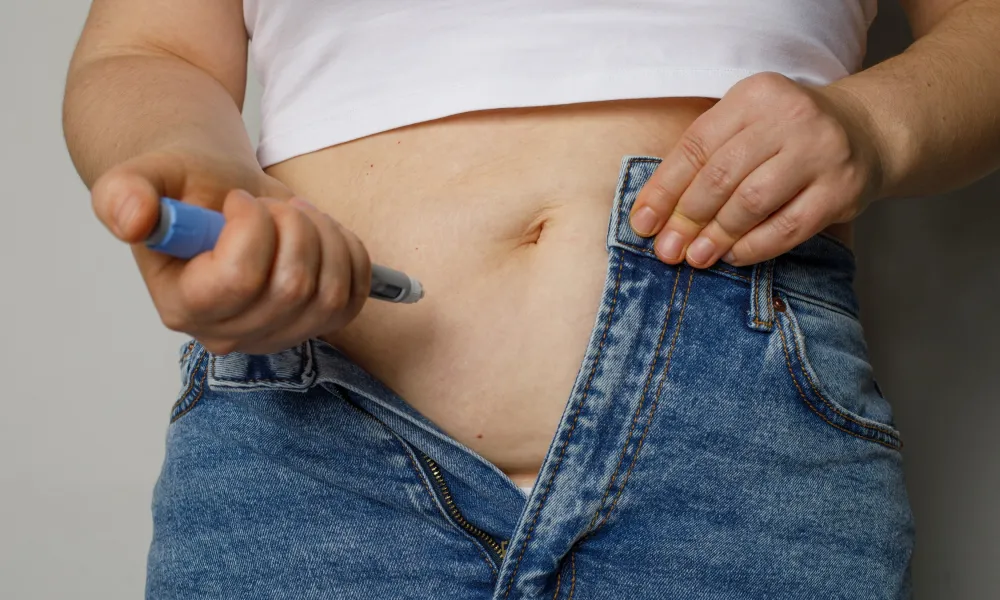

Weight-loss and diabetes injections Ozempic and Mounjaro are gaining an increasingly strong foothold in Cyprus, with more than 8,300 reimbursement requests submitted through the national health system over the past 20 months and spending exceeding €2.5 million.
A notable shift has emerged in 2026, with requests for Mounjaro already tripling compared with the whole of 2025, while requests for Ozempic have declined over comparable periods.
Originally developed as treatments for specific medical conditions, the injectable medicines have become central to a global debate over weight loss, attracting widespread attention through social media, celebrity endorsements and growing public demand.
The surge in popularity has also raised questions internationally about off-label use, the need for medical supervision and the risk of inappropriate prescribing. In publicly funded healthcare systems, access to such treatments is generally subject to eligibility criteria and review procedures.
Access through the health system
The two medicines are currently covered differently under Cyprus' General Healthcare System (GeSY).
Ozempic is included in the system's pharmaceutical formulary, while Mounjaro remains outside the standard list and requests are examined on a named-patient basis.
Guidelines have been issued to doctors regarding eligibility criteria for Mounjaro applications, while health authorities aim to include the drug in the formulary to improve patient access.
More than 8,300 requests submitted
A total of 8,389 requests for Ozempic and Mounjaro were submitted between the start of 2025 and 20 August 2026.
Ozempic accounted for the majority, with 6,642 requests relating to 3,412 patients. During the same period, 1,747 requests for Mounjaro were submitted for 972 patients.
The number of requests does not correspond directly to the number of patients, as more than one request may be submitted on behalf of the same beneficiary.
Of the 6,196 Ozempic applications assessed, 4,707 were approved and 1,489 rejected. The approvals related to 2,775 patients out of the 3,412 for whom requests had been submitted.
The picture differs for Mounjaro. Of the 1,747 applications submitted, 422 had been assessed, with 238 approved and 184 rejected. Those approvals related to 85 patients, while requests had been filed on behalf of 972 individuals.
The Health Insurance Organisation acknowledged that delays have been observed in the assessment of some Mounjaro applications, which continue to be examined on a named-patient basis.
Mounjaro gains momentum
While Ozempic remains the more widely requested treatment, Mounjaro has recorded the strongest growth.
A total of 436 requests were submitted for Mounjaro during 2025. Between 1 January and 20 August 2026, the figure had already reached 1,311.
Health officials caution against drawing direct comparisons between the two periods. Between May and July 2025, approvals for Mounjaro had not yet begun, meaning awareness of the application process remained limited and request volumes were correspondingly low.
Nevertheless, the organisation says it has observed growing preference for Mounjaro among prescribers and patients.
Ozempic followed a different trajectory. A total of 3,881 requests were submitted in 2025, while a further 2,761 had been recorded by 20 August 2026.
Comparisons are also complicated by the inclusion of Ozempic in GeSY during May-July 2025, when diabetic patients who had already been receiving the treatment privately were allowed to apply for coverage within a six-month window. That led to a surge in applications during the period.
The data do not allow a definitive conclusion that one medicine is replacing the other. They do, however, highlight growing demand for Mounjaro as authorities work towards its inclusion on the national formulary.
Spending exceeds €2.5 million
The increase in use is also reflected in healthcare spending.
The Health Insurance Organisation spent a combined €2.56 million on the two medicines during 2025 and the period from January to 20 August 2026.
Most of that expenditure related to Ozempic.
Spending on Ozempic reached €791,000 in 2025 and had already climbed to €1.6 million by 20 August 2026.
For Mounjaro, spending amounted to €22,600 in 2025 and €118,000 during the first eight months of 2026.
Hundreds of doctors involved
Hundreds of doctors have submitted requests for the two treatments, although prescribing patterns vary significantly.
For Ozempic, applications were submitted by 271 doctors in 2025 and 213 doctors in 2026. The corresponding figures for Mounjaro were 75 and 82 physicians.
A substantial share of requests was concentrated among a relatively small number of doctors.
Five physicians accounted for 19% of Ozempic applications in 2025, while four doctors were responsible for 21.5% of applications in 2026.
The concentration was higher for Mounjaro, with four doctors submitting 48% of applications in 2025 and three doctors accounting for 35% in 2026.
The Health Insurance Organisation said such figures should be interpreted cautiously. Ozempic can be prescribed by personal doctors, whereas the same provision does not currently apply to Mounjaro. In addition, diabetologists and endocrinologists are expected to treat larger numbers of patients who may require such therapies.
Two in 10 requests rejected
The approval process includes safeguards designed to ensure treatments are prescribed according to established criteria.
For Ozempic, common reasons for rejection included prescription errors, failure to meet protocol requirements and failure to provide proof of purchase for patients who had begun private treatment before 15 May 2025.
According to the Health Insurance Organisation, applications that failed to meet protocol criteria accounted for 5% of all requests.
For Mounjaro, reasons for rejection included the availability of alternative treatments already reimbursed by GeSY, prescription errors and failure to satisfy conditions set by the relevant committee.
The latter category accounted for 26% of all applications, according to the organisation.