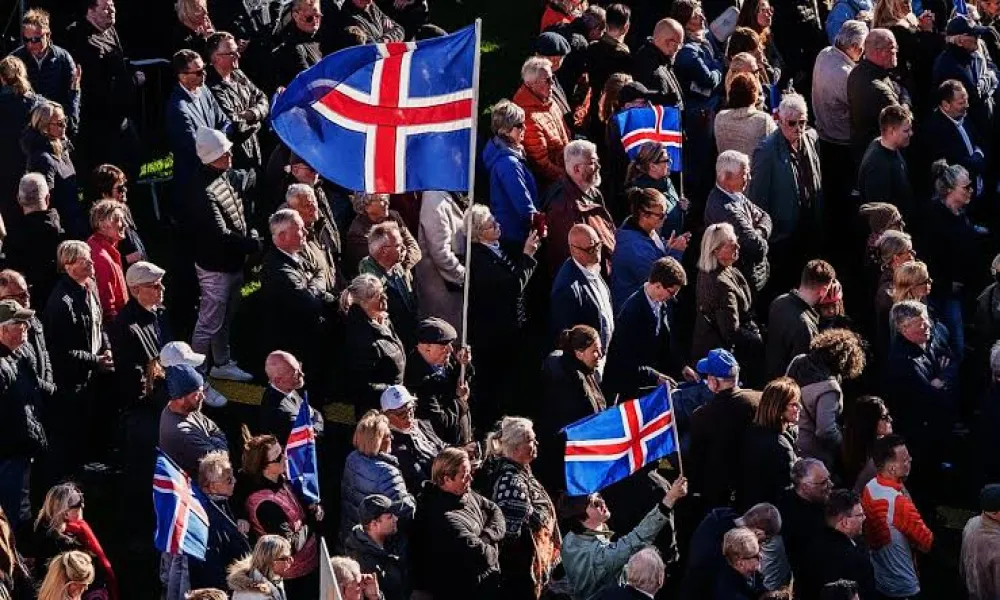

Iceland has voted against reopening accession talks with the European Union, rejecting the proposal by 52.8% to 47.2% in a closely fought referendum.
Turnout was high at 82.5%, with the result exposing a sharp divide between Reykjavík and the rest of the country. The capital was the only part of Iceland where a majority voted in favour of restarting negotiations.
The referendum was held against a backdrop of growing geopolitical uncertainty, including US President Donald Trump’s repeated threats concerning neighbouring Greenland. Supporters of closer ties with the EU argued that membership could strengthen Iceland’s security and provide greater solidarity with Europe.
Fishing & farming
However, the campaign against reopening talks focused heavily on national sovereignty and concerns about the impact of EU membership on Iceland’s fishing and farming industries.
Prime Minister Kristrún Frostadóttir acknowledged the narrow result and said the government would respect the views of both sides. She nevertheless made clear that the issue would not move forward under the current government.
The government will consider whether to formally withdraw Iceland’s EU membership application, which was submitted in 2009 following the financial crisis. Accession negotiations were suspended in 2013.
The referendum did not ask Icelanders whether they wanted to join the EU immediately. Instead, voters were asked whether negotiations should resume, with a further referendum expected if an agreement were eventually reached.
Sovereignty
Iceland is already closely integrated with the European bloc through the European Economic Area and the Schengen area, but has remained outside the EU.
Supporters of reopening negotiations argued that closer integration could help address Iceland’s high cost of living, inflation and interest rates, while strengthening its position at a time of growing international instability.
Opponents warned that EU membership could undermine Iceland’s control over its natural resources, particularly its fishing waters, and weaken national sovereignty.
The campaign also highlighted a pronounced urban-rural divide, with concerns over agriculture and fisheries particularly strong outside Reykjavík.
Political analysts said the result reflected a combination of economic self-interest, national identity and concerns about sovereignty. Some also criticised the anti-EU campaign for spreading misinformation and noted that it had significantly greater financial resources than the pro-EU side.
The result is likely to disappoint Brussels, which had shown interest in Iceland returning to the accession process and had indicated a willingness to discuss sensitive issues, including fisheries.
For Iceland, however, the immediate message from voters is clear: the country will not be reopening EU accession negotiations under the current government.
Source: The Guardian