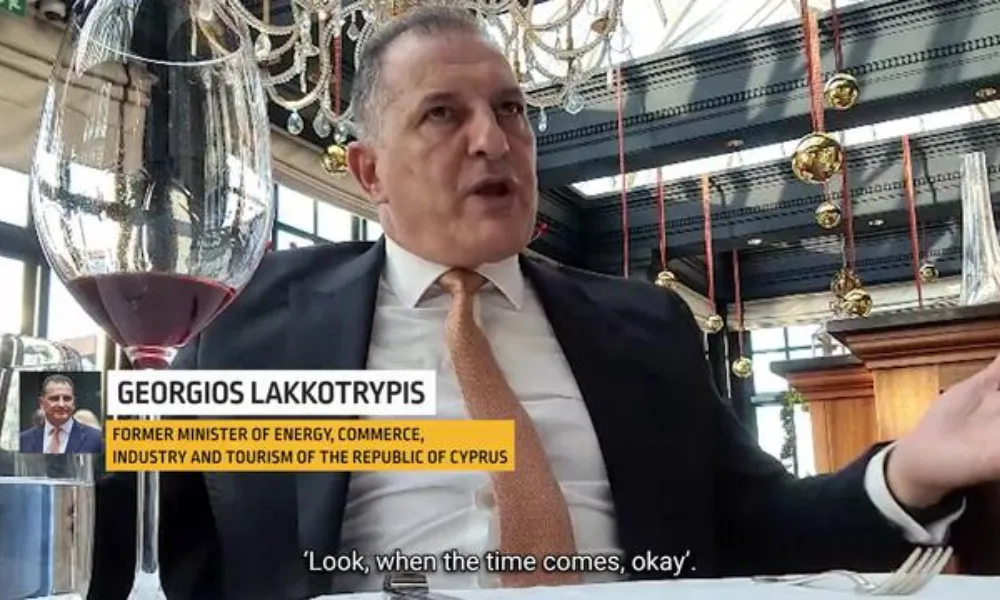
Under legislation addressing influence peddling and abuse of office, if any individual presents themselves as having access to people in power and the ability to influence them, there may be grounds to suspect an offence has been committed.
Even if we were to accept claims of a “hybrid war” – of unknown origin and cause at this stage – the substance of the matter remains unchanged. Extra-institutional actors, primarily business interests seeking to advance their agendas at the highest possible level, appear to be guided by intermediaries – in this case government officials and close associates of the President of the Republic – on how to secure access to the President through donations.
Whether by supporting the President’s election campaign with cash or by making anonymous contributions to the First Lady’s Fund, which uses these resources to build strong links with lower-income groups and reinforce the image of a protector of the poor, modelled on figures such as Evita Perón, the picture that emerges is deeply troubling.
Is this criminally actionable? Can the effectively “orphaned” video – uploaded by the fake Emily Thompson profile – lead the case to court, as happened with the Al Jazeera affair, under the influence-peddling law? For now, these remain open questions. What is beyond doubt is that the government is exposed to extremely serious political responsibility.
Not legitimised
“Formally, there may not yet be something that is legally actionable. We do not know that at this stage. But we can focus on political and moral responsibility. And the method is illegitimate. There is a clear issue of conflict of interest. Ethical standards are being violated,” comments Charidimos Tsoukas, professor at the University of Cyprus.
This comes despite the fact that the Director of the President’s Press Office, Viktoras Papadopoulos, publicly declared on television earlier this week that he would accept no lessons in morality from anyone.
“If we assume that doctors routinely take envelopes of cash from their patients and that this is a widespread practice, the fact that ‘everyone does it’ does not mean it is not reprehensible. Widespread practice does not legitimise an unacceptable phenomenon. Our tolerance merely reveals our decline,” Tsoukas adds.
Favours and donations
He goes on to say that the video essentially confirms society’s worst suspicions: that Cyprus has a political system in which senior officials use their positions to grant favours and accept donations in order to serve party, political, or personal interests.
“Just as Dimitris Syllouris once winked at an alleged businessman and told him ‘don’t worry, I’ll help you’, here too a former minister, a close friend of the President, and the Director of the President’s Office are allegedly arranging favours for specific business interests so that they will financially support either the previous campaign or a future one. This is unacceptable.”
A breeding ground for opacity and corruption
Referring to the operation of the Student Support Social Fund, chaired by Filippa Karsera, the President’s spouse, Tsoukas notes that the video confirms how “every pocket of opacity becomes a potential breeding ground for corruption”.
This, he argues, explains the fierce dispute over maintaining the Fund in a semi-transparent status, allowing it to accept large donations without disclosing donors’ identities. It is worth noting that the Audit Office of Cyprus report, which highlighted opacity and raised concerns about the political instrumentalisation of the Fund, is among the few audit reports that were never discussed by Parliament’s Audit Committee – a fact that raises its own questions about legislative oversight.
Political accountability and resignations
Returning to what he describes as Cyprus’ near-absence of institutional sensitivity, Tsoukas draws comparisons with other democracies.
“I will speak about countries I know well. In the United Kingdom, you cannot last even an hour – not a day, an hour – once something like this is revealed. Recall that one of the reasons Boris Johnson resigned was a damning report on the so-called ‘Partygate’ scandal, as well as another report stating that he had used his influence to appoint a Conservative Party donor as chair of the BBC. Once these findings were published, the Prime Minister had no choice but to resign.”
In Cyprus, however, the Director of the President’s Office is a close in-law of the President, alongside other friends and relatives holding roles within government.
“These conditions do not foster a culture of institutional checks and balances. Democracy is a demanding system, because it requires you to live with accountability and oversight, to feel that you must answer for your actions.”
In Cyprus, Tsoukas argues, institutional counterweights in both constitutional design and political practice have been eroding since 1963, leaving democracy fragile.
“We often find ourselves facing an abscess that periodically bursts, fills with pus again, bursts again, and so we move from crisis to crisis and from scandal to scandal. That is what we are seeing once more.”
This time, however, with a crucial difference. In the Al Jazeera case, the figures involved were the Speaker of the House and an MP, neither of whom held executive power within government, unlike the current situation.
Charalambous’ resignation the bare minimum
“The first and easiest step is the resignation of the Director of the President’s Office. Without question, this is the minimum that must happen. The maximum would be the resignation of the President himself.
“I previously cited the Johnson example in the UK. There are others. Take the case of Germany’s legendary Chancellor Willy Brandt, who resigned in 1974 after it emerged that a close aide was a Stasi agent. Brandt was among the finest leaders Germany produced after the Second World War. Even he could not withstand the pressure once that revelation came to light.
“No one can remain in a senior executive office when such matters are made public. At the very least, the person who runs the President’s political office must resign, and the President himself must explain how all of this was allowed to happen.”