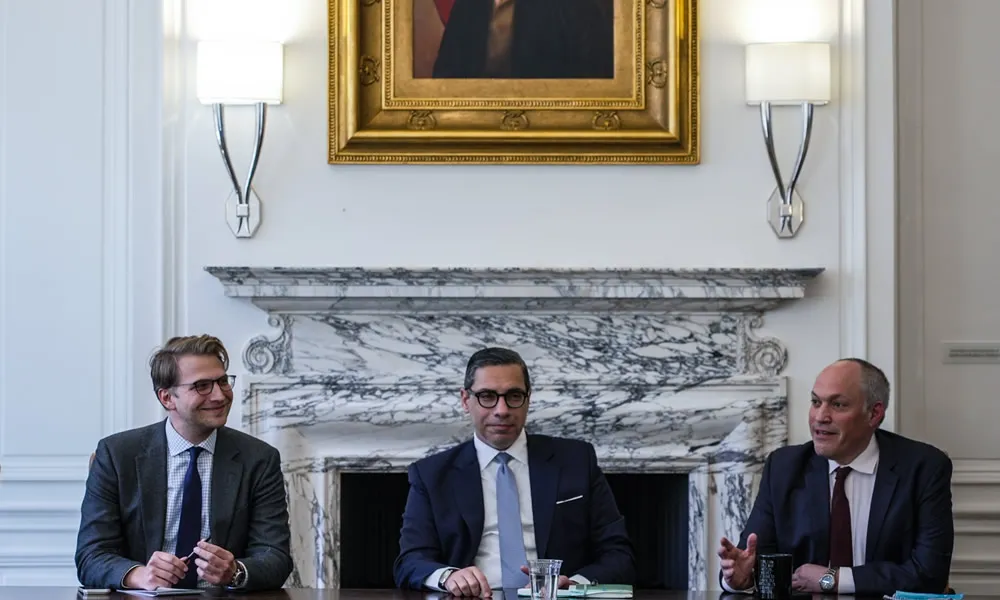

Cyprus’ Foreign Minister Konstantinos Kombos wrapped up a dense round of meetings in Washington that went well beyond protocol, placing Cyprus firmly inside a network of congressional powerbrokers, policy think tanks, and strategic conversations shaping US engagement in the Eastern Mediterranean and the Middle East.
The visit unfolded as a layered series of contacts across Capitol Hill and Washington’s policy ecosystem, highlighting Cyprus’ effort to entrench itself as an interlocutor for both Republicans and Democrats at a time of heightened regional instability.
Bipartisan Access on Capitol Hill
At the heart of the visit were meetings with senior members of the US Congress who hold key committee positions affecting foreign policy, defence, and budgetary priorities.
Kombos met Brian Mast, the Republican chair of the House Foreign Affairs Committee, with discussions centred on developments in the Middle East and Cyprus’ role as a stabilising partner in the region. Mast has been one of the most vocal congressional figures on Eastern Mediterranean security, making the meeting politically significant. In the Senate, the Foreign Minister held talks with Jerry Moran, chair of the Appropriations Subcommittee overseeing Commerce, Justice and Science funding.
Meetings also included Jim Risch, chair of the Senate Foreign Relations Committee, alongside Jeanne Shaheen, the committee’s ranking Democratic member. The bipartisan nature of the encounter underscored Washington’s continued cross-party support for Cyprus, particularly as the island assumed the EU Council Presidency last month.
Defence issues were discussed with Roger Wicker, chair of the Senate Armed Services Committee, reflecting Cyprus’ increasing relevance in US security planning for the Eastern Mediterranean.

Inside Washington’s Think Tank Circuit
Beyond Congress, Kombos appeared keen to position Cyprus within the policy debates that often shape future US decisions. He spoke at the American Enterprise Institute, a conservative institution with strong links to Republican foreign policy circles, and at the Arab Gulf States Institute, where discussions focused on Cyprus’ relationship with the Middle East and its bridging role between Europe and the region.
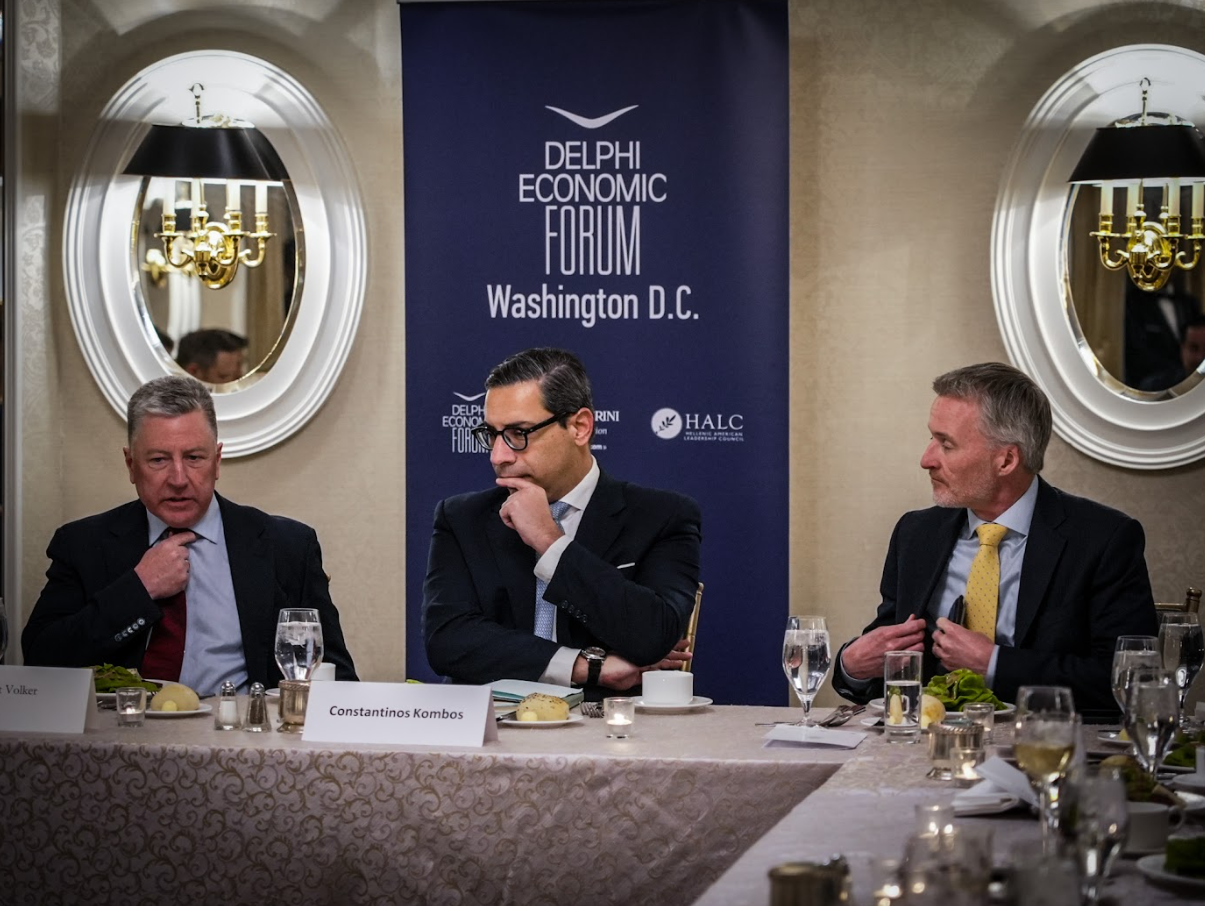
He also addressed audiences connected to the American Jewish Committee, reflecting Cyprus’ ongoing engagement with Jewish and pro-Israel policy networks in Washington, and attended the Delphi Economic Forum dinner alongside Kurt Volker, an American diplomat who served as George W. Bush's last U.S. Ambassador to NATO, and Greece’s Foreign Minister Nikos Dendias.
Symbolic Gestures and Side Encounters
Among the quieter but notable moments of the visit was a brief street-side exchange with India’s External Affairs Minister Subrahmanyam Jaishankar, following recent trade breakthroughs between India, the US, and the EU. The encounter reflected Cyprus’ interest in positioning itself within emerging connectivity corridors linking Europe, the Middle East, and South Asia.
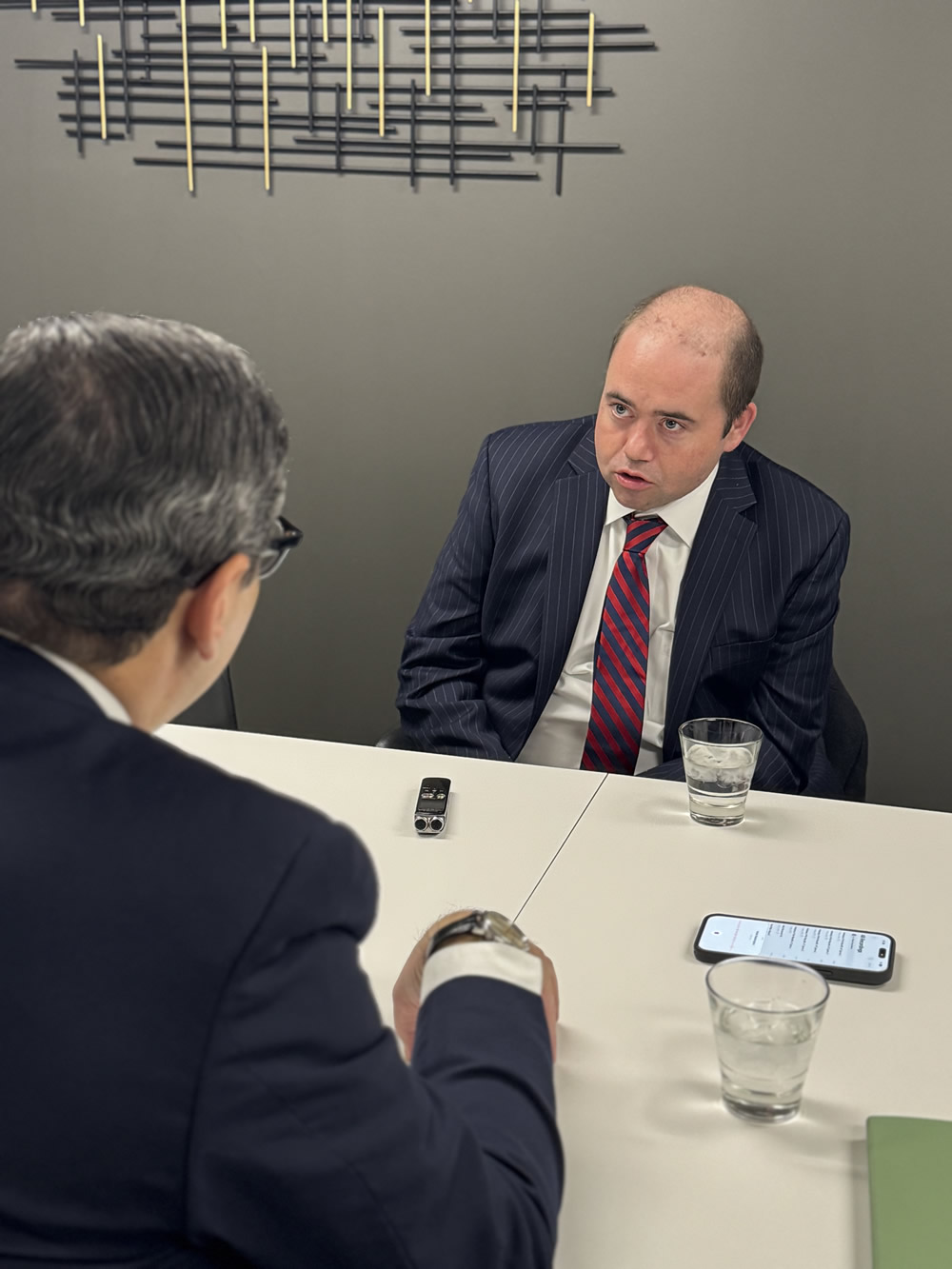
Kombos also gave an interview to Breitbart, a move likely aimed at reaching conservative audiences influential within the current Republican policy landscape.
The outlet, once closely associated with Steve Bannon, has in recent months returned to prominence within hardline conservative circles amid renewed internal battles over the direction of the Republican Party and US foreign policy. While Bannon no longer holds a formal role at Breitbart, the platform continues to amplify nationalist, anti-globalist and isolationist currents that are shaping debates within the Republican base, including scepticism towards multilateral institutions, EU policy and overseas security commitments.
Taken together, the Washington trip suggests a deliberate effort by Cyprus to cultivate long-term political capital in the US.