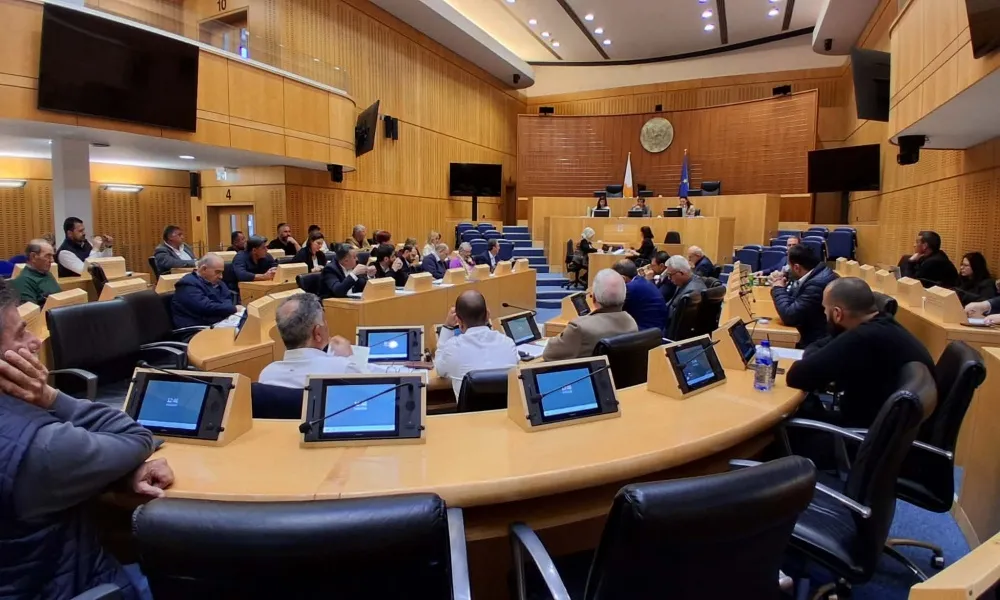

Today is a decisive day for the surveillance bill, as the parliamentary Legal Affairs Committee convenes in an extraordinary session at 8:30 a.m. in a final effort to agree on a text that can be submitted to the House plenary. The plenary session is scheduled for 11 a.m., leaving limited time to secure the necessary political consensus and votes required for approval.
Disputed provision on intelligence oversight
Last Friday, the Legal Affairs Committee, meeting behind closed doors, approved by majority a final version of the bill. The most contentious provision concerned the role of the head of the Cyprus Intelligence Service. The proposal provided that, in exceptional and urgent cases, the director could authorise the initiation of surveillance, with an obligation to refer the decision within 72 hours to KYP’s three-member oversight committee. This provision triggered strong reactions across nearly all parliamentary parties. The main objection centres on the lack of independence, as both the KYP director and the oversight committee are appointed by the President of the Republic.
Amendment aims to shift authority to courts
Despite the majority within the committee, it became clear that the required 38 votes to amend the Constitution were not secured. This led Democratic Rally to submit an amendment earlier this week.
Under the proposal by MP Nikos Tornaritis, which has the backing of the party’s parliamentary group, court authorisation would be required for surveillance of telephone communications. If adopted, this would remove KYP from the approval stage, limiting its role strictly to executing surveillance after a judicial warrant is issued.
Following the submission of the amendment, political tensions have eased to some extent. However, approval in plenary remains uncertain. Further controversy has emerged over a separate provision in another bill, which would require telecommunications providers to grant full access to KYP for surveillance purposes. This has also drawn strong objections.
Multiple scenarios on the table
The outcome will become clearer after the Legal Affairs Committee concludes its session. Several scenarios remain under consideration. One possibility is that, with the amendment by DISY, Parliament approves the amendment to Article 17 of the Constitution, allowing for lawful interference with the confidentiality of communications, while debates continue on related legislation. Another scenario is that, if the amendment fails to pass, the bill may not be brought to a vote at all.
The current parliamentary arithmetic remains tight, particularly as the House is approaching dissolution ahead of upcoming legislative elections. It remains to be seen whether the surveillance framework will be approved now or deferred to the next composition of Parliament.