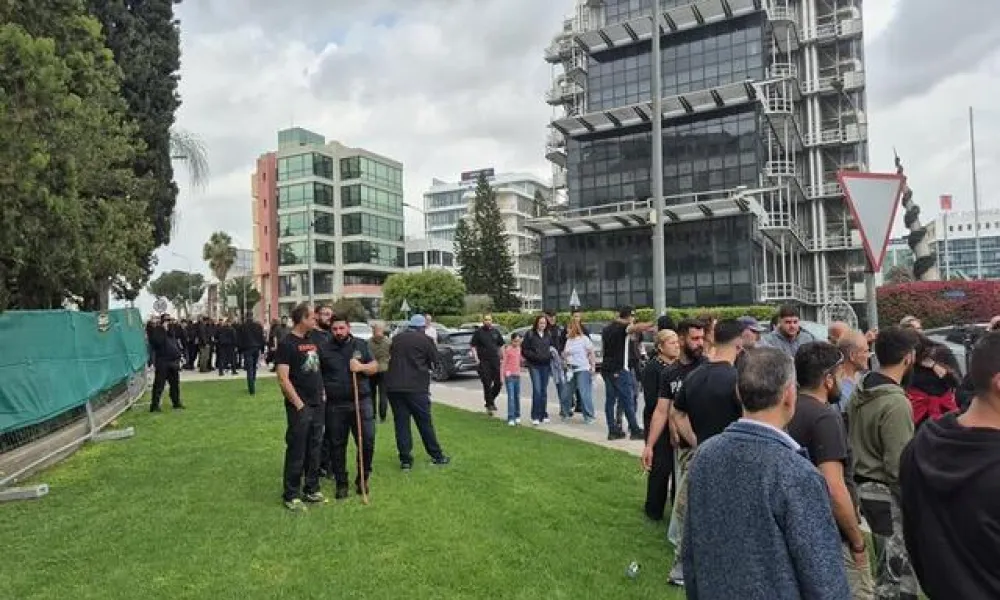

Groups of livestock farmers are escalating pressure over the foot-and-mouth disease outbreak, warning of more aggressive action unless mass cullings are stopped immediately. The threat comes as the virus continues to spread into western Nicosia and the number of animals culled rises to 52,000, wiping out around 10 percent of the country’s livestock population.
Following Sunday’s protest in Nicosia, farmer groups have warned that if their demand to halt the cullings is not met, they will block roads on Thursday, the day Cyprus hosts an EU summit. Planned actions include road closures at the Rizoelia roundabout and at Larnaca airport and port, moves they say would cause “chaos” on a day of particular importance for Cyprus’ EU Presidency.
At the same time, concern is growing within the Ministry of Agriculture and among scientists over the increasing politicisation of what they view as a veterinary and public health crisis. Officials fear that protest actions are undermining efforts to manage the outbreak, while unsubstantiated claims about the nature of the virus and the response measures are circulating publicly.
In an interview on ANT1 on Monday, Agriculture Minister Maria Panayiotou said European experts had warned that political interventions by individuals unfamiliar with scientific data and the dangers posed by the virus had negatively affected the handling of the foot-and-mouth disease crisis. According to information obtained by Politis, members of the epidemiological task force from the academic community are now preparing to intervene with public statements of their own.
Focus on the north
The situation in the north features prominently in the arguments put forward by protesting livestock farmers. They describe the measures adopted so far by the Republic of Cyprus – in line with EU legislation and protocols – as ineffective, arguing that the disease will continue to reappear as long as a different policy is applied in the north.
They point out that Turkish Cypriot authorities rely primarily on vaccination without culling animals, effectively opting to “live with the virus”. As long as this approach remains in place, they argue, foot-and-mouth disease cannot be eradicated island-wide.
Agricultural organisations are preparing to revisit the issue despite receiving an official rejection on 13 March from EU Commissioner for Health and Animal Welfare Oliver Várhelyi. While the organisations have condemned protest rallies by farmer groups due to the risk of virus transmission and have not taken part in them, they acknowledge that containment measures have failed to deliver results.
In closed-door meetings, the organisations agreed to seek renewed negotiations with the EU. According to Politis sources, they plan to raise the issue next week both at a meeting of the Foot-and-Mouth Disease Compensation Committee and at the Committee for Halloumi. They will ask that Cyprus’ request for exemption from mandatory culling protocols be put back on the negotiating table, warning that continued application of the current rules could ultimately wipe out the country’s livestock sector.
They argue that Cyprus’ unique circumstances – as an island with a divided administration, where vaccination without culling is practiced in the north – justify a derogation from standard EU procedures.
Bicommual committee meets again
Developments have also emerged on the question of a common policy between the two sides through the Bicommual Technical Committee on Health. After 15 days, the Turkish Cypriot side has responded to a request from the Greek Cypriot side to convene a second meeting of the Veterinary Subcommittee, following talks held on 17 March.
At that earlier meeting, veterinarians from the Veterinary Services of the Republic of Cyprus, acting in a personal capacity, urged their Turkish Cypriot counterparts to align with the EU acquis and adopt a unified strategy. Turkish Cypriot members of the subcommittee asked for time to examine a potential shift in strategy and submit proposals to their leadership.
According to Leonidas Phylactou, the Greek Cypriot co-chair of the Bicommual Technical Committee on Health, the issue will return to the agenda at a meeting next week, when the position of the Turkish Cypriot side is expected to be clarified. Phylactou made the remarks in an interview on the Politis radio programme ‘Defteri Matia’ (107.6 FM).
He also stressed that pressure from the bicommual committee alone is insufficient, arguing that the EU must play a decisive role. As he noted, the EU provides funding to the Turkish Cypriot community and should ensure that common practices are applied in managing the crisis.
Emergency session in parliament
Amid mounting concern in the livestock sector over the failure to contain the virus, the House Agriculture Committee will hold an emergency meeting next Thursday. Those invited include the head of Veterinary Services, the permanent secretary of the Ministry of Agriculture and the permanent secretary of the Ministry of Interior.
Officials are expected to provide answers on the latest foot-and-mouth disease outbreaks, the measures taken to curb the spread of the disease and the support available to livestock farmers whose turnover has been affected.
Tougher measures under review
The adoption of stricter measures and restrictions aimed at curbing human-driven transmission of the virus was also the focus of a meeting of the epidemiological task force on Monday. After confirmation last Wednesday that the virus had breached the two original containment zones and spread into western Nicosia, work began on drafting new measures.
This process culminated in Monday’s critical meeting, though committee members have so far maintained strict silence on its outcome.
Final stages for compensation
As for compensation for affected livestock farmers, including the final amounts to be paid after the initial advance, sources on the Foot-and-Mouth Disease Compensation Committee say the issue should be finalised within the next 7-10 days.
According to the same sources, the 90-day period stipulated under EU legislation for the payment of compensation is now nearing completion.