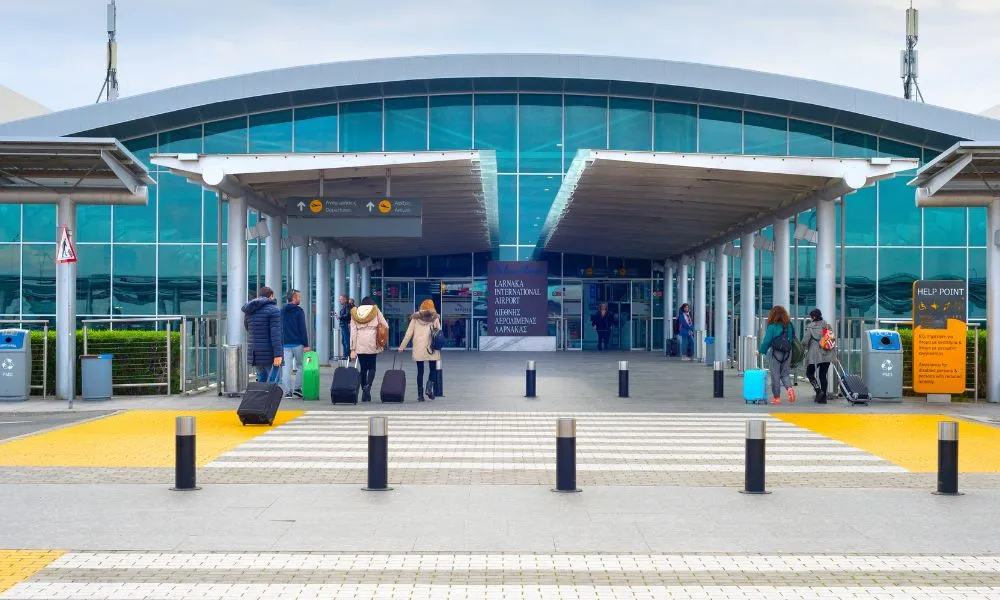
Intense concern prevails among tourism stakeholders in free Famagusta, should fears be confirmed over flight cuts to Cyprus from traditional tourist markets due to the sharp increase in fuel prices. Some routes have already been cancelled, but to a very limited extent and without serious consequences at least for the time being.
However, if the tense climate between Iran, the United States and Israel continues, the prospect of some airlines proceeding with drastic cuts to their Cyprus flight programmes appears tangible, with unpredictable consequences for the country’s tourism industry as a whole. The representative of the Famagusta Association of Leisure Centres, Petros Assias, told P that turnover for most businesses in Ayia Napa and Protaras is reduced compared with the corresponding periods of the past two years.
Concern is compounded by the fact that, to date, there is no sign of hope for a definitive ceasefire and an end to the war in the Middle East. It is considered certain that if the volatile situation continues, the negative consequences for businesses in the district will be far greater.
Mr Assias said the situation remains difficult. While the majority of leisure centres in the two major resorts have reopened, turnover for April and the first days of May was not satisfactory, with the reduction averaging between 30 per cent and 35 per cent compared with last year. He also noted that there are venues recording turnover declines exceeding 35 per cent, while others show decreases of less than 30 per cent, depending on their location.
At weekends, there is some activity from Cypriot visitors, while on the remaining days of the week businesses mainly operate with foreign visitors, chiefly British and Polish, but in small numbers.
“The concern of our members is not only about the current situation, but also about the summer months. If the war situation in the Middle East continues, our tourism will not recover, while at the same time the purchasing power of foreign visitors will weaken. We do not foresee reaching pandemic levels, but it is certain that we will experience a difficult tourism season,” Mr Assias pointed out. He added that concerns are heightened by the very real possibility that some airlines may soon be forced to proceed with flight cuts to Cyprus if fuel prices continue to rise, as well as due to reduced interest from travellers in visiting the island.
“An airline needs less fuel to travel from Germany to Spain than from Germany to Cyprus. For many European countries which are considered traditional tourist markets for our country, Cyprus is a long‑haul destination. As a result, due to the increase in oil prices, this will prove damaging for our island,” he observed.
Disappointment Among Hoteliers
The situation in the hotel industry of free Famagusta is also discouraging. The president of the local hoteliers association, Panagiotis Constantinou, said that occupancy rates for May are expected to range between 45 per cent and 55 per cent, whereas in May 2025 occupancies reached 80 per cent to 90 per cent. April this year was described as a disastrous month from a tourism perspective.
Regarding June bookings, Mr Constantinou said that at this stage they stand, on average, at 45 per cent to 50 per cent of total bed capacity. “If the war does not end soon, the situation will not change dramatically,” noted the president of PASYXE Famagusta, who emphasised the great concern over the potential reduction of air routes to Cyprus during the summer months.
“In such a case, the scenario would be catastrophic for the entire tourism industry. Some routes have already been reduced, but not to an alarming extent,” he pointed out.
Revenue Down by Up to 70 Per Cent
Meanwhile, the beaches officer of Ayia Napa Municipality, Dimitris Pateras, told our newspaper that by early May the reduction in sunbed rentals had reached 35 per cent compared with the same period last year. He noted, however, that the decrease was not due solely to the war, but also to adverse weather conditions in recent days.
He added that revenues from the rental of umbrellas and beds on organised beaches are down by 65 per cent to 70 per cent. “Forecasts for May are not good, but we hope the situation will improve from June onwards. By mid‑month we will have a more complete picture of how this summer season will unfold. At this stage, we are experiencing a problem,” he stressed.