By Andreas Athanasiou
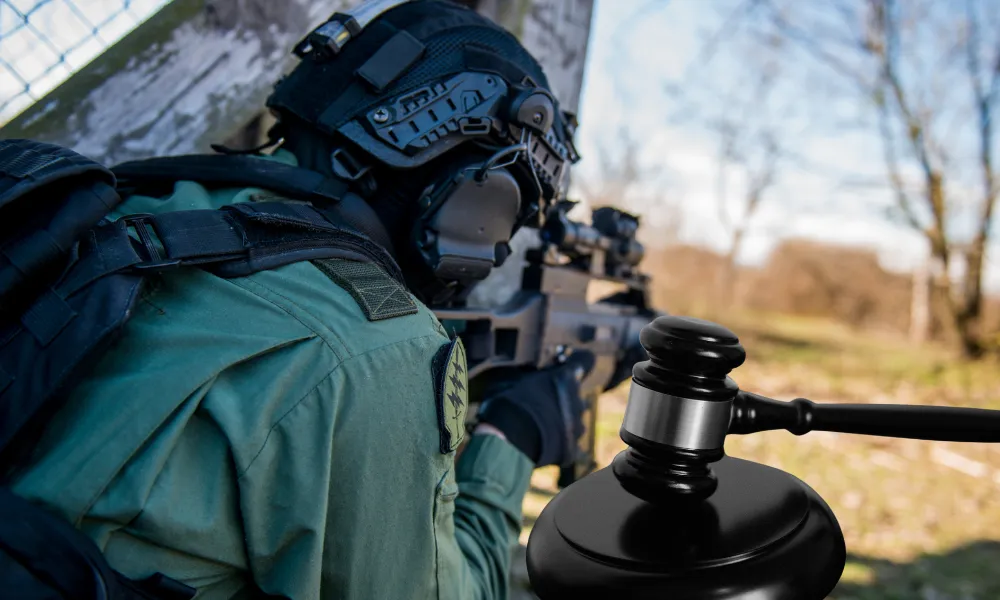
In Cyprus, airsoft is one of the fastest-growing hobbies, continuously attracting new followers and inspiring teams from all walks of life. From family men and reservists to members of the security forces, fans of this sport gather to enjoy the energy, strategy, and adrenaline it offers.
However, airsoft remains in a legal “gray zone”, as the country’s legislation has yet to specialize in this area. The Police, however, take a positive stance, supporting the recognition and legal regulation of airsoft as a sporting activity.
“Our community is well-organized, follows strict safety measures, and teaches discipline, teamwork, and honesty”, said the president of the Cyprus Airsoft Association (CAA), Argyris Argyrou, to Politis.
He added that “legalization will strengthen the sport and offer reassurance to both players and the public”. When asked about the dangers of the sport, he noted: “The plastic pellets are absolutely harmless if safety rules are followed”.
What is airsoft?
Airsoft is a team game that combines strategic thinking, physical exercise, adrenaline, and discipline. Players use realistic replicas of weapons that fire plastic pellets with a 6-millimetre diameter and low kinetic energy (2–7 Joules). This creates a strong sense of realism without leaving marks or causing serious injuries, unlike other similar sports.
Differences from paintball
Airsoft is often confused with paintball, but there are key differences. In paintball, players use paint-filled projectiles with higher kinetic energy (10–13 Joules), which burst on impact, leaving marks on the body and clothing.
In contrast, airsoft pellets do not break, making player honesty and self-regulation fundamental to the sport. Airsoft is usually played outdoors in conditions that emulate real military operations, enhancing teamwork and discipline.
The legal situation in Cyprus
Although airsoft has grown rapidly since 2008, it still operates in a legal “gray area.” According to the Firearms Law (N113(I)/2004), airsoft guns are considered airguns, since they operate with compressed air and fire plastic pellets. However, the pellet diameter (6 mm) exceeds the legal limit of 4.5 mm set for airguns.
In addition, airsoft replicas are not classified as sporting firearms and cannot be registered as such, and some are automatic, which is prohibited by law. As a result, acquiring, owning, transporting, and using these guns is banned unless a special permit is granted by the Chief of Police, yet such permits are not issued for airsoft.
Obstacles and community demands
The absence of a legal framework creates many obstacles for the development of airsoft in Cyprus. Among the main problems reported by the Cyprus Airsoft Association are:
- No licensing provisions for acquiring, owning, and transporting equipment.
- Effective prohibition of importing and selling airsoft equipment in local stores.
- No recognition as a sport due to its unclear legal status.
- Misconceptions about the dangers of replica weapons because of their visual similarity to real firearms.
- No established safety, training, or regulatory standards due to lack of recognition.
The CAA, founded in 2022 and representing more than 600 active players, has submitted a memorandum to Parliament and the relevant Authorities, requesting the official recognition and legal regulation of airsoft. The association proposes the inclusion of airsoft replicas under Article 24 of the law, which already covers paintball weapons, calling for a clear licensing and safety framework.
The CAA president explained to Politis that the groups involved in the sport have no connection whatsoever with paramilitary activity or military training.
“It promotes values such as discipline, teamwork, fair play, honesty, and strategic thinking”, he added, noting that several local teams are invited to international events and represent Cyprus in competitions such as the airsoft event ILEGAL in Ierapetra and Borderwar Mislim. “Similar events could also be hosted in Cyprus, boosting tourism and the local economy”.
Prospects and regulation
The legalization of airsoft would not only aim at its recognition as a sport but also at strengthening public safety. Keeping the activity in a vague or nonexistent legal framework does not eliminate airsoft; it pushes it into illegality.
On the other hand, responsible legalisation would curb bad practices by setting clear guidelines and binding rules. Players would know exactly the terms of ownership and use, while Authorities could distinguish lawful sporting activity from potentially dangerous or unlawful situations.
The Police’s stance
The Cyprus Police hold a positive position on the legislative regulation of airsoft. In a response to Politis, the Police stated that such regulation would strengthen public safety and provide clear guidelines to both players and the Authorities.
However, they emphasised that the final decision on legislation rests with the Ministry of Justice and Public Order, which recently requested the Police’s views on the matter. “Currently, the mentioned weapons are considered prohibited under the abovementioned Law”, the Police response noted.
The airsoft community
The airsoft community in Cyprus is highly organised, with strict safety measures and an emphasis on discipline, teamwork, and honesty. According to CAA president Argyris Argyrou, legalisation would strengthen the sport and reassure both players and the public.
Plastic pellets are completely harmless as long as safety rules are followed. Teams engaged in airsoft have no connection with paramilitary activity or military training but instead promote values such as discipline, teamwork, fair play, and strategic thinking.
Examples and international exposure
Many European countries, including Greece, Spain, France, Italy, Germany, Portugal, and Slovakia, have already legally regulated airsoft, using it as a means of promoting sport, social interaction, and tourism.