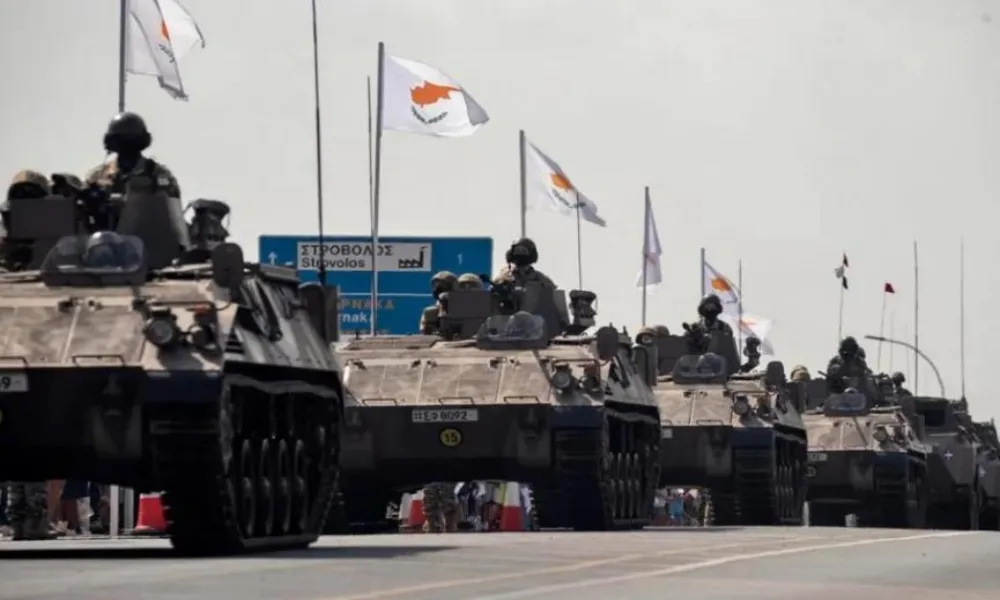
The Audit Office has uncovered illegal and extensive use of National Guard vehicles by both military and civilian staff at the Ministry of Defence (MoD), along with irregularities in the way flexible working hours are applied. The findings point to significant costs for the state budget and ongoing non compliance with existing law and cabinet decisions.
Illegal use of military vehicles
According to the report, permanent National Guard personnel and civilian MoD staff continue to use military vehicles on a daily basis to travel to and from work, in breach of legislation and at the expense of fuel budgets meant for unit operations.
A 23 April 2014 Cabinet decision authorised the Defence Minister to issue a circular ending the informal arrangement that allowed staff to be transported by service vehicles between home and work as of 1 July 2014.
Although the National Guard General Staff (GEEF) formally banned exclusive use of a service vehicle with personal driver except for the National Guard Chief, and prohibited vehicles from passing by staff homes, it still allows permanent staff to drive private cars to designated camps near their homes and then board service vehicles for daily transport to and from work.
The MoD asked the Finance Ministry’s Treasury of the Republic to amend the law so that service vehicles could be used for home to work travel in exchange for a special fee. The request was rejected in January 2017. After that rejection, the MoD instructed GEEF in October 2018 to comply with existing law.
The Audit Office, however, finds that non compliance continues and that the practice has even expanded, with GEEF increasing the number of entitled users by adding more commanders and directors and allowing certain senior officers to travel without distance limits.
The MoD told auditors that measures have been taken to restrict use of service vehicles to strictly official purposes.
Irregularities in working hours
The report identifies weaknesses in recording and monitoring working time for MoD employees and irregularities in the way flexible hours are applied. As a result, some staff appear with unjustified absences or time deficits, contrary to circulars, laws and regulations.
There were also errors in how annual leave was deducted for unjustified absence or shortfalls. The ministry has asked the company that installed the attendance system to correct the problems identified.
Court appeals over early retirements
The Audit Office notes a large number of pending appeals against decisions of the Higher Promotions Board on early retirements of officers, lodged between 2019 and 2021 following an earlier annulment ruling by the Administrative Court. These cases create a risk that the state may have to pay compensation.
The MoD does not dispute the finding, but says that since the 2023 promotion cycle a substantially different procedure has been introduced, in line with the Administrative Court’s comments in several rulings.
Overpayments after SYOP resignations
The audit also records overpayments in the payroll of contract soldiers (SYOP) who resign during the year, mainly because they take more annual or sick leave than they are entitled to. In some cases, additional debts arise because resigned SYOP are contractually obliged to compensate the state for not completing their full term of service.
As of 30 September 2024, outstanding amounts under this heading totalled €38,836. The MoD says more frequent checks will be carried out to reduce the number of people who owe money to the Republic.
The ministry launched an administrative reform based on a 2015 study, aiming to restructure its organisation, staffing and posts, improve performance and merge MoD and GEEF departments under one roof.
Although the co location of MoD and GEEF in new premises was completed in April 2019 and all new MoD posts had been filled by 2024, the expected reduction in the number of military staff working in the ministry has not materialised. On the contrary, the number of officers assigned to MoD departments has increased compared with previous years.
The ministry acknowledges this and attributes the higher numbers to needs arising from specialised military expertise, driven by geostrategic developments and new activities such as the defence industry.
Ministry still paying rent
The Audit Office also notes significant delays in the process to build state owned premises for the MoD and GEEF. Considerable time has passed with no substantial steps towards acquiring an owned building, raising doubts about whether the project can be completed before the current lease expires and creating the risk that the rental period will have to be extended.
According to the MoD, the issue of constructing dedicated buildings for the ministry and GEEF will be resubmitted for approval in the 2026–2029 medium term budget framework.