What began as a dispute over a teacher evaluation reform bill has spiraled into a national debate about sexism, respect, and accountability in public life.
As if Cyprus’s education system didn’t already face enough challenges, a new controversy erupted when the President of OELMEK, Dimitris Taliadoros, launched a fierce attack on the Minister of Education, Athina Michaelidou, over the proposed teacher evaluation reform.
“The Minister of Education has been tormenting us for a year.”
“She is at odds with the truth.”
“She will disrupt our educational system.”
Then came the remark that set off a firestorm: “A woman was found, fifty years later, to change the plan.”
These were just some of the heavy accusations Taliadoros voiced, painting Michaelidou as not only misguided but almost malicious in her insistence on pushing through reform.
Delivered live on Ant1, the phrasing was widely condemned as sexist, dismissive, and inappropriate for public discourse.
The reactions
- President of the House of Representatives and leader of DISY, Annita Demetriou, also reacted sharply, condemning the comment and underscoring that such attitudes have no place in politics or education.
- In a social media post, the Vice President of OELMEK, Andreas Mavratsas, distanced himself from the comment made by Taliadoros, stressing that “when we resort to characterizations that demean individuals or gender, we undermine the credibility of our position and harm public dialogue.”
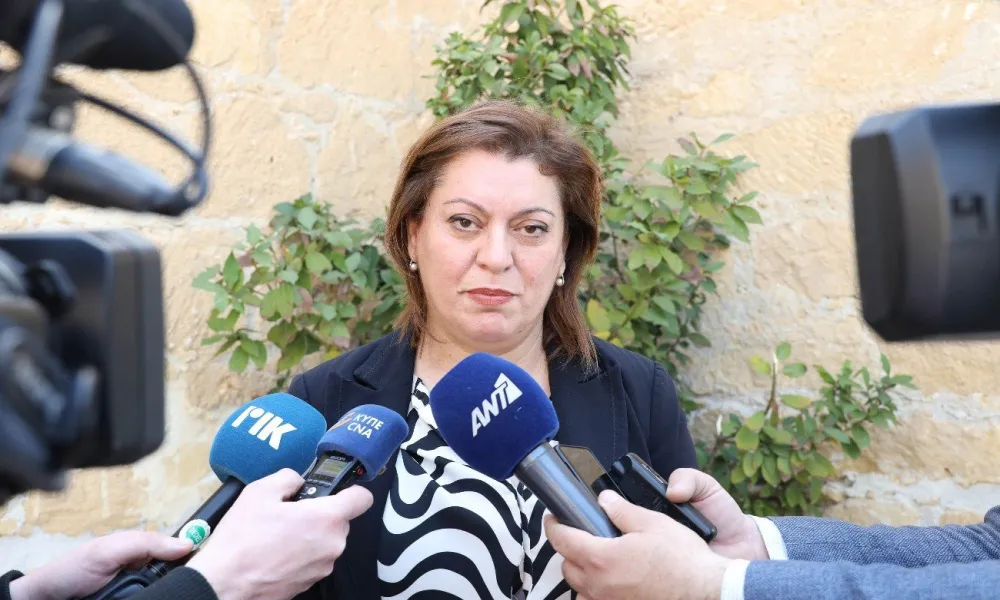
- Minister Athina Michaelidou expressed regret that Taliadoros refused to apologize, calling his stance “problematic” and stressing that the debate should remain focused on policy, not personal attacks.
- Commissioner for Gender Equality, Josie Christodoulou criticized the remark as derogatory, warning that public speech must not slip into prejudices.
- POGO (left AKEL women’s organization) issued a strong statement, labeling the comment sexist and outrageous, reminding that sexism has been a criminal offense in Cyprus since 2020.
On air
Pressed repeatedly by journalists, including on Politis’ Morning Review, Taliadoros insisted his words were not sexist:
He argued that calling someone a woman is not offensive, citing examples like “Annita Demetriou is a very good politician.”
He said: “For those who consider it sexist, I withdraw it. I don’t consider it sexist.”
When asked why he would not apologize, he replied: “I believe in my views and fight for them to the end. That shows ethos and honesty.”
He further accused journalists of “guiding public opinion” against him and dismissed calls for his resignation, saying such demands were not new.
The Minister’s disappointment, the Commissioner’s warning, POGO’s condemnation, and the Speaker of Parliament’s reaction all highlight how one remark has shifted the conversation from education policy to the deeper question of how women in leadership are treated in Cyprus.
Education in Cyprus continues to suffer under the weight of sexism, nationalism, and religion. At least this time, a public sexist comment has not been tolerated.