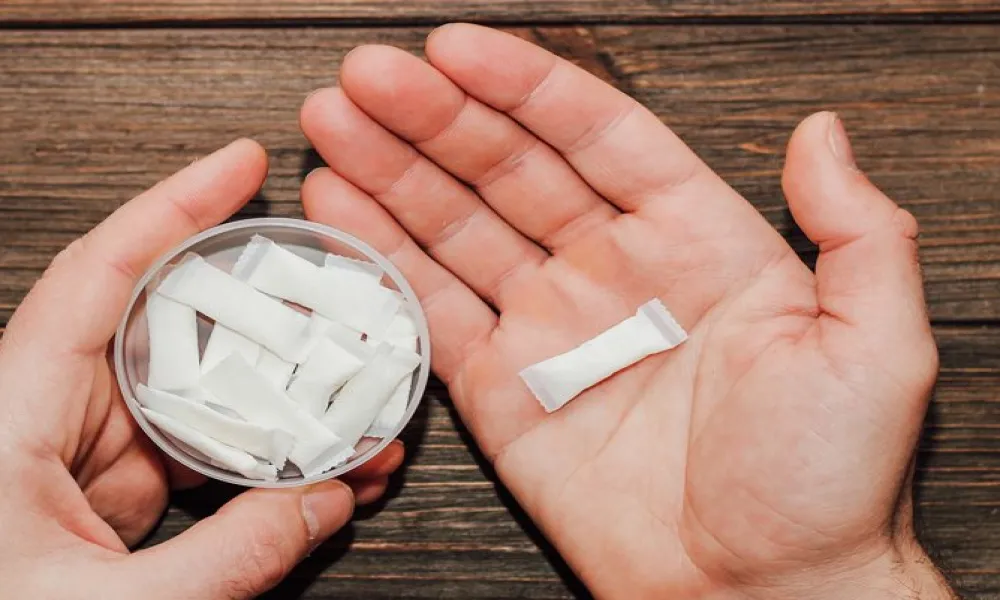

A total of 3,728 nicotine pouches were seized in Cyprus from November 2023 through early March 2026, according to Customs Department figures obtained by Politis. The products were located in postal and courier packages, retail establishments, and on passengers, during a period when these items – despite lacking authorisation for sale in the Republic – continue to surface in the market. Nicotine pouches are small sachets placed between the gum and the lip, releasing nicotine without the combustion of tobacco. They produce no smoke, have little smell, and can be used discreetly, making them particularly appealing, especially to younger people.
Customs data show that seizures occurred through various channels. Specifically, 1,950 nicotine pouches were found in postal and courier shipments, 1,533 in shops, 235 on passengers, and 10 at crossing points. These findings indicate that the products arrive and circulate in Cyprus through multiple routes, from online orders to physical retail points. A significant share of the seized products also lacks clear information about their origin. Of the 3,728 products seized, 1,435 came from EU countries, 928 from third countries, while the origin of 1,365 is listed as unknown. This raises concerns for authorities, as the lack of traceability obscures the supply chain and production conditions.
Illegal but still circulating
Despite the seizures and interventions by authorities, nicotine pouches continue to appear on the market. Under the law, these products are classified as medicinal products, and their sale requires prior authorisation from the Pharmaceutical Services. To date, no such authorisation has been granted in the Republic of Cyprus. This means that any commercial distribution of the products is illegal. Nevertheless, they are occasionally found in retail premises or arrive through online orders, raising concerns about their accessibility to young people.
In this context, a bill submitted to parliament by DIKO MP Chrysanthos Pantelides seeks to regulate their availability clearly for the first time. The bill, which is being discussed today by the Health Committee, proposes incorporating nicotine pouches into the existing legislative framework for tobacco control, so that the same restrictions and penalties applied to tobacco products also apply to them. Among other provisions, the bill includes an explicit ban on sales to minors, while violations could lead to fines of up to €2,000 and/or imprisonment of up to six months. Inspections could be carried out by the Health Services, the Police, and other authorised officials.
Attracting young users
One of the main reasons nicotine pouches have caused intense concern is the characteristics that make them highly attractive to young people. Unlike traditional tobacco products, they are not smoked, produce no smell, and can be used discreetly without drawing attention. They are often offered in various flavours and come in small, visually appealing packages that do not necessarily resemble tobacco products. Their discreet use is one of the factors that, according to international reports, contributes to their growing popularity among young people, as they can be used in places where smoking is prohibited or without being easily detected.
Concern over pupil fainting incidents in schools
In recent weeks, schools have reported a rise in pupil fainting incidents, prompting concern across the education community. Teachers, particularly school headteachers who contacted Politis, describe an increasingly frequent phenomenon that is taking on worrying dimensions, with cases now recorded even in the first years of lower secondary school. Among the products pupils appear to be using are nicotine pouches and vaping devices. The main concern is that these are nicotine‑containing products that can be used frequently and without being immediately noticed by school staff.
Health risks
Although often marketed as an alternative form of nicotine consumption, experts warn that nicotine pouches may pose significant health risks, particularly when used by young people. Nicotine is absorbed through the oral mucosa and quickly enters the bloodstream. In many cases, these products contain high concentrations of nicotine, increasing the risk of adverse reactions. Symptoms associated with nicotine consumption include dizziness, nausea, vomiting, rapid heartbeat, and severe discomfort, while cases of fainting have also been reported. Moreover, because these products currently circulate in Cyprus without authorisation, there is no guarantee regarding their composition or the consistency of nicotine levels.