Iran’s targeting of British military facilities in Cyprus with missiles and drones amid escalating Middle East tensions marked the first direct strike on UK installations on the island since 1986. Militarily, the incident was limited. Politically, its repercussions are far more profound.
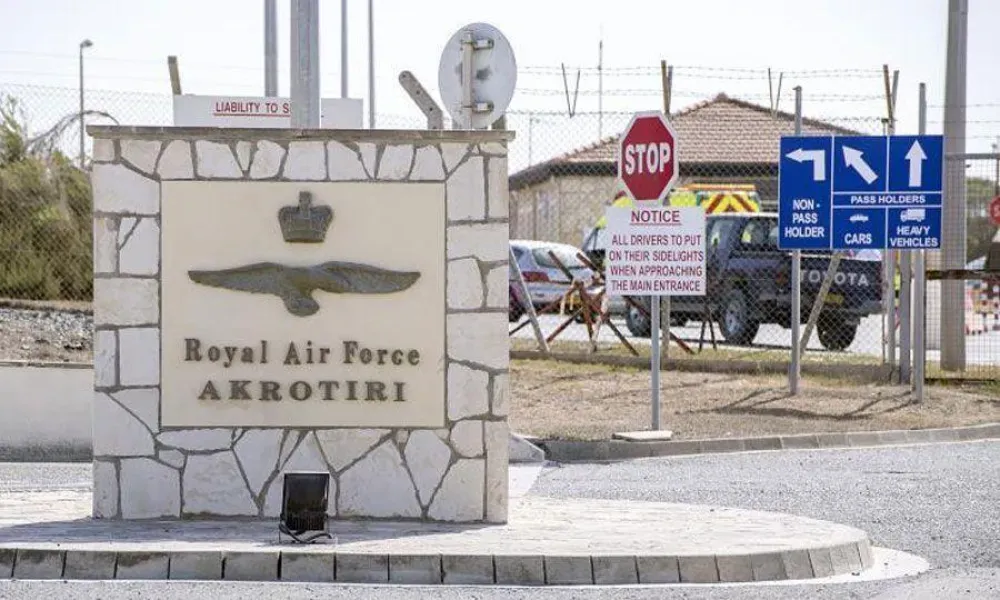
On February 28, two Iranian missiles were fired toward Cyprus and intercepted mid-air. It remained unclear whether the intended targets were the UK Sovereign Base Areas. But on the night of March 1–2, the situation shifted. A drone believed to be an Iranian-made Shahed struck the runway at RAF Akrotiri. Damage was minor and there were no casualties. Two additional drones were downed by air defense systems.
The attacks came immediately after British Prime Minister Keir Starmer authorized the United States to use British bases, including those in Cyprus, for what London described as “limited and defensive” strikes against Iranian missile sites. Following U.S.-Israeli operations targeting Iranian assets, Tehran initiated a regional retaliation cycle, drawing Cyprus directly into the geopolitical equation for the first time.
London insisted it was “not at war.” The UK emphasized that it had not joined U.S.-Israeli offensive operations but had permitted defensive use of its bases. Additional F-35 fighter jets were deployed to Akrotiri. Radar and counter-drone systems were reinforced. Families of base personnel were evacuated as a precaution, and British forces were placed on high alert.
Greek Cypriot leader Nikos Christodoulides stated that Cyprus was not a party to military operations and had no intention of joining the conflict. The island reiterated its neutrality. Yet geography does not bend to political declarations. Cyprus, willingly or not, had become part of a widening strategic confrontation.
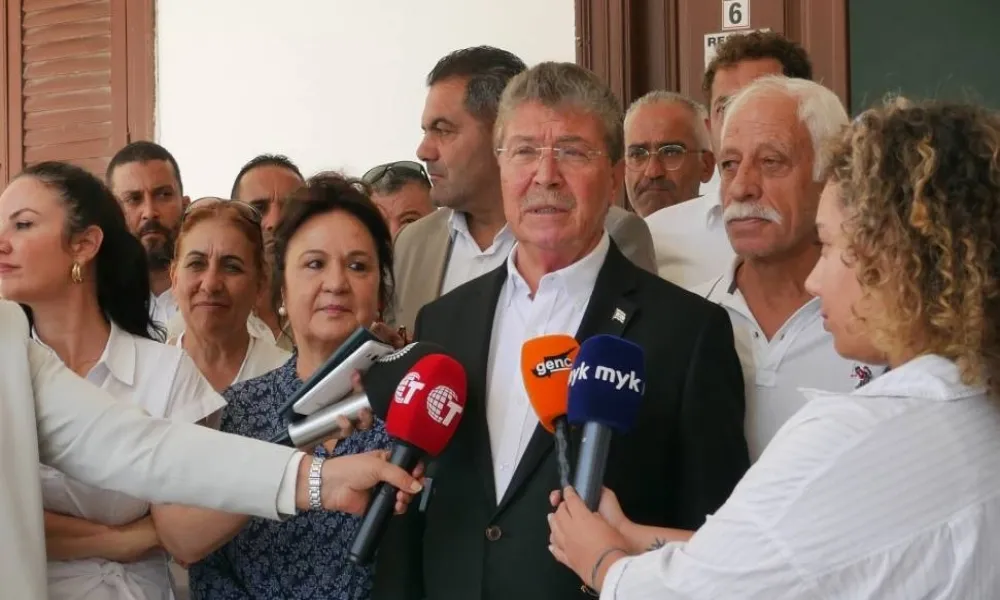
Turkish Cypriot leader Tufan Erhürman framed the issue beyond its military dimension, calling it a “political and structural risk.” According to Erhürman, the perception that Cyprus functions as a logistical extension of regional military operations, due to decisions taken by the Greek Cypriot administration, risks turning the island into a target.
These reactions underline a critical point: this was not merely a drone strike. It has reopened fundamental debates about sovereignty, security, and the future of the Cyprus problem.
The 1960 legal reality: Not bases, but sovereign British territory
Although the term “British bases” has become commonplace, Akrotiri (37 square miles) and Dhekelia (62 square miles) are not ordinary foreign military bases. Under the 1960 Treaty of Establishment, these areas constitute sovereign territory of the United Kingdom. There is no lease agreement. There is no status-of-forces arrangement. What exists is direct sovereignty.
Legally speaking, the strike on Akrotiri was not an attack on the Republic of Cyprus but on British sovereign soil. London’s legal position is unambiguous.
However, geography does not operate according to legal abstractions. For civilians living near the perimeter fences, the distinction between British and Cypriot sovereignty is theoretical. The risk of escalation is not.
This leads to a critical question: Do the Sovereign Base Areas function as a security umbrella for Cyprus, or do they transform the island into a potential target within regional conflicts?
Starmer’s decision and the geopolitical crossroads
Prime Minister Starmer’s authorization for U.S. use of British bases falls within the UK’s sovereign authority. Yet its political consequences are felt on Cypriot soil.
Iran’s retaliation chain has already placed British troops in Bahrain at risk. The E3 countries—Britain, France, and Germany—have condemned Iran and expressed support for defensive measures. But Cyprus occupies a uniquely exposed position.
The island may declare neutrality, but it sits at the geographic intersection of competing military spheres. This reality demonstrates that the Sovereign Base Areas create not only a military presence but also a political vulnerability.
The debate on removing the bases: A new crisis?
Each time regional tensions escalate, calls emerge for the termination of the Sovereign Base Areas. Such reactions are understandable. No society wishes to see its territory perceived as an extension of great power military confrontations. Yet this is not merely a matter of political will.
The first hard reality is legal. The 1960 Treaty framework constitutes the constitutional foundation of the Republic of Cyprus. The Sovereign Base Areas are embedded within that architecture. Their status is not a simple bilateral defense arrangement but part of the independence settlement itself. Altering this structure would require explicit British consent. Given the UK’s strategic interests in the Eastern Mediterranean and its integration within NATO and U.S. defense planning, voluntary relinquishment of sovereignty appears unlikely in the near term.
The second reality is even more complex: Cyprus remains divided.
The internationally recognized Republic of Cyprus governs the south. A separate political and administrative structure controls the north. A United Nations buffer zone separates them.
In the hypothetical scenario of a British withdrawal, a fundamental question arises: To whom would the territory revert?
From a legal standpoint, the Republic of Cyprus would invoke the principle of state continuity. Yet the de facto situation is more complicated. Particularly in the east, parts of the Dhekelia Sovereign Base Area extend northward and intersect with the buffer zone.
If those territories were transferred directly to effective Greek Cypriot control, the security equilibrium would shift. Contact lines could change. The buffer zone near Paralimni and Famagusta might require redefinition. Property disputes in Pergamos and Pyla could intensify. The status of strategically sensitive areas such as Ayios Nikolaos would become subject to renewed negotiation.
Rather than resolving the Cyprus problem, such a development could trigger a new territorial crisis layered on top of an unresolved conflict.
Dhekelia and the eastern fragility
The total surface area of the British Sovereign Base Areas on the island is approximately 99 square miles. Roughly half of this territory, both in Akrotiri and in Dhekelia, consists of public land. The remaining half is privately owned property. Of these private holdings, about four-fifths belong to Greek Cypriots and one-fifth to Turkish Cypriots.
The Dhekelia Sovereign Base Area is already a fragile geography due to its proximity to Paralimni, Pergama, Pyla and the Famagusta line. This corridor is one of the most sensitive sections of the buffer zone. The recent Pyla road dispute is a concrete illustration of how quickly tensions can escalate in this area.
A glance at the map shows that certain parts of Dhekelia extend northward toward areas under Turkish control. If these territories were to pass directly under Greek Cypriot administration in the event of a British withdrawal, this could create serious security sensitivities from the northern perspective.
Inevitably, several questions arise:
- • In the event of a possible British withdrawal, would these territories automatically fall under the effective control of the Republic of Cyprus? Or would the boundary of the Turkish-controlled north be redefined to encompass Turkish-owned properties within Dhekelia?
- • Would new de facto contact lines emerge in the sections extending northward?
- • Would the boundaries of the buffer zone around Paralimni need to be redrawn?
- • Under which legal regime would public lands and private properties around Pergama be regulated?
- • How would the status of strategically significant areas such as the Ayios Nikolaos camp be determined?
Moreover, the equation cannot be limited to Dhekelia alone. The Akrotiri Sovereign Base Area also contains thousands of acres of Turkish-owned land in villages such as Evdim, Piskopu, Paramal and Asomatos. In the event of a change in status, the question of how and from where compensation or territorial adjustment would be provided for these properties would inevitably come to the fore. It would not be surprising if the northern side were to seek territorial equivalence from the Dhekelia area.
Taken together, these issues demonstrate that in the absence of a comprehensive settlement to the Cyprus problem, it is impossible to produce clear, sustainable and mutually acceptable answers to such questions.
A new layer: Map, security, and the buffer zone equation
The potential termination of British sovereignty would add an entirely new layer to the Cyprus question.
Until now, negotiations have revolved around governance and political equality, security and guarantees, and territorial and property arrangements. The Sovereign Base Areas were treated as fixed variables. British withdrawal would turn that constant into a negotiating variable.
The map would change. The buffer zone would require adjustment. The security architecture would need redesign.
The United Kingdom is both a guarantor power and a sovereign base holder. Removing one of these roles inevitably affects the other. Turkey and Greece would reassess their positions. The 1960 guarantee system would be reopened for debate.
Property issues further complicate matters. Both Greek and Turkish Cypriots own land within the base areas. Civilian settlements and military zones overlap. Termination of British sovereignty would create new legal uncertainties and potentially feed into broader property litigation, including at the European Court of Human Rights.
The economic dimension cannot be ignored either. Thousands of civilians are employed within the base areas. The British military presence contributes to the local economy. Withdrawal would create an economic vacuum requiring structural adjustment.
Taken together, these realities point to a clear conclusion: the removal of the Sovereign Base Areas is not a magic solution to the Cyprus problem. In the absence of a comprehensive settlement, it could introduce a new negotiating front and fresh instability.
Not a standalone issue
The Sovereign Base Areas are not an isolated chapter in Cypriot politics. They are interwoven with the island’s territorial map, security system, and constitutional foundations.
Without a comprehensive resolution of the Cyprus question, attempting to dismantle the base regime risks destabilizing an already fragile equilibrium.
Today, the debate is triggered by a regional war’s shadow. Tomorrow, it could reshape the island’s internal balance. The drone strike may have been temporary. The sovereignty and security questions it has revived are not.