By Costa Constanti*
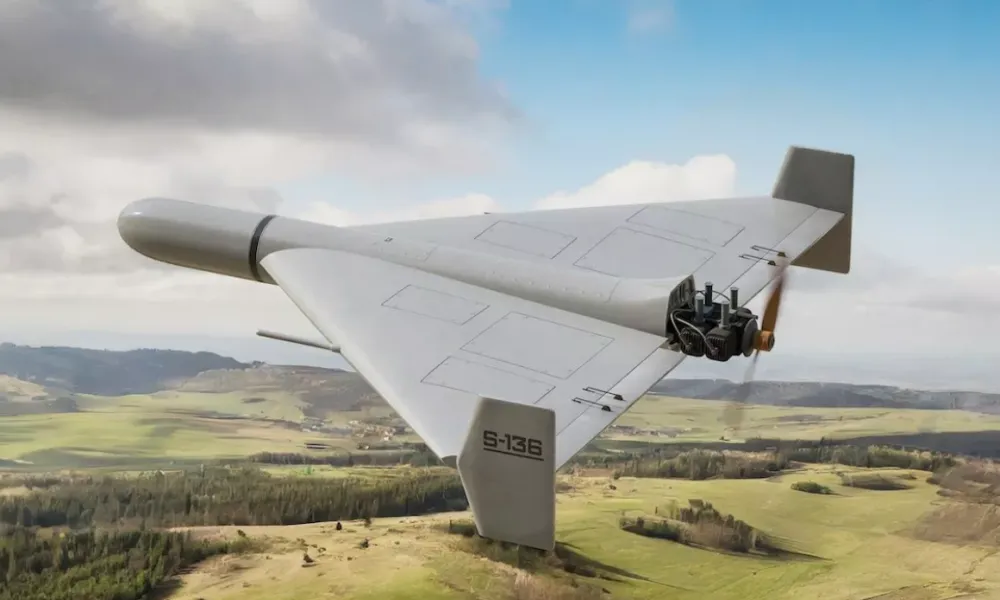
Just minutes after midnight on Monday morning, 2 March, an Iranian-made Shahed drone struck RAF Akrotiri in Cyprus. This was the first time the British Sovereign Bases in Cyprus were directly hit by a hostile state actor or its proxies. Initial reports suggested the drone was launched directly from Iran. On 4 March London debunked this, claiming it originated from elsewhere. Hezbollah terrorists in Lebanon, Tehran’s proxy in the Eastern Mediterranean, the most likely culprits. The bases are not unfamiliar with being attacked. In 1986, guerilla terrorists sympathetic to Libya, the short-lived United Nasserite Organization, struck the bases and injured two. Again in 1987, they hit again, injuring two near the bases.
Earlier on Sunday 1 March, the government denied Cyprus was a potential target. With the conflict between Israel-USA and Iran spiralling and expanding, Nicosia denied any threat to the Cypriot people. Conflicting and confusion messaging from both the Cypriot and British authorities did not deliver comfort to civilians. One moment Cyprus ‘was’ the target of a potential threat, then it ‘wasn’t’, then it ‘was’ again. The diplomatic tennis match between Cypriot and British authorities demolished trust. How would they act in the event of an actual crisis? We didn’t wait long for this to be tested. In the end, the island was hit. For Cypriots, the attack on the British bases was far too close to home. Limassol city borders the base. For almost eight hours, residents remained awake across Cyprus waiting for word from the government, which apparently was sleeping cosy. Residents scoured foreign media sources and commentary on social media to learn what was happening and to forge their own facts.
Failure the trend
This follows failure after failure of the state. In July 2025, fire destroyed 120.7 km² of the island and killed two citizens. The 112 alert system (cell broadcast) used across the EU was not functioning to alert residents to flee in a timely manner. Over eight months later the system is still not operating. Last night, four days after the initial drone attack, the authorities announced they would test the system with a text message to mobile phones at 7pm. Although they claimed it was a success, the media reported widely that scores either got the test SMS over an hour late, or did not get the message at all. Since 2023 the emergency communication system has been planned, but not delivered. Interior Minister Constantinos Ioannou said it would be ready by June. We would not be surprised if we are disappointed yet again.

Meanwhile, we are encouraged to download the SafeCy app to identify our closest bomb shelter. For months complaints circulated that the shelters are either inaccessible, unhygienic, overgrown with weeds, full of rubbish or used as storage – some even non-existent! Five full days after the attack on RAF Akroti, the authorities admitted defeat and instructed Civil Defence to visit the sites and rectify issues. But with only 45% population capacity, even in a pristine and accessible state, it’s not enough. Too little too late? Perhaps.
For now, we watch the news and doom scroll trying to piece together realities. Some may remember Iraq’s Minister of Information, Mohammed Saeed al-Sahhaf, aka ‘Comical Ali’. This due to his colourful and blatantly inaccurate media pronouncements. I feel we are learning from his playbook in Cyprus.
*Costa Constanti is Director of CONSTANTi.org – social & political analysis consultancy, Assistant Director of the Diplomatic Academy Cyprus (DIAC) and a Nicosia candidate with Volt Cyprus.