
By Peter Stevenson*
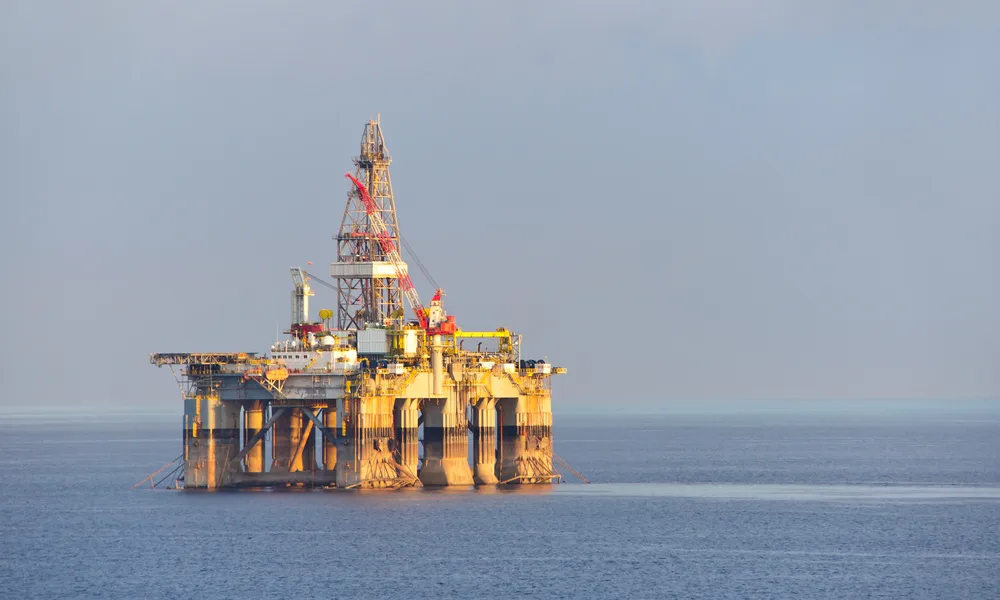
On 30 March, ExxonMobil declared 7 trillion cubic feet (tcf) of gas commercially viable in Cypriot waters. Add Aphrodite, Cronos, and the rest: Cyprus now holds 14 to 18tcf of gas in place. For a country of one million people that still burns fuel oil and diesel for electricity and pays some of Europe's highest energy bills, this should be the best news in a generation. But only if something is done about it. Opportunities like this don’t emerge very often and when they do, they are fleeting.
Energy routes compromised
More than a decade of covering the East Mediterranean energy scene and speaking to people inside the supermajors and on the ground has provided me with some insight that not everyone is privy to. This past month — with the Iran war, the Strait of Hormuz closure, and the ceasefire announced on Tuesday night — has been the most consequential I've seen during my tenure. Oil hit $141 per barrel. European diesel breached $1,500 per ton. The Strait of Hormuz is now open only under Iranian military coordination. The Red Sea is threatened by Yemen’s Houthi rebels. Every traditional energy route to Europe is compromised — except one. The Israel–Cyprus–Greece corridor. Cyprus sits at the centre of the EU’s only alternative.
And yet: not a single cubic foot of Cypriot gas has ever reached a Cypriot consumer. Not one. After fifteen years of discoveries, declarations, intergovernmental agreements and ministerial press conferences — nothing is operational. The Cypriot public is paying the price of that failure every month through its electricity bills.
Proclamations have not been sparse. The public was promised the EastMed pipeline. Then EuroAsia. Then the GSI interconnector. Then gas imports through Vasiliko. Each time: declarations, ceremonies, timelines. Each time: delays, scandals, investigations. To what end?
Each project has been mired in controversy, not least the LNG import terminal at Vasiliko. The project that was supposed to bring gas to local power stations and bring electricity bills down has cost €315 million so far. The Chinese-Greek contractor CMC
walked out. The EU demanded €67 million back because of irregularities in how the contract was awarded. The European Public Prosecutor’s Office (EPPO) is investigating potential corruption. The government's own consultants found "fundamental failures" in the design. The state gas company managing the project has five engineers on staff instead of forty. The energy minister told parliament he cannot give a timeline for when — or if — it will be finished. Nobody can.
What is the plan?
That is the backdrop against which we must assess every new announcement, every new "milestone," every new handshake with foreign partners. When the government tells you the ExxonMobil declaration is a triumph, ask: what is the actual plan? When is the development plan due? When is the investment decision? When does gas actually flow? Because history teaches us that in Cyprus, a declaration of commerciality is not a development plan, a development plan is not an investment decision, and an investment decision is not gas being extracted. Aphrodite was discovered in 2011. It may not produce gas until 2031. That’s 20 years. And frankly that’s unforgivable.
The pattern should concern every Cypriot. The plan is for Cypriot gas to go to Egypt — through Egyptian infrastructure, creating Egyptian jobs, generating Egyptian transit fees. Cyprus gets a royalty. The government tried to persuade the companies to invest in a floating LNG facility here — they declined. Statements have been made that ExxonMobil has big plans for Block 10 — but ExxonMobil has simultaneously secured better terms at adjacent blocks in Egyptian waters, creating a natural pull for Cypriot gas southward. Chevron is progressing Aphrodite — but industry sources say the partners may be looking to sell. The potential buyer? Abu Dhabi's XRG.
The UAE has shown interest in Cyprus, of that there is no doubt. The president met with Abu Dhabi’s hierarchy, ADNOC has circled around Vasiliko, XRG is positioning in the East Med. Any serious foreign investment is welcome. But Cypriots have earned the right to ask hard questions. Who is doing what and why? Is a deal being rushed for the cosmetics of an announcement before elections, or is it a genuine strategic partnership that serves Cyprus's long-term interests?
Due diligence
Given what happened at Vasiliko, given what happened with the GSI procurement, given the investigations underway, can any new partnership truly be taken at face value? Due diligence is not suspicion. It is responsibility.
Everyone is rushing to use Cyprus for their own interests. The question is whether Cyprus has a plan to use this moment for its own interests.
Israel will increasingly want to route its gas exports through Cyprus into the EU and will badge it as collaboration. Egypt needs Cypriot gas to feed its liquefaction plants and supply its unquenchable domestic market. The supermajors want the cheapest route to market, which is usually Egypt. The US-Israel partnership sees Cyprus as a convenient node in the IMEC corridor. The UAE has its own regional calculations.
None of this is inherently wrong — but none of it is a Cyprus strategy. It is other people's strategies, running through Cypriot territory. The difference between a player and a pawn is whether you have a plan of your own.
Can authorities actually change course when projects are close to an investment decision?
This is the honest counterargument, and it deserves a direct answer: this is not about halting anything. It is about having a national plan regardless of what individual projects do. Even if gas goes to Egypt in the short term — and it probably will — there is excess Israeli gas looking for routes through Cyprus. There is 7tcf that needs its own development concept. EU demand for LNG will remain at 4-6tcf per year as Russian pipeline flows are permanently gone. An onshore LNG facility at Vasiliko — built in phases, modular, scalable — would cost €6 to 9 billion over time. Significant, but not impossible. The economics look different at $141 per barrel oil prices than they did at $65.
National energy strategy
What Cyprus needs — what its people deserve — is a genuine, independent national energy strategy. Not a ministerial talking point. A published document that maps every field, every route, every timeline, every risk, every cost. With named authors. Debated in parliament. Held to account. A governance standard is required that makes international investors trust those in charge — because right now, between Vasiliko and the GSI investigations, Cyprus’ credibility is damaged. The island needs energy diplomacy that matches the scale of the discovered reserves and geopolitical significance. Cyprus needs a cross-party commitment that energy is a national priority above electoral games — because these projects take fifteen years, and they cannot be hostage to five-year political cycles.
A second chance
The past weeks have given Cyprus something rare: a second chance. The war has repriced everything. The 7tcf declaration has given Cyprus enough reserves for a sovereign play. The EU needs exactly what Cyprus has. The region is being rewritten, and the island sits at its geographic centre. But none of that matters if the same pattern
is repeated: declarations without plans, partnerships without due diligence, cosmetics without substance, and promises that turn into investigations.
The coordination needed is enormous. Left to their own devices, politicians will always prefer to appease the plans of others than lead anything complex themselves. History tells us this. But this time, the stakes are too high for the people of Cyprus to leave it to politics as usual. The energy table must be set properly. The questions must be asked openly. And the answer to whether Cyprus can finally realise its potential must come not from the presidential palace or the boardrooms of supermajors, but from the people who are paying for every year of failure in their electricity bills, their cost of living, and their children's future.
The region needs this to work. Cyprus can lead it. The question is: why not?
*Peter Stevenson is the East Mediterranean Editor at MEES (Middle East Economic Survey). He is widely regarded as one of the leading analysts in the region.